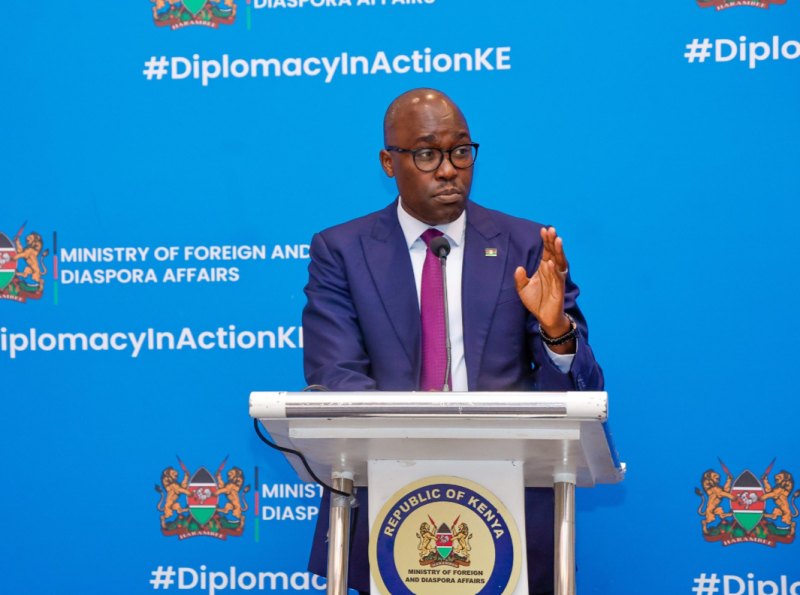
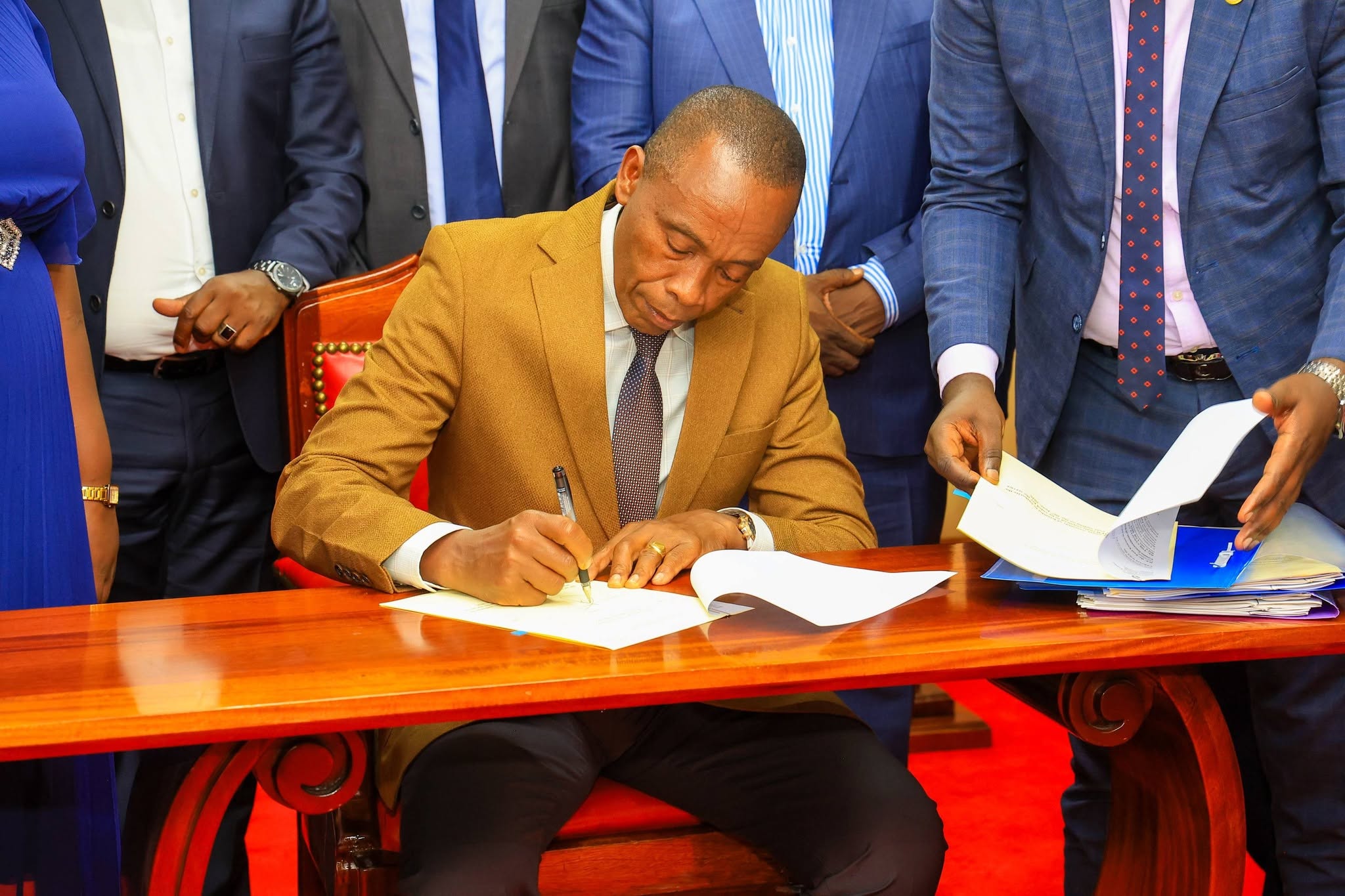
 Kiambu Governor Kimani Wamatangi assenting to the Kiambu County Early Childhood Development Education (ECDE) Act on June 8, 2026/ALICE WAITHERA
Kiambu Governor Kimani Wamatangi has assented to the county's Sh25.1 billion budget for the 2026/27 financial year, unveiling an ambitious spending plan that prioritises roads, healthcare, agriculture, education and water services.
Of the total budget, Sh8.5 billion has been earmarked for development projects, with the county government saying the investments are intended to accelerate economic growth and improve service delivery across Kiambu.
Road infrastructure received the largest share of development funding at Sh4.5 billion, reflecting the county's plan to improve connectivity and open up key economic zones.
The health sector has been allocated Sh750 million to equip and operationalise new hospitals, while agriculture will receive Sh816 million to boost food production and improve farmers' incomes.
Education has been allocated Sh667 million to expand Early Childhood Development Education (ECDE) centres and roll out youth empowerment programmes.
The budget also sets aside funds for trade and enterprise development to spur job creation, while additional resources will go towards expanding water supply to households across the county.
Speaking during the signing of the budget, Wamatangi said the spending plan reflects his administration's commitment to delivering inclusive and people-centred development.
"This budget reflects our commitment to delivering transformative, people-centred development through strategic investments in infrastructure, healthcare, education, agriculture, trade and water services. Our goal is to improve the quality of life for every resident of Kiambu County," the governor said.
Wamatangi, however, renewed calls for reforms in how counties are funded, arguing that the current revenue allocation model does not adequately reflect the actual cost of delivering devolved services.
He said counties continue to prepare budgets without a scientific costing of functions, making it difficult to provide quality services despite increasing demand.
"When you want to drive a mile, you calculate how many litres of fuel you need. That is called costing. But when you ask what it costs to provide healthcare in Kiambu, nobody knows—not even the Treasury or the Ministry of Health," he said.
The governor noted that Kiambu's growing population has placed enormous pressure on healthcare, infrastructure and other public services, yet counties continue to receive allocations that do not match their responsibilities.
He said a significant portion of the county's equitable share goes towards paying salaries, leaving limited resources for development.
According to Wamatangi, counties only collect user fees and small levies and, therefore, rely heavily on equitable share transfers from the National Government to finance critical services.
He also defended the county's decision to challenge the Kenya Revenue Authority over the taxation of county own-source revenue, saying the court ruling in favour of counties protected devolved governments from unlawful taxation.
The governor further accused the National Government of withholding billions of shillings meant for county roads under the Road Maintenance Levy Fund (RMLF).
"Counties are owed approximately Sh12 billion from the Road Maintenance Levy Fund. We maintain about 140,000 kilometres of roads compared to the National Government's 60,000 kilometres, yet nearly 90 per cent of the fund remains with the National Government," he said.
Wamatangi said counties would be able to deliver significantly more if they received adequate funding based on the actual cost of devolved functions.
"If the right amounts of money were sent to Kiambu, this county would rival international cities because we have demonstrated that we have the capacity to deliver despite limited resources," he said.