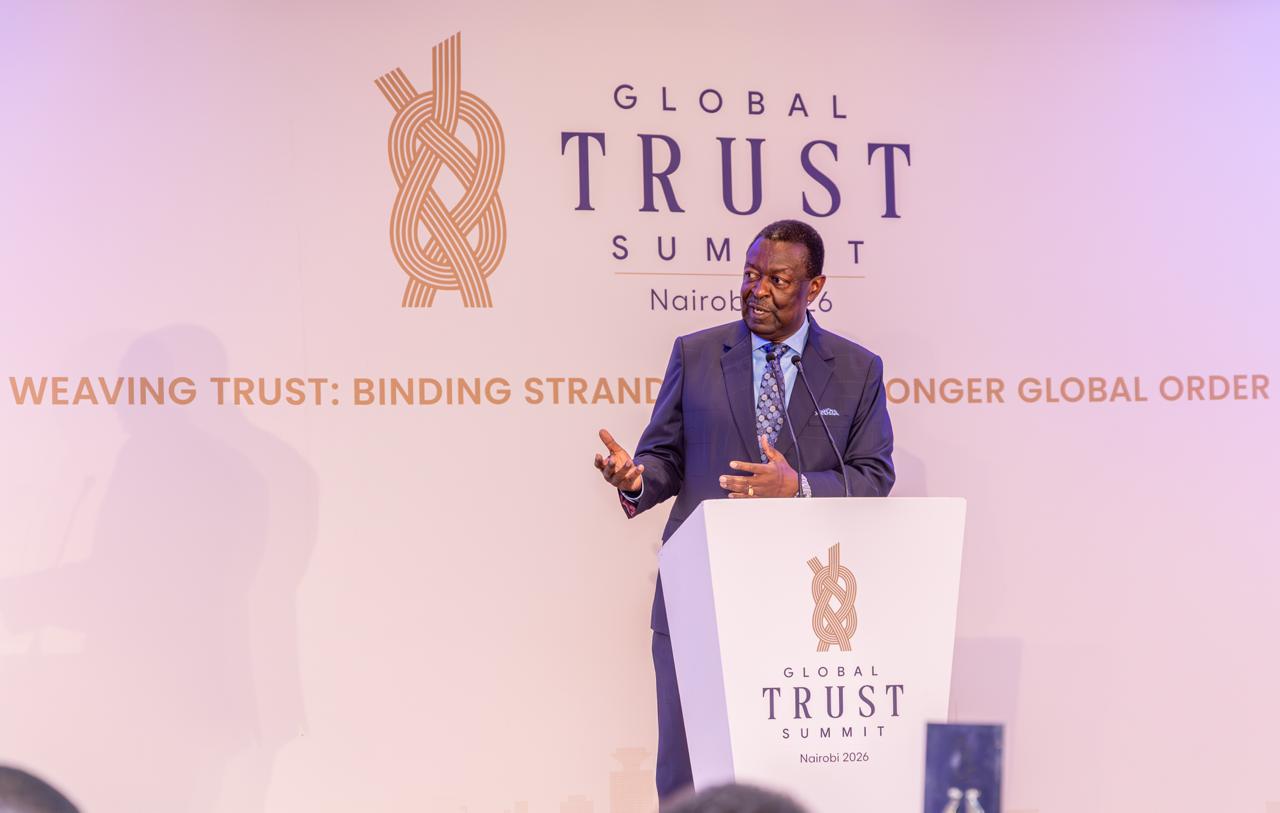
 Prime Cabinet Secretary and Cabinet Secretary for Foreign and Diaspora Affairs Musalia Mudavadi speaking during a consultative breakfast meeting with regulators in Nairobi on June 30, 2026/ OPCS
Prime Cabinet Secretary and Cabinet Secretary for Foreign and Diaspora Affairs Musalia Mudavadi has urged Kenya's regulatory institutions to implement practical reforms that will strengthen public confidence in government ahead of the Global Trust Summit to be hosted in Nairobi later this year.
Speaking during a consultative breakfast meeting with regulators in Nairobi on Tuesday, Mudavadi said rebuilding trust in public institutions requires more than policy declarations, insisting that citizens judge government through the quality, fairness and integrity of services delivered by regulatory agencies.
He said Kenya's decision to host the Global Trust Summit on October 22 and 23 reflects the country's commitment to advancing democratic governance and restoring confidence in public institutions through concrete institutional reforms.
"The Summit is not another international conference. It is a strategic diplomatic and governance initiative that seeks to move the global conversation beyond diagnosing declining trust towards identifying practical reforms and institutional actions that rebuild and sustain it," Mudavadi said.
He cited findings from the Organisation for Economic Co-operation and Development (OECD) 2024 Survey on Drivers of Trust in Public Institutions, which found that only 39 per cent of citizens across 30 advanced economies reported high or moderately high trust in their national governments, while 44 per cent expressed low or no trust.
Mudavadi said the findings should encourage Kenya to strengthen public confidence in its own institutions as it prepares to host the global forum.
He noted that Kenya's hosting of the summit fulfils a commitment made under the Fifth Open Government Partnership National Action Plan launched by President William Ruto in September 2024, which places rebuilding public trust at the centre of the country's open government agenda.
According to Mudavadi, trusted institutions are also anchored in the Constitution, which upholds integrity, transparency, accountability and responsive public administration as guiding principles of governance.
He said regulators occupy a unique position because citizens interact with them daily when seeking healthcare, financial services, transport, agricultural inputs and other essential public services.
"When regulatory institutions perform their mandates professionally, citizens develop confidence not only in those institutions but in government itself. Conversely, when regulation fails, public confidence is diminished, often across the entire public sector," he said.
Mudavadi added that the credibility of Kenya's regulatory institutions also influences the country's international standing by shaping investor confidence, market access and recognition of Kenyan professional standards.
"The confidence that international markets place in Kenyan products, the recognition accorded to Kenyan professionals, the willingness of investors to commit capital, and the trust placed in Kenya as a destination for trade and international engagement all depend significantly on the credibility of our regulatory systems," he said.
He urged every regulatory institution represented at the meeting to identify measurable reforms before October that would strengthen public confidence within their respective mandates.
Mudavadi said the reforms should become a lasting institutional legacy rather than initiatives designed solely for presentation during the summit.
"I encourage every regulatory institution represented here to identify concrete reforms and measurable actions that will strengthen citizen trust within your respective mandates. These commitments should become part of the lasting institutional legacy that Kenya leaves behind," he said.
He maintained that the success of the Global Trust Summit would ultimately be judged not by the number of delegates attending but by whether Kenyans experience greater transparency, fairness, improved service delivery and stronger confidence in public institutions after the event.