A growing number of Africans recruited to fight for Russia in the war against Ukraine are caught in a legal dilemma that is challenging governments, international lawyers and human rights organisations: are they mercenaries who knowingly joined a foreign conflict for financial gain, or victims of human trafficking deceived into becoming soldiers?
A report by the International Federation for Human Rights (FIDH), Truth Hounds and the Kazakhstan International Bureau for Human Rights and Rule of Law argues that the answer is often far more complex than existing international law allows.
It says Russia has institutionalised the recruitment of vulnerable foreign nationals, including thousands from Africa, through deceptive job offers, promises of citizenship and financial incentives.
Researchers estimate that between 1,700 and 4,000 Africans have joined the Russian Armed Forces, although they caution that the actual number is likely much higher. Ukrainian intelligence believes Russia plans to recruit an additional 18,500 foreign nationals before the end of 2026.
The report notes that many recruits do not fit neatly into the traditional definition of mercenaries.
"While the report finds that most foreign fighters meet the definition of 'mercenarism' within the colloquial understanding," the authors state, "the current international legal framework governing mercenarism defines the concept too narrowly to adequately capture the phenomenon documented in this report."
Instead, investigators found evidence suggesting that many recruits were lured through deception or coercion, raising concerns that they may also qualify as victims of human trafficking.
According to the report, Russia shifted its recruitment strategy after suffering heavy battlefield losses following its full-scale invasion of Ukraine in 2022.
Rather than relying primarily on ideologically motivated volunteers, recruiters increasingly targeted economically vulnerable people across Africa, Asia and Latin America with promises of lucrative employment, education opportunities and simplified access to Russian citizenship.
Researchers found that many recruits only realised they had signed military contracts after arriving in Russia. Contracts were typically written exclusively in Russian, often without interpretation, while many recruits were assured they would perform civilian or non-combat duties.
"Of the 16 prisoners of war interviewed for this report, 13 stated that they had been told they would not be required to fight; most nevertheless found themselves deployed to forward positions within weeks of signing," the report says.
According to Russian authorities, this is not the case.
“Russia is not forcing anyone to enlist. Just as in the case of participation in the special military operation, volunteers join this operation in full compliance with Russian law,” Russian Foreign Minister Sergey Lavrov said.
Those deployed frequently received only a few weeks of military training before being assigned to high-risk assault units carrying out so-called "meat assaults" — frontal attacks associated with extremely high casualty rates.
The report estimates that at least 3,388 foreign fighters have been killed in combat, with some reports suggesting that one in five foreign recruits die after deployment.
Despite these findings, legal accountability remains complicated.
International conventions define mercenaries using strict criteria, including motivation, nationality and combat status. The report argues these definitions fail to account for individuals who accepted military contracts primarily because they were deceived, coerced or trafficked.
"As a non-party to the UN Mercenary Convention, Russia cannot be held legally accountable under that instrument for the use of mercenaries," the report notes, highlighting a significant gap in international law.
For African governments, the findings present difficult policy choices.
Countries must decide whether returning fighters should face prosecution under domestic anti-mercenary laws or be treated as trafficking victims entitled to protection and rehabilitation.
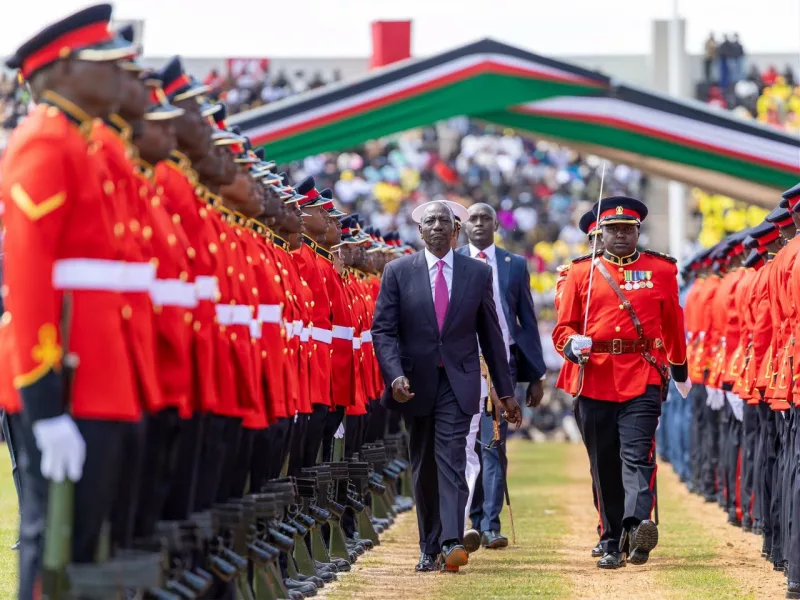
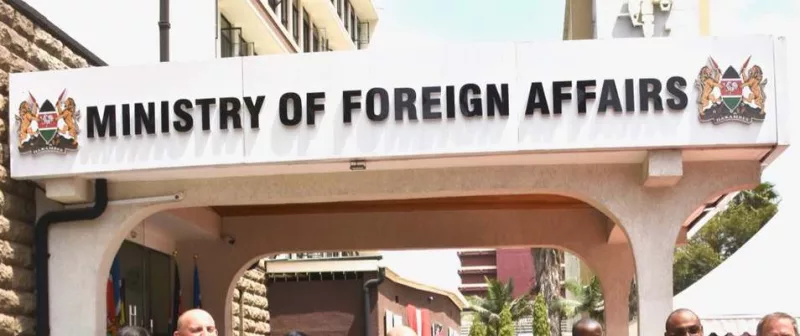
The report notes that Kenya has mounted one of the strongest institutional responses among countries studied by combining diplomatic engagement with travel restrictions, criminal investigations into recruiters and efforts to dismantle trafficking networks.
However, researchers say recruitment has continued through modified routes despite these measures.
Rather than focusing solely on prosecuting recruits, the report recommends that governments prioritise dismantling recruitment syndicates operating across borders.
It calls on states to criminally investigate recruiters, strengthen anti-human trafficking measures, engage Russia diplomatically to facilitate the repatriation of affected citizens and support families whose relatives remain trapped in the conflict.
The report also urges international organisations to recognise predatory recruitment into foreign armed conflicts as a form of trafficking and exploitation, while reviewing outdated definitions of mercenarism that no longer reflect modern recruitment methods.
As Russia expands its search for foreign fighters, the report warns that existing international law may be ill-equipped to address a conflict where many recruits are neither entirely willing combatants nor entirely innocent victims, but occupy a legal grey zone that demands new approaches to justice and accountability.