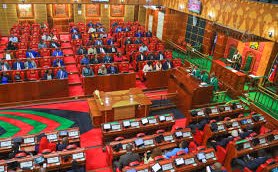
MPs have backed a petition by secondary school principals and their deputies seeking a resolution to stalled promotions that have left hundreds of educators stuck in the same job groups for years.
The petition to the National Assembly was filed by Maurice Otieno Ouma, Paul Juma Were and 14 other deputy principals from different parts of the country.
Read Also
In the petition, the teachers claim the implementation of the 2018 Career Progression Guidelines (CPG) by the Teachers Service Commission (TSC) has unfairly disadvantaged deputy principals, particularly those appointed between 2001 and 2014.
The guidelines replaced the scheme of service and established a structured framework for teacher career growth based on qualifications, competencies, experience and performance.
They also created professional pathways as follows: Secondary Teacher III (C1), Secondary Teacher II (C2), Secondary Teacher I (C3), Senior Master III (C4), Senior Master II (C5), Senior Master I (D1) and Deputy Principal and Principal grades (D1–D5).
One of the major concerns raised by teachers and unions since the introduction of the 2018 CPG has been the slow progression from C3 upwards, where promotions are pegged on vacancies, interviews and budget allocations.
According to the petition, many deputy principals have remained in the same grades despite decades of service and increased responsibilities.
They argue that the guidelines, introduced following a joint job evaluation exercise conducted by the TSC and the Salaries and Remuneration Commission, failed to recognise teachers' years of service and experience under the former job group system.
The petitioners argued that the transition to the new grading structure downgraded many deputy principals and disrupted their career progression paths, resulting in widespread frustration among school administrators.
“The petitioners contend that the implementation of the Career Progression Guidelines has occasioned discrimination, inequity and stagnation among deputy principals who have diligently served in leadership positions for many years,” the petition states.
Lawmakers expressed concern over the slow pace of career progression in secondary schools, saying the situation has demoralised teachers and affected the management of learning institutions.
They urged the TSC to expedite the promotion process and address complaints of inequity and delays in advancing qualified teachers.
They noted that many headteachers have remained in acting positions or served for long periods without corresponding promotions despite meeting the required qualifications.
The legislators argued that career stagnation has contributed to low morale among school administrators, who play a critical role in implementing education policies and ensuring the smooth running of schools.
Kilifi North MP Owen Baya, who previously served as a deputy principal, painted a vivid picture of the challenges faced by school administrators.
Baya said deputy principals often bear the burden of managing schools on a daily basis, handling discipline, academics, administration and student welfare, yet many remain stuck in the same job grades for years.
“Anybody who has worked in a school understands that the deputy principal is the engine of the institution,” Baya said.
“In many cases, they arrive before everyone else and leave after everyone else. They handle discipline, supervise teachers, manage examinations and ensure the school runs smoothly.”
“It is therefore unfair that people carrying such enormous responsibilities remain in the same grade for years without promotion. We cannot expect excellence in our schools when those entrusted with leadership feel neglected and unappreciated,” he said.
Funyula MP Ojiambo Oundo told the House that the promotion crisis had reached alarming levels, with many teachers increasingly reluctant to take up leadership positions because of uncertainty surrounding career advancement.
“It has reached a point where teachers no longer see the incentive of becoming deputy principals because they know they may remain in acting positions or stagnate in one grade for years,” Oundo said.
“This is not just about salaries. It is about dignity, recognition and rewarding hard work. When a teacher serves faithfully for decades and sees no progression, the system is essentially telling them their contribution does not matter.”
Nominated MP Dorothy Muthoni said the petition highlighted a deeper crisis affecting teachers across all levels of the profession.
She lamented that some teachers spend their entire careers without meaningful advancement despite acquiring additional qualifications and taking on greater responsibilities.
“It is heartbreaking that a teacher can be employed in their youth, dedicate 35 or 40 years to educating Kenyan children and retire in virtually the same grade in which they started,” Muthoni said.
“Teaching is one of the most important professions in this country. If we fail to motivate teachers, we are undermining the future of our children and the quality of education itself.”
Magarini MP Harrison Kombe called for clear timelines for confirming teachers serving in acting capacities, arguing that prolonged acting appointments had become a source of exploitation.
“There must be certainty in career progression. A teacher should know that after serving in an acting position for a specified period, there will be a transparent process leading to confirmation,” he said.
The principals, through their petition, want the TSC to review the promotion framework and allocate adequate resources to facilitate regular advancement of teachers based on merit, experience and performance.
The National Assembly's Education committee is now expected to scrutinise the claims, engage the TSC and other stakeholders, and recommend measures that could reshape career progression for thousands of deputy principals across the country.
INSTANT ANALYSIS
In the petition, the teachers claim that the implementation of the 2018 Career Progression Guidelines (CPG) by the TSC has unfairly disadvantaged deputy principals, particularly those appointed between 2001 and 2014.