Children today are growing up in a world where swiping, scrolling, and notifications have become part of everyday life. While social media has opened doors to learning, communication, and creativity, experts are raising concerns about its growing impact on children's academic performance and overall well-being.
From classrooms to dining tables, smartphones have become constant companions for many young people. Teachers and parents say excessive use of social media is affecting concentration, reducing reading habits, and limiting face-to-face interactions.
A recent OECD report found that problematic social media use among teenagers has risen in recent years, with nearly one in ten adolescents reporting that social media negatively affects their daily lives.
A silent distraction in the classroom
Read Also
Educational experts warn that social media is not entirely harmful, but unsupervised and excessive use can become a major distraction.
Many students admit to checking social media during study time, thereby reducing the time dedicated to homework and revision.
Studies have also linked excessive off-task social media use to lower academic achievement among children and adolescents.
"Technology should be a tool for learning, not a replacement for learning itself."
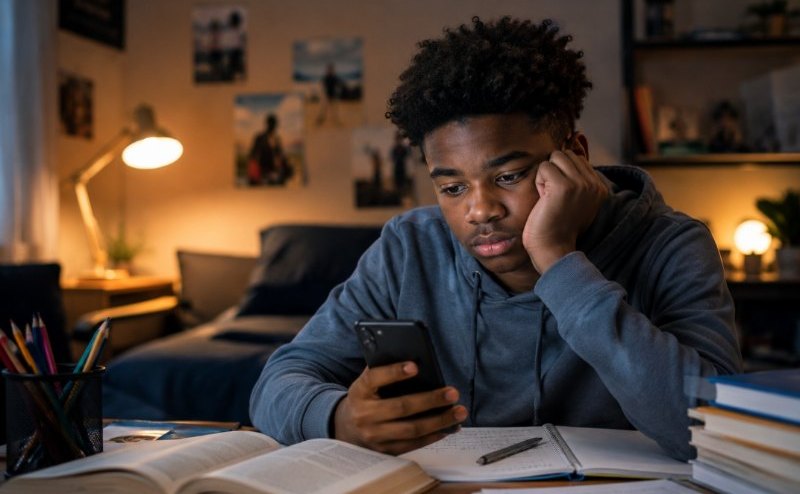
Teachers say children are increasingly struggling with shorter attention spans and reduced critical thinking skills.
However, experts stress that banning technology altogether is not the solution.
Finding balance instead of imposing total bans
International organisations such as UNESCO advocate for safer and more balanced digital environments for children. They encourage stronger parental guidance, digital literacy education, and age-appropriate regulations.
Parents are being encouraged to establish screen-time boundaries, create phone-free study periods, and engage children in offline activities such as reading, sports, and family conversations.
"Children need guidance online just as much as they do offline."
Schools are also being urged to teach responsible digital citizenship rather than focusing only on punishment.

As children spend more time online, society faces a difficult challenge: protecting young minds without disconnecting them from the digital world. The future may not depend on removing social media entirely, but on teaching the next generation how to use it wisely.