The Treasury is dangling tax reductions, cheaper electricity and tax reliefs as top priorities aimed at easing the business climate in the country in the new financial year.
In a budget that the exchequer steered off any new tax hikes, CS John Mbadi said the government was prioritising investments that directly improve the operating environment for firms and support private sector-led growth.
The state is planning a raft of fiscal, customs and tax administration measures designed to boost industrial growth while raising an additional Sh98.9 billion in revenue without introducing new taxes.
According to Mbadi, businesses are set to benefit from lower production costs, fresh industrial financing and incentives aimed at boosting local manufacturing and creating employment, even as the government moves to widen the tax base and tighten compliance measures.
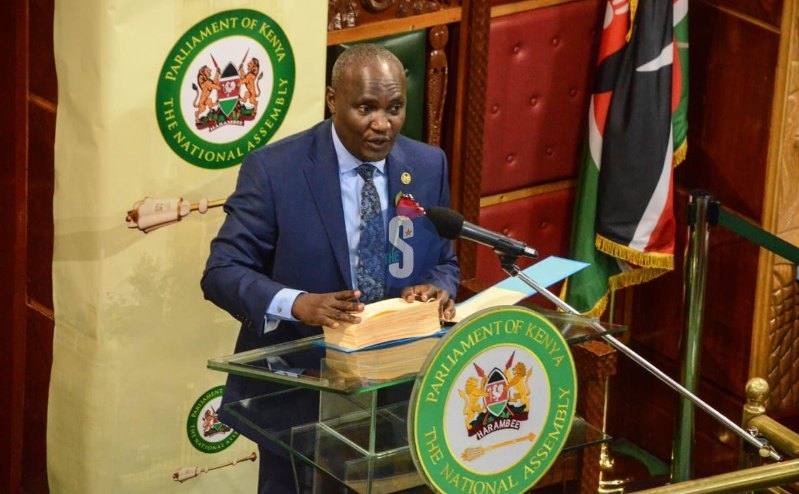
Mbadi who presented the budget in Parliament on Thursday said the government had deliberately avoided introducing new taxes or increasing existing tax rates, opting instead to improve tax administration and seal revenue leakages.
"In preparing these proposals, I have been guided by the overriding principle of putting the wellbeing of the common mwananchi first," Mbadi said.
Businesses are set to be among the biggest beneficiaries of the Sh4.8 trillion budget for the 2026-27 financial year, on planned increased spending on energy, water and transport infrastructure. All are aimed at lowering production costs and boosting competitiveness.
The Treasury has allocated Sh16.7 billion to support industrialisation programmes, including funding for industrial parks, export processing zones, special economic zones and the Kenya Jobs and Economic Transformation project.
The spending is expected to support expansion of manufacturing capacity, attract private investment and create jobs.
A major boost for manufacturers comes through East African Community tariff measures that will take effect from July 1.
Kenya secured approval to continue importing key industrial inputs at reduced or zero-duty rates, lowering production costs for sectors such as pharmaceuticals, automotive assembly, furniture, roofing materials, electronics and leather processing.
Manufacturers assembling smartphones, laptops and tablets will continue accessing critical inputs duty-free, while automotive firms will benefit from zero-rated imports of selected components.
“Kenya requested and was regarded to purchase on-demand products used in the assembly of smartphones, laptops, and tablets. The policy is expected to encourage investment in electronics manufacturing while making digital devices more affordable,” Mbadi said.
The government also seeks to strengthen local industries through higher tariffs on competing imports, including textiles, processed foods, construction materials and selected household products, a move aimed at protecting domestic manufacturers and preserving jobs.
For consumers, the government has maintained reduced import duties on wheat and animal feed inputs, measures expected to support food affordability and help contain prices of bread, meat and other food products.
The government is also increasing the tax-free threshold for goods carried by arriving passengers from $300 (Sh38,700) to $2,000 (Sh258,000), potentially reducing costs for travellers and small-scale importers.
On taxation, Mbadi said the government intends to raise an additional Sh98.9 billion through compliance and administrative reforms rather than new taxes.
The measures include expanding the tax base, introducing withholding tax on gambling winnings and scrap metal transactions, taxing gains from offshore transfers involving Kenyan assets and requiring companies to distribute at least 60 per cent of profits or face deemed dividend taxation.
“Gambling activities have grown significantly in recent years, particularly through digital platforms. While these are legitimate activities, winnings from gambling and illegal income, unlike any other income, they should be taxed. The Bill therefore proposes to introduce withholding tax on winnings, not a return to risk,” Mbadi said.
The government will also revise tax return filing timelines for individuals while retaining the June 30 deadline for businesses.
To improve the investment climate, the budget proposes VAT exemptions for dialysis equipment and public-private partnership projects.
Mbadi said the reforms are designed to create a fairer and more predictable tax environment while supporting investment, industrial growth and job creation.
"We shall continue to broaden our tax base, a process that will help us lower tax rates and ease the burden on the few that are taxed today," he said.
The focus on energy comes as manufacturers and other businesses continue to cite high electricity costs as one of the biggest constraints to growth lowering Kenya’s trade competitiveness.
Mbadi said the government would pursue investments in energy infrastructure to improve reliability and affordability of power supplies, a move expected to benefit manufacturers, processors and other industrial users that rely heavily on electricity.
The budget also places water infrastructure among its key priorities, with Treasury arguing that reliable water supply is critical for industrial development, agriculture and urban growth.