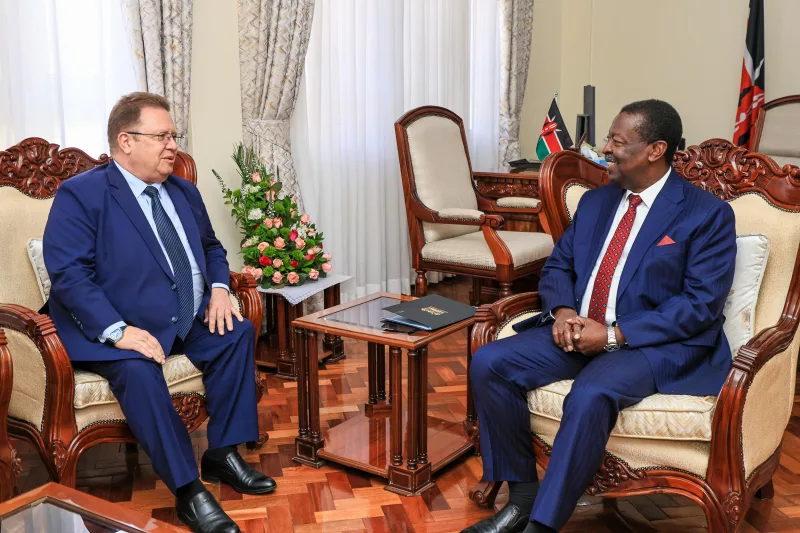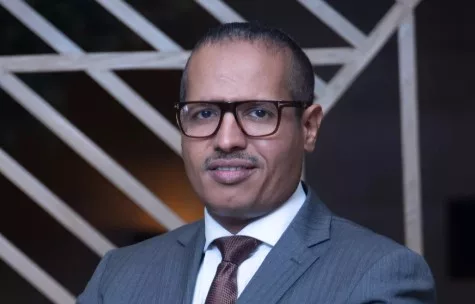
Principal Secretary for Children Welfare Services Caren Ageng'o and National Assistance Trust Fund Director Marygorret Mogaka, when they appeared before the Special Funds Accounts Committee. /HANDOUT
What begins as a desperate search for employment is increasingly ending in exploitation, debt and trauma for hundreds of Kenyans lured by promises of lucrative jobs abroad.
As unemployment continues to push young people to seek opportunities overseas, human trafficking is emerging not only as a criminal justice issue but also as a costly labour market failure exposing weaknesses in Kenya's job creation efforts, overseas recruitment systems and migrant worker protections.
The scale of the challenge came into focus during a meeting of the National Assembly's Special Funds Accounts Committee, chaired by vice chairperson Rahim Dawood.
Officials from the State Department for Children Welfare Services told lawmakers that more than 170 Kenyans who had been trafficked been repatriated in 2025 alone.
They were largely from Myanmar, where many had been trapped in scam compounds after being lured by fraudulent job offers.
The revelations underscore a growing trend in which unemployed youth, eager to escape economic hardship at home, become easy targets for sophisticated trafficking networks masquerading as recruitment agencies.
"Most of the victims are looking for jobs, we realised traffickers often exploit vulnerable job seekers with promises of well-paying positions overseas," National Assistance Trust Fund director Marygorret Mogaka said.
According to the Ministry of Social Protection, every victim rescued and repatriated continues to carry a financial cost borne largely by taxpayers through the National Assistance Trust Fund.
Yet the fund itself says it is struggling to keep pace with rising demand. According to officials, the fund has typically received annual allocations of about Sh20 million, although expenditure often exceeds that amount due to growing operational demands and accumulated commitments from previous years.
The fund's managers said the allocation has never been sufficient to address all the needs of trafficking victims, particularly following large-scale rescue operations involving Kenyans stranded abroad.
“If there are Kenyans who have been trafficked outside the country, the fund is supposed to assist to bring them back. If there are non-Kenyans who have been trafficked to Kenya, the fund is supposed to assist in returning them to their country of destination,” said Mogaka.
PS State Department for Children Welfare Services Caren Ageng'o pointed to the fact that, human traffickers are increasingly shifting their focus to new parts of Kenya, targeting economically vulnerable communities far from the traditional migration corridors.
Historically, anti-trafficking efforts have focused on major urban centres and counties with established migration patterns.
However, the officials told the parliament that recruiters are now moving deeper into rural communities where awareness of trafficking risks is lower and economic hardship makes residents more susceptible to false promises.
The government has identified Nakuru, Mt Elgon, Busia and Turkana as key trafficking hotspots as cases of human trafficking continue to rise across the country.
Officials from the National Assistance Trust Fund for Victims of Trafficking in Persons told Parliament that many Kenyans rescued from trafficking syndicates abroad originated from Nakuru and Mt Elgon, prompting targeted awareness campaigns in the affected regions.
Myanmar remains the leading destination where trafficked Kenyans have been rescued, alongside cases reported in Malaysia, India, Russia and South Africa.
Border counties such as Busia and Turkana have also been flagged as vulnerable transit points because of their proximity to Uganda, Ethiopia and South Sudan.
"We held last year's anti-trafficking commemoration in Nakuru because many victims were coming from the area. This year, the event will be held in Mt Elgon after authorities recorded a significant number of trafficking victims originating from the region,” said Mogaka.
“Busia remains a key focus due to its border crossings at Malaba and Busia, where law enforcement officers have been trained to identify trafficking cases, while a protection unit at Busia Police Station assists victims, particularly women."
The PS said fraudulent recruitment practices are creating an additional burden on public finances as the state was last year forced to send home 500 people who were trafficked into the country.
While the government has promoted labour migration as a source of jobs and remittances, traffickers are increasingly exploiting the same demand for foreign employment.
In many cases, victims bypass official recruitment channels in favour of informal brokers promising faster placement and higher earnings.
Officials acknowledged that some victims rescued from trafficking situations later attempt to leave the country again through unofficial routes despite receiving warnings about the risks involved.
The committee heard that some victims repatriated from Myanmar had later sought alternative pathways through neighbouring countries in hopes of securing employment abroad.
While areas such as Nairobi and Nakuru have historically featured prominently in trafficking cases, officials said Mount Elgon has recently emerged as a significant source region for victims being trafficked overseas.
The shift suggests recruitment networks are adapting their strategies, targeting economically vulnerable communities where awareness of trafficking risks remains limited.
Regional economic disparities are therefore becoming an important factor in understanding the evolving trafficking landscape.
While women account for the majority of international trafficking cases, children remain the largest group trafficked domestically.
Officials told lawmakers that many children are trafficked internally for labour exploitation, often moving from rural areas into urban centres where they become part of the informal economy.
The trend raises difficult questions for businesses and supply chains operating in sectors that rely heavily on informal labour.
Child labour, domestic work and other forms of exploitation remain deeply connected to broader economic inequalities, particularly in regions where households struggle to generate sustainable incomes.
To break the cycle, the CS said the government has increasingly turned to economic reintegration programmes.
Among the initiatives funded by the National Assistance Trust Fund is a programme that provides rescued victims with seed capital to start small businesses.
Ageng’o disclosed that 39 trafficking survivors had each received Sh30,000 to establish income-generating activities as part of their reintegration process.
Without a stable source of income, survivors remain vulnerable to being targeted again by traffickers offering seemingly attractive employment opportunities.
The programme effectively treats entrepreneurship as a form of social protection, providing victims with a pathway to financial independence while reducing the likelihood of re-trafficking.
However, questions remain about the long-term success of these micro-enterprises and whether they generate sustainable incomes for beneficiaries.
Although the law allows it to receive grants and proceeds recovered from convicted traffickers, officials revealed that such revenue streams have been largely absent.
The fund has received only one court-related payment amounting to Sh350,000 since operations began.
This means taxpayers continue to shoulder most of the burden despite legal provisions intended to ensure traffickers contribute to compensating victims.
Officials said partnerships with airlines and social media campaigns are already being used to identify potential victims and educate travellers about trafficking risks.