As secondary schools across Kenya close for the mid-year break, a disturbing trend continues to trouble parents, teachers, and education officials. In recent weeks, several schools have reported incidents of arson and student unrest, leaving behind damaged dormitories, disrupted learning, and unanswered questions.
The incidents have once again drawn national attention to the state of discipline in schools and the challenges facing learners in an increasingly complex environment.
For many Kenyans, the question is simple but troubling: why would students burn the very schools meant to secure their future?
Recurring Problem
Read Also
School fires have become a recurring feature in Kenya's education sector. While some incidents are linked to criminal investigations still underway, experts say the destruction often reflects deeper frustrations among students.
"When a dormitory goes up in flames, learning suffers, parents incur costs, and students lose a sense of security,” an education administrator said during previous discussions on school safety.
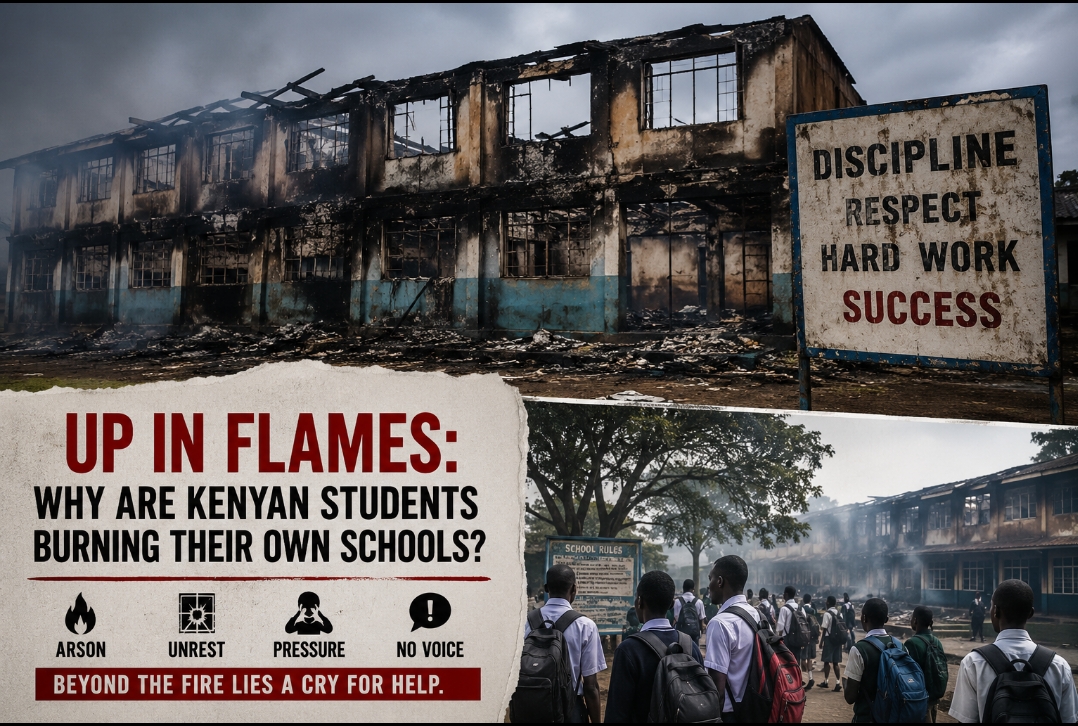
In many cases, unrest occurs close to examination periods or before schools break for holidays. Dormitories are frequently targeted, resulting in losses worth millions of shillings and forcing schools to divert resources meant for learning towards reconstruction.
According to education stakeholders, the effects go far beyond damaged buildings.
Searching for Answers
Education experts point to a range of factors that may contribute to student unrest.
These include academic pressure, mental health struggles, peer influence, substance abuse, family-related challenges and dissatisfaction with school policies.
Some counsellors argue that today's learners face pressures unlike those experienced by previous generations. Social media, academic competition and uncertainty about future opportunities have added new layers of stress to student life.
Others believe some students feel disconnected from decision-making processes within schools.
“Young people need discipline, but they also need to feel heard,” says a school counsellor familiar with student welfare programmes.
The Discipline Question
The recent incidents have reignited debate over whether schools have become too lenient or whether students are struggling with a lack of guidance and support.
While some parents advocate stricter disciplinary measures, education specialists caution that punishment alone may not solve the problem.
They argue that effective discipline combines clear rules, counselling services, parental involvement and open communication between learners and school management.
Beyond the Flames
As investigations continue into recent incidents, education stakeholders say the focus should not only be on identifying those responsible but also on understanding the conditions that allow unrest to occur.
The destruction of school property carries lasting consequences. Learning is interrupted, resources are lost, and trust within school communities is damaged.
“Every school fire should be treated as a warning sign,” says one education expert. “The real challenge is addressing the issues before the flames start.”
As students head home for the holidays, the debate continues. Behind every burnt dormitory lies a bigger question about discipline, communication and the changing realities facing Kenya's young people.