President William Ruto faces yet another delicate governance and foreign policy balancing act as he navigates America’s overtures to establish an Ebola quarantine facility and domestic opposition to the proposal.
The controversy places him between a rock and hard place as he tries to respect bilateral commitments and multilateral obligations in global health diplomacy while dealing with internal opposition that risks ending up in another demonstration.
Opposition from Kenyans, civil society groups, medical professionals and a court order already in place complicate Ruto’s alternatives in the matter.
The US-proposed Ebola quarantine and treatment arrangement intended to support the management of exposed individuals as part of a wider regional preparedness strategy.
On Friday, the US State Department said Secretary of State Marco Rubio spoke with President Ruto to discuss the ongoing Ebola outbreak and US-Kenya coordination on public health response efforts.
“The Secretary and President Ruto discussed coordinated efforts to secure vital medical supplies for Kenya and ensure the strength and preparedness of Kenya’s health system,” the statement said.
“The United States Government intends to commit $13.5 million toward Kenya’s Ebola preparedness efforts and has already committed to providing $112 million in bilateral assistance to the regional response.”
Additionally, the two agreed to maintain close coordination as the situation evolves and to continue leveraging the “strong US-Kenya health partnership that has proven essential in addressing public health challenges in Kenya and across East Africa”.
“The United States’ highest priority remains protecting the health and security of the American people by working to prevent the Ebola outbreak from reaching our shores,” it added.
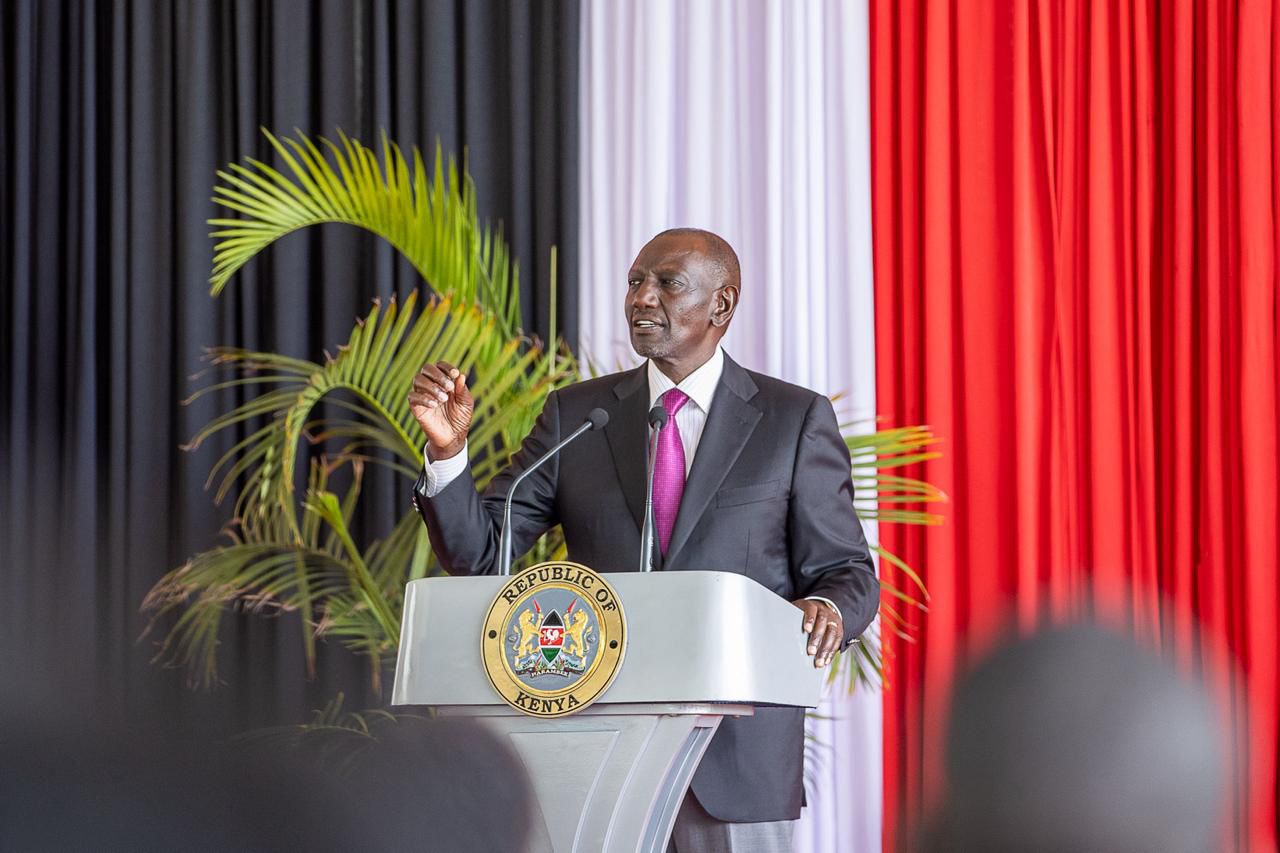
On Thursday, Ruto met ambassadors, development partners, multilateral agencies and key stakeholders to discuss the outbreak and mobilise collective action to contain the spread of the disease.
“We agreed on the importance of cooperation and avoiding isolationism, recognising that public health threats do not respect borders and require coordinated regional and global action,” he said.
“Kenya will continue to act transparently, responsibly and decisively to protect lives, while contributing to regional and global health security.”
He added that a National Response Committee under the leadership of Foreign Affairs CS Musalia Mudavadi will be formed to coordinate response, strengthen public awareness and preparedness.
However, the move to allow the quarantine centres faces opposition from medical professionals.
The Kenya Medical Practitioners, Pharmacists and Dentists Union has gone as far as warning of nationwide industrial action, accusing the government of exposing Kenya to undue health risks in exchange for foreign assistance.
The union has also questioned why Kenya appears to be considered for such a facility when countries closer to the outbreak epicentre in the DRC and Uganda are not being prioritised.
“This is not about partnership, it is about turning Kenya into a containment zone for a foreign health crisis,” the doctors’ union said in a strongly worded statement, demanding full disclosure of any bilateral arrangements.
Sections of civil society and health experts have also raised concerns about sovereignty, biosecurity risks and transparency.
The dispute escalated further after the High Court issued interim orders temporarily blocking the establishment of Ebola quarantine, isolation or treatment facilities.
This effectively places the proposed arrangement under legal suspension pending further hearings.
Katiba Institute, which is behind the petition, argued that the plan raises constitutional and public health concerns, particularly around transparency, risk allocation and the protection of Kenyan citizens in the event of a biosecurity breach.
At the same time, however, the US remains one of Kenya’s most significant health partners. A recent bilateral health cooperation framework, the first to be signed with an African country, is expected to channel up to $2.5 billion worth of health support over five years.
This includes funding for disease surveillance, outbreak response, HIV-Aids programmes, tuberculosis, malaria control and health system strengthening.
Washington has also separately pledged $112 million towards Ebola preparedness efforts in Kenya and the wider region.
This presents Ruto with the challenge of the overlap between foreign policy commitments and domestic political legitimacy in sensitive sectors such as public health.
On one hand, Kenya’s strategic relationship with the US has delivered significant financial and technical support to the country’s health sector, including disease surveillance systems and epidemic preparedness infrastructure.
On the other, the growing perception that Kenya could host facilities linked to foreign outbreak management has triggered fears of unequal risk distribution, which risks turning political just months to the General Election.
Medical professionals argue that Kenya’s public health system is already under strain, citing shortages of personnel, limited resources and gaps in critical care infrastructure.
They warn that introducing high-risk quarantine arrangements without full transparency could overstretch an already fragile system.
Civil society groups have echoed similar concerns, warning that any agreement involving foreign-managed Ebola facilities must meet strict constitutional and public accountability standards.