The Ministry of Health in Uganda has issued a strict medical advisory to male Ebola survivors, sparking an intense debate across social media platforms.
Official guidance shared by the ministry warns that men recovering from the virus must abstain from sexual relations for at least six months or use condoms consistently and correctly.
Health officials clarified that the Ebola virus can persist in seminal fluid long after a patient has fully recovered and cleared the virus from their bloodstream.
“Men who recover from #Ebola should avoid sex for at least 6 months or use condoms consistently and correctly. This is because the virus can stay in semen even after recovery,” the ministry said via official X account.
Public Confusion and Mixed Reactions
The directive, shared on the ministry's official X account, was met with a mixture of shock, confusion, and dark humour from the public. One user, @MiltonKiiza, reacted with disbelief, writing, "Sux months without what! Be serious, you people."
Another user raised concerns about alternative options, asking what individuals allergic to latex rubber should do. The ministry simply replied: "Abstain."
"Did I just read six months? Besides, are you trying to say that ebora is sexually transmitted too?" — @Drake_K_Mujuni
The ministry quickly defended the tough stance online. They reminded the public that "prevention is better than cure."
The Regional Picture: DRC and Uganda
According to data from the World Health Organization (WHO), the broader East and Central African region remains under a heightened threat from the virus. The latest outbreak is heavily concentrated in the Democratic Republic of Congo (DRC), where authorities have tracked 906 suspected cases and 223 suspected deaths.
Meanwhile, neighbouring Uganda has recorded nine confirmed cases and one death. The WHO has previously noted that the testes act as an immune-privileged site, allowing the virus to replicate silently in semen for months after a patient appears completely healthy.
Storm Over Kenya Quarantine Plans
While Kenya has not reported any active cases, it has found itself at the centre of an intense international health controversy. The High Court in Nairobi temporarily blocked a secretive plan by the Kenyan government and the United States to open a 50-bed Ebola isolation facility at the Laikipia Air Base in Nanyuki.
Under the $13.5 million (Ksh1.7 billion) agreement, American citizens exposed to Ebola in the DRC or Uganda would be flown directly to Kenya for monitoring. If they developed symptoms, they would then be flown to Europe for treatment.
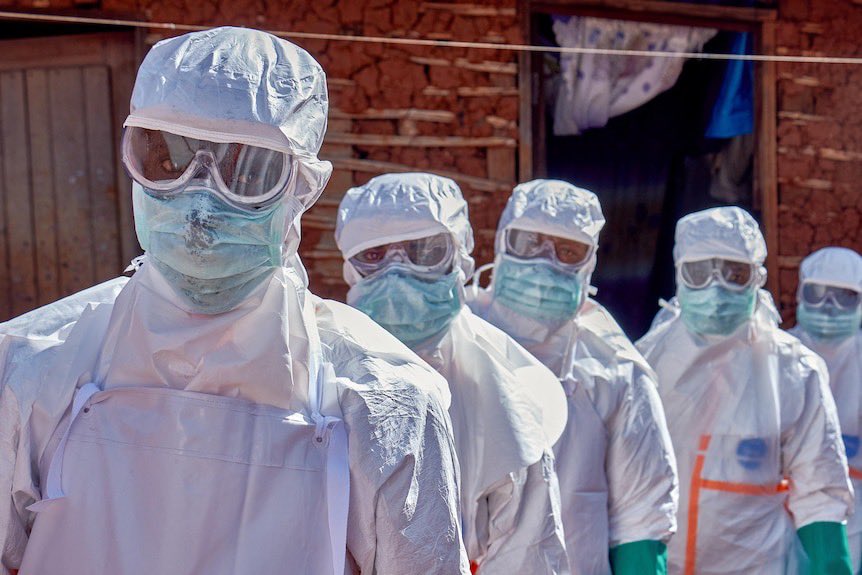
"If it is too dangerous for America, it is too dangerous for Kenya." — Kenya Medical Practitioners, Pharmacists and Dentists Union
The legal challenge, brought forward by the governance watchdog Katiba Institute, argues the facility was being set up without public participation or parliamentary oversight.
Local medical unions fiercely criticised the deal, questioning why American citizens could not be quarantined in their own country.
Government representatives defended the plan, stating that Kenya’s advanced medical infrastructure makes it a key player in global health security. However, Justice Patricia Nyaundi ordered the plans halted entirely until the case is formally heard.