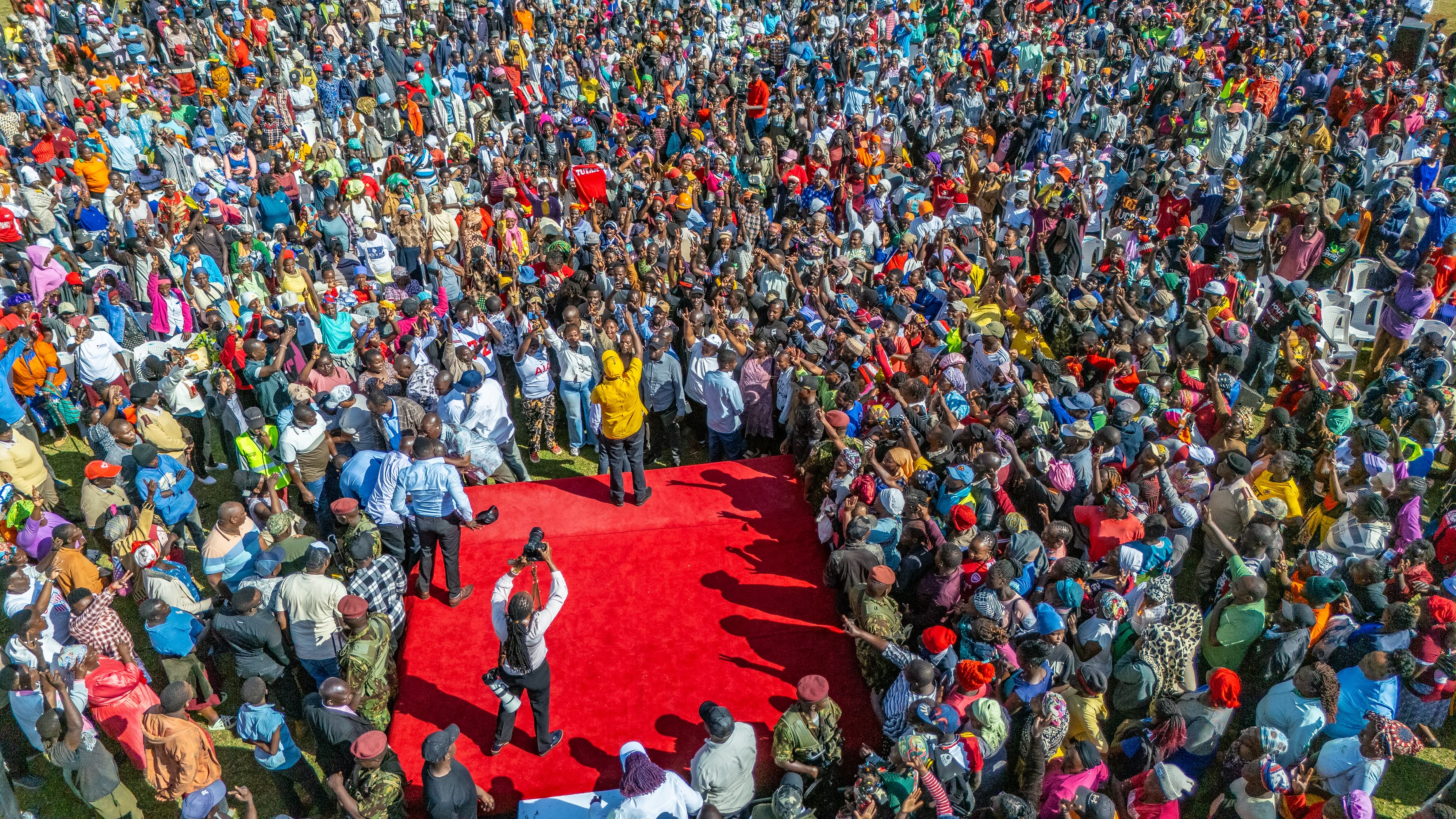
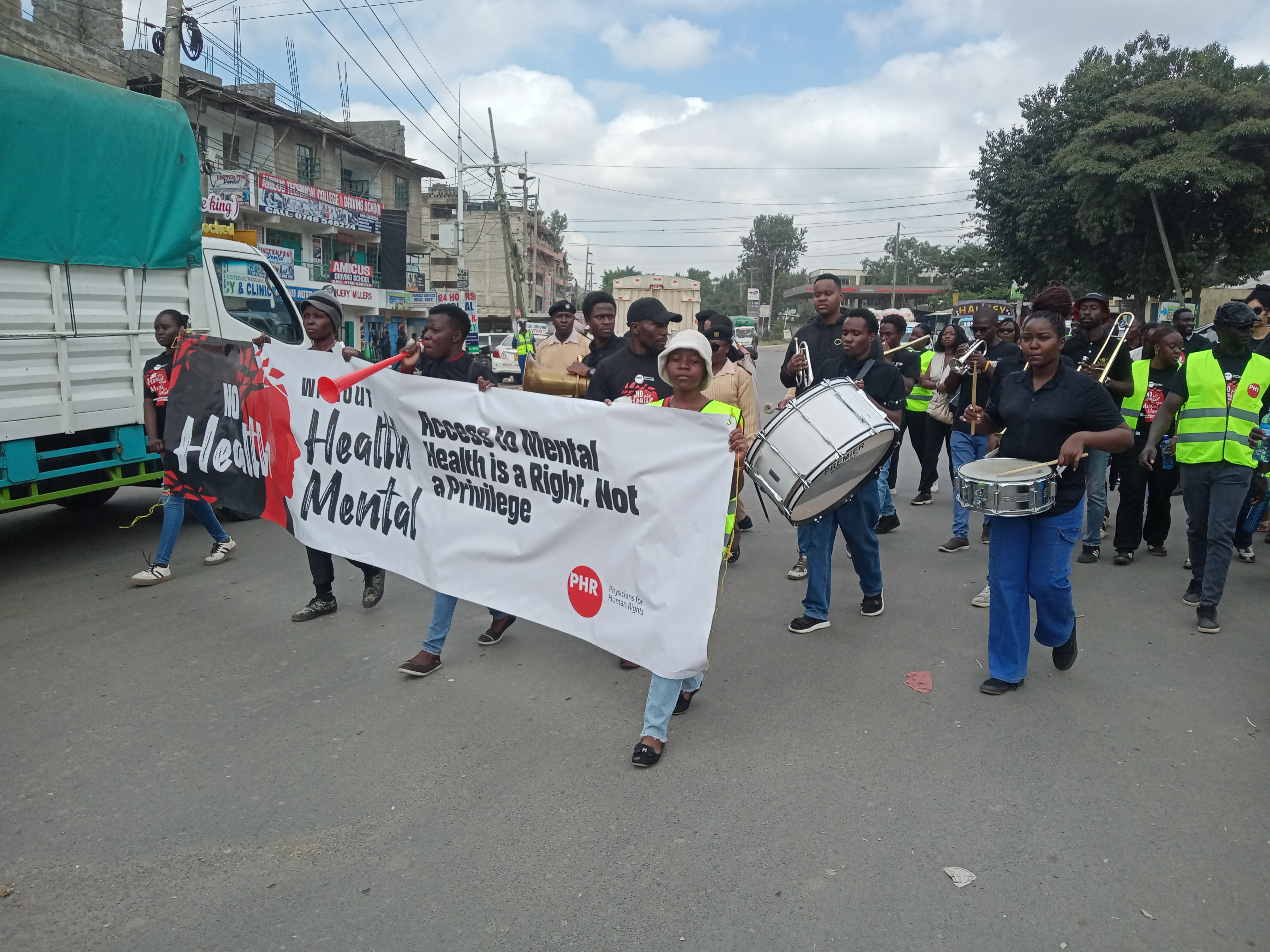
 Participants take part in a mental health awareness walk organised by Physicians for Human Rights (PHR) in Dandora, Nairobi, during Mental Health Awareness Month on May 29, 2026./CHRISTABEL ADHIAMBO
Mental health advocates and civil society organisations have called for increased investment in mental health services and stronger support systems for survivors of sexual violence, citing stigma, high treatment costs, and limited access to care.
The calls were made on Friday during a public awareness walk and advocacy forum organised by Physicians for Human Rights (PHR) in Dandora, Nairobi, to mark Mental Health Awareness Month.
During the event, the organisation also launched a report outlining barriers survivors encounter while seeking mental health care in Nairobi County. The event, themed From Silence to Support: Advancing Mental Health Care for Survivors of Sexual Violence, began with a community walk from Kinyago Police Station to Dandora 3 Social Hall, after which participants engaged in discussions on mental health and trauma-informed care.
PHR programme officer Dorcas Gitonga said survivors of sexual violence continue to face significant challenges in accessing mental health services, despite the growing burden of mental health conditions in the country.
“Many survivors walk into hospitals and only receive physical examinations, yet there is more to healing than medical tests. There is trauma, anxiety, and depression that also require attention,” Gitonga said.
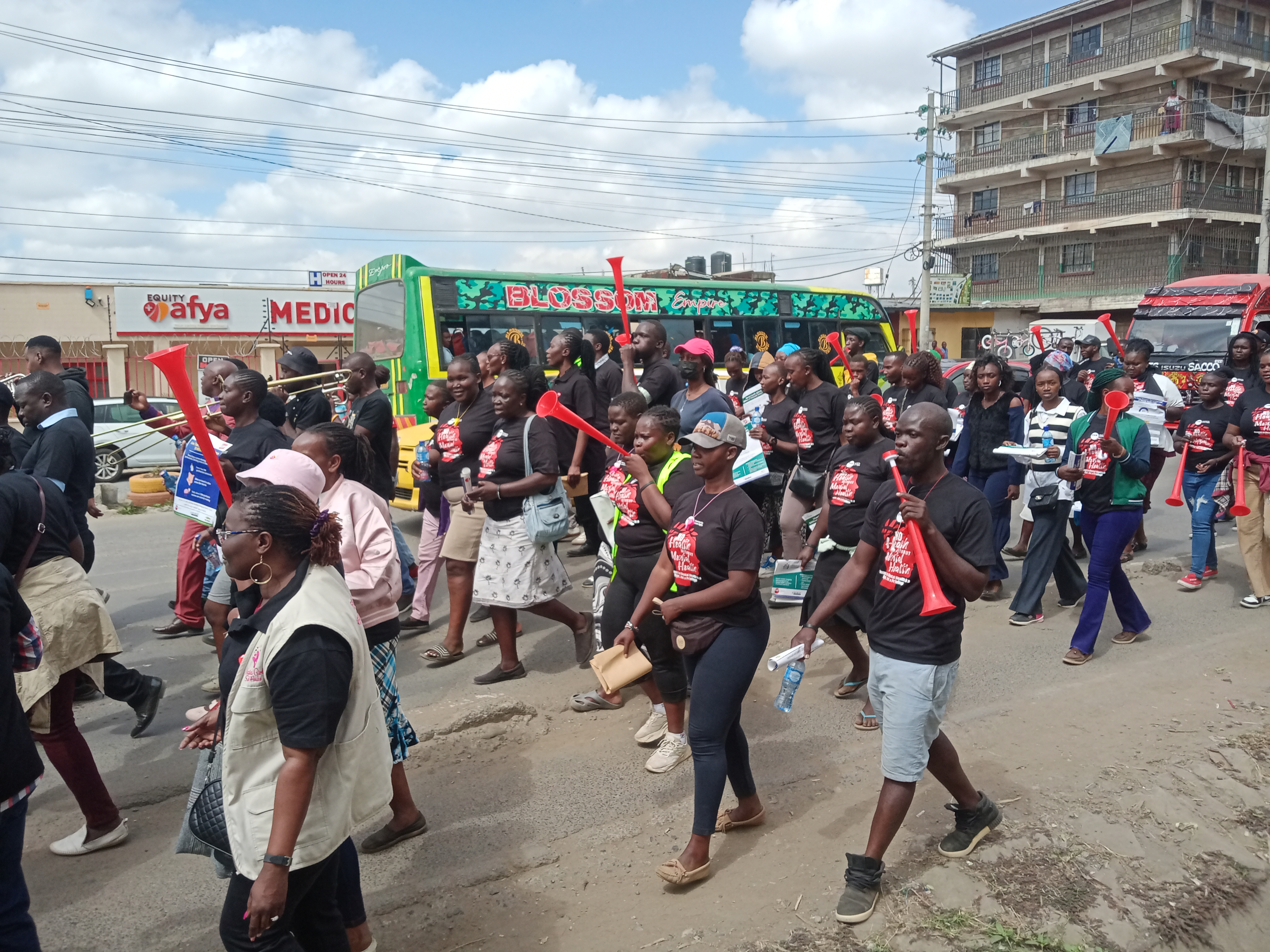 Participants take part in a mental health awareness walk organised by Physicians for Human Rights (PHR) in Dandora, Nairobi, during Mental Health Awareness Month on May 29, 2026./CHRISTABEL ADHIAMBO
She noted that outpatient mental health services are not yet fully covered under the Social Health Authority (SHA), leaving many Kenyans to pay out of pocket for counselling and psychiatric care.
“Something as simple as allowing people to use their SHA cards for outpatient mental health services would significantly improve access,” she said.
According to Gitonga, only about 15 per cent of Kenyans currently access mental health services, due to a shortage of specialists, limited public facilities, and the high cost of treatment.
“Seeing a psychologist can cost about Sh4,000, and some public hospitals only have specialists available once a week. That means the majority of Kenyans are left without support,” she said.
She also urged the media to help normalise conversations around mental health in order to reduce stigma and encourage more people to seek help.
PHR programme officer Daniella Khajidi said the organisation recently conducted a community-based “Photovoice” project in which survivors and human rights defenders documented their experiences accessing mental health care through photographs and voice recordings.
Khajidi said the findings revealed gaps in affordability, privacy, and awareness.
“Many survivors said they could not afford care, while others feared seeking services because there was no privacy in hospitals. Some would narrate their experiences while other patients or staff could overhear them,” she said.
She noted that Kenya continues to allocate limited resources to mental health services despite rising demand.
“The World Health Organization recommends that at least five per cent of a country’s health budget should go to mental health. In Kenya, we are currently far below that,” Khajidi said.
The report launched during the forum highlighted stigma and lack of awareness as key barriers preventing survivors from seeking help.
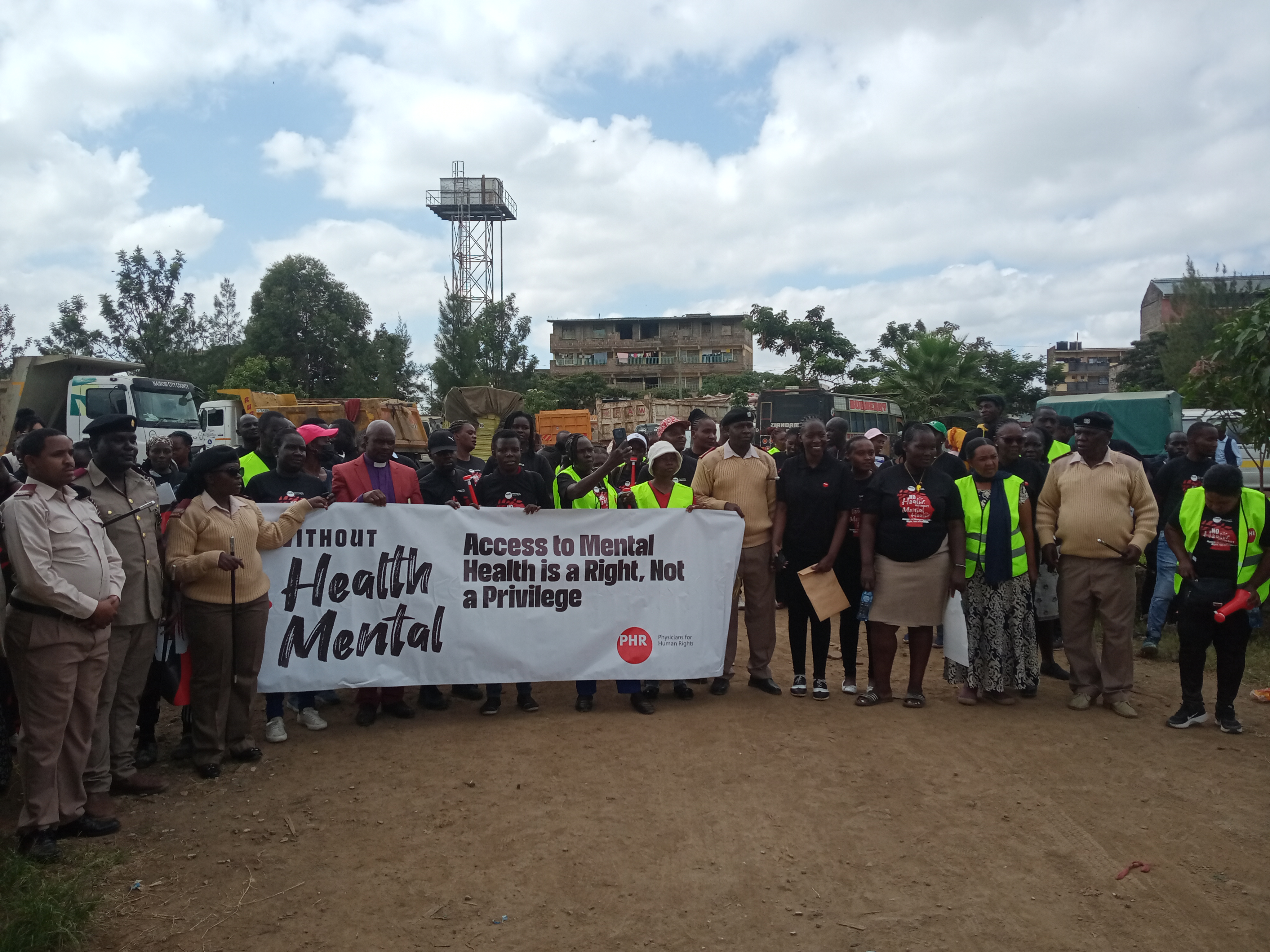 Participants take part in a mental health awareness walk organised by Physicians for Human Rights (PHR) in Dandora, Nairobi, during Mental Health Awareness Month on May 29, 2026./CHRISTABEL ADHIAMBO
Social worker Florence Keya from Maisha Girls’ Safe House said most survivors received at the shelter have experienced sexual violence and severe trauma requiring long-term psychosocial support.
“At the shelter, we provide temporary accommodation, trauma healing, psychosocial support, and help survivors access justice,” Keya said.
She said the organisation currently supports 46 girls aged between 10 and 19, most of whom are survivors of sexual abuse.
“Healing cannot be measured by time. Sometimes, even after six months, someone is still at the beginning of their recovery journey,” she said.
Keya called on the government to increase staffing levels and funding for mental health services in public facilities.
“You can find one mental health officer serving thousands of people in a month and only available a few days a week. The government must invest more in mental health facilities and professionals,” she said.
Participants at the walk also called for greater public awareness and stronger community support for survivors.
Mary Atieno, a Dandora resident, said she attended the event because many survivors suffer silently without knowing where to seek help.
“Mental health affects families and communities, yet many people are still afraid to speak out. I attended because survivors need to know they are not alone,” Atieno said.
Kevin Mwangi, another participant, said mental health was important to him after witnessing friends struggle with depression and trauma.
“Mental health is very personal to me because I have seen how trauma changes people. We need more safe spaces where people can seek help without fear or shame,” Mwangi said.
Organisers said the forum aimed to strengthen advocacy around trauma-informed mental health services while encouraging policymakers to prioritise survivors’ welfare and access to care.
The event brought together community leaders, healthcare workers, and civil society organisations working on gender-based violence and mental health advocacy in Nairobi.