Police and wildlife officers in Makueni County are investigating an incident in which human remains believed to belong to a missing 70-year-old woman were found scattered in a bush, in what officials suspect may have been a wild animal attack.
The incident was reported by a resident of Athi Salama in Mukaange Sublocation.
According to the report, skeletal remains were discovered scattered in bushes within a farm on Wednesday.
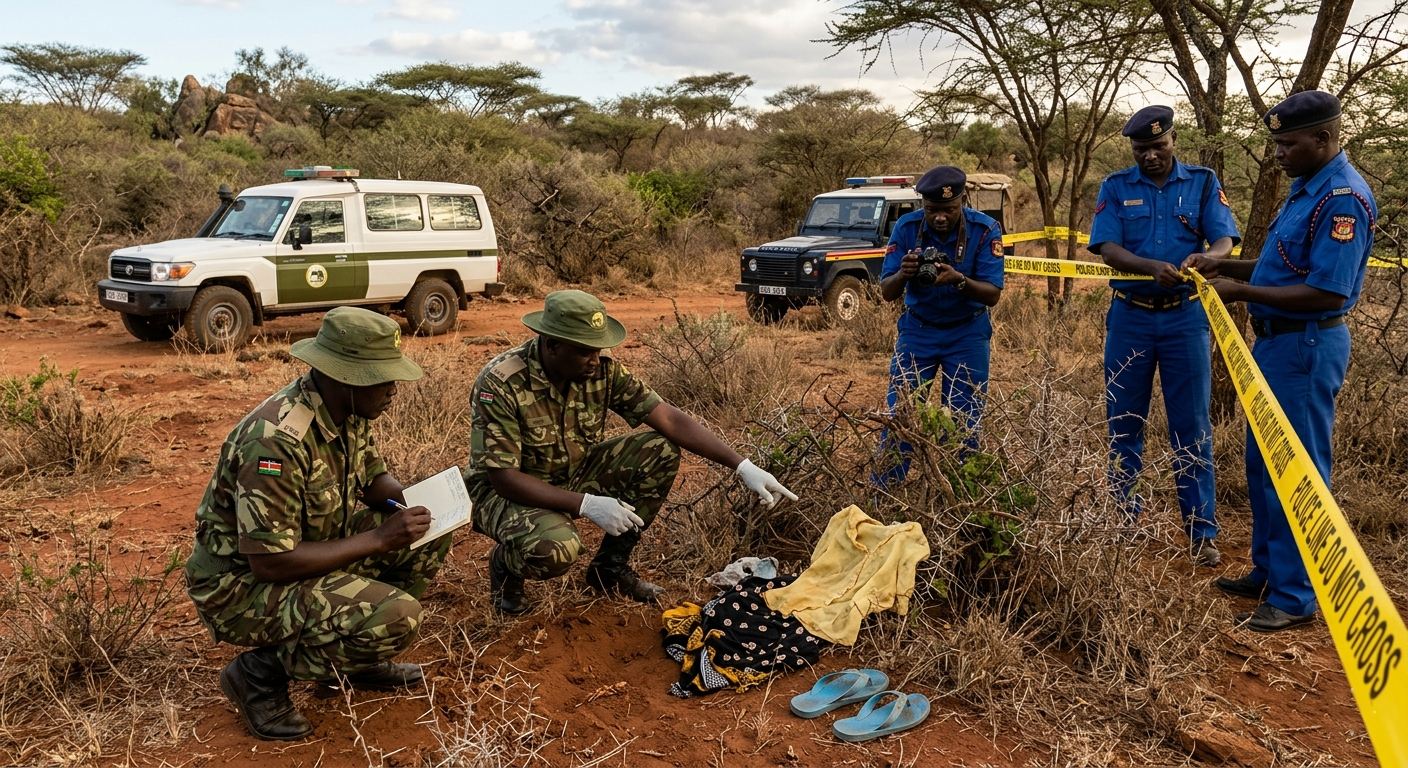
At the scene, investigators recovered a pair of sky-blue plastic shoes, a yellow blouse and a black leso, which the complainant said resembled clothing worn by his wife, Maritina Nzula Musau, who had earlier been reported missing at the station on April 20, 2026.
Police officers and personnel from the Kenya Wildlife Service (KWS) based in Kambu visited and processed the scene.
The remains were moved to Kambu Sub-County Hospital mortuary pending formal identification and further investigations.
Preliminary findings indicate the woman may have been attacked by wild animals in the area. Officials said they suspect an elephant could have been involved, although investigations are ongoing.
The incident comes amid growing concern over cases of human-wildlife conflict reported in different parts of the country.
In May 2025, Kenya introduced the third phase of its Human-Wildlife Conflict Compensation Programme, an initiative aimed at addressing such incidents and supporting affected families.
During the launch at Meru National Park, President William Ruto unveiled the Wildlife Conservation Card, a tool designed to support conservation efforts.
“Compensation is justice, but prevention is progress,” Ruto said, while emphasising the need for long-term solutions that benefit both people and wildlife.
“Through the Conservation Card, fencing, and community-led tourism, we are turning conflict into opportunity,” he added.
Developed in partnership with KCB Bank, the Wildlife Conservation Card is available in three tiers — Platinum (Elephant), Gold (Lion), and Silver (Cheetah).
A portion of every transaction made using the card — Sh10, Sh5, and Sh3 respectively — is channelled to the Wildlife Conservation Trust Fund.
The initiative aims to enable Kenyans and international supporters to contribute to wildlife conservation while promoting economic benefits for local communities.
Through the programme, Kenya hopes to strengthen efforts towards safer and more sustainable coexistence between humans and wildlife.