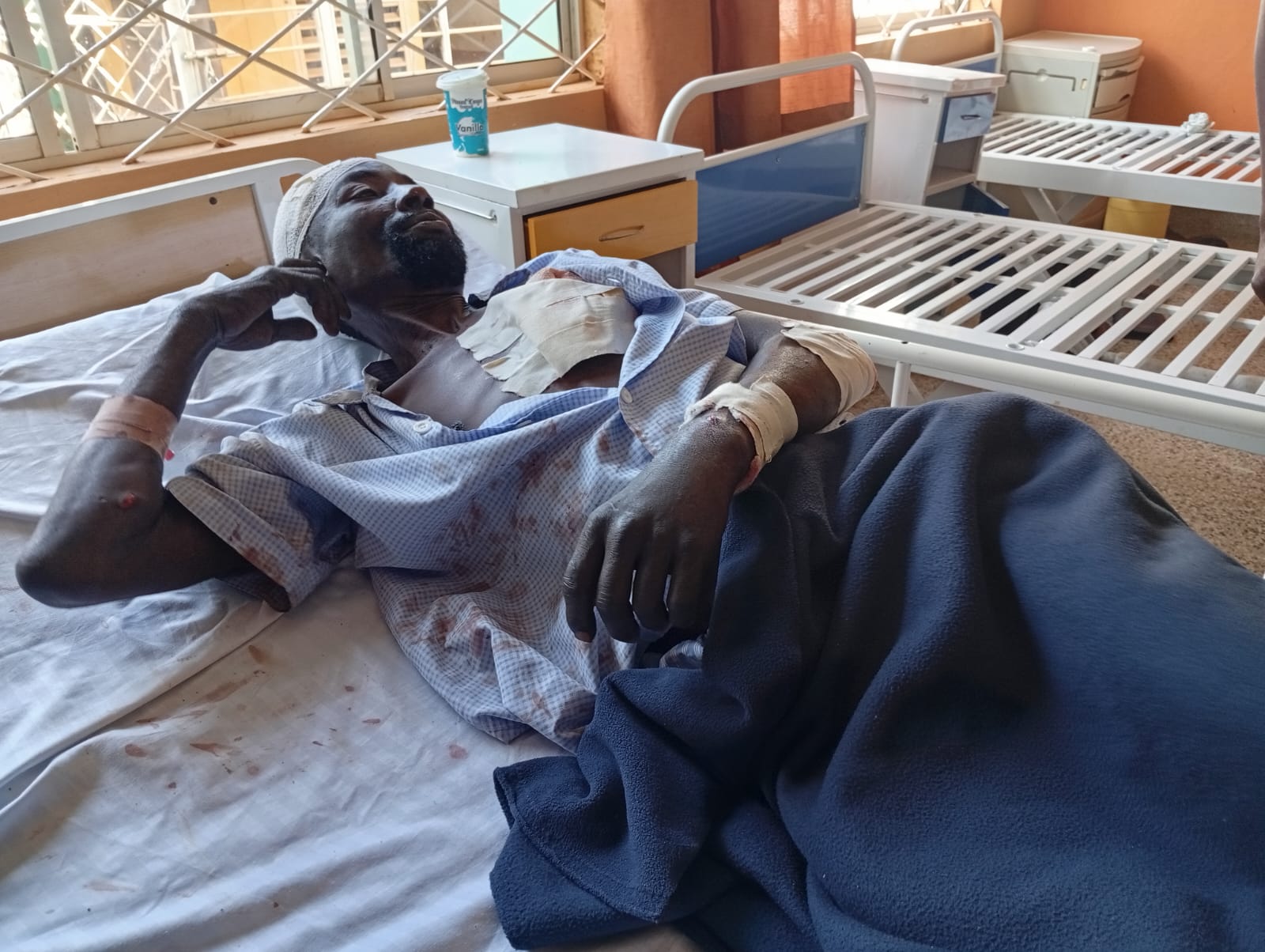
 Peterson Kariuki at Kerugoya Level Five Hospital, where he has been admitted after being attacked by a hippo/ ALICE WAITHERA
A man from Kiumbu village in Kirinyaga county is nursing injuries at a Mwea hospital after he was attacked by a hippopotamus within his home at night.
Peterson Kariuki was attacked at around midnight on Tuesday as he walked towards an outdoor toilet.
Speaking from his hospital bed, Kariuki said he only saw a huge object charging towards him before he was tossed into the air.
The animal then disappeared towards River Thiba.
“I just saw something charging towards me and within seconds I had been thrown up. After that it disappeared towards the river,” he said.
The attack left him with injuries on the head, arms and chest. Residents now fear the hippo could attack more people if urgent action is not taken.
The animal is believed to have strayed from River Thiba, with locals saying it has been roaming villages at night in search of food while destroying crops in nearby farms.
The incident comes barely weeks after another resident from the neighbouring village of Gakindu was allegedly attacked by what residents believe is the same hippo.
Residents have now accused the Kenya Wildlife Service (KWS) of failing to respond despite repeated complaints over rising cases of human–wildlife conflict in the area.
“This incident happened just weeks after another person from Gakindu was attacked. We raised concerns and demanded action, but nothing has happened so far,” Caroline Wanjiru said.
Most residents in Kiumbu village depend on farming for their livelihoods and say the roaming hippos have become a major threat not only to their safety but also to their crops.
They claim the animals invade farms at night, destroying crops with farmers counting heavy losses.
Residents say the destruction has become
frequent, with some farmers losing large portions of their harvest in a single
night.
The locals are now calling on the Kenya Wildlife Service (KWS) and the county government to act quickly and contain the situation before more lives are lost.
They warned that frustration among villagers is growing and that some residents could resort to taking matters into their own hands.
Residents also appealed to the government to speed up
compensation for victims of human–wildlife conflict, saying the current process
takes too long.
“Once victims fill compensation forms, there are delays before the money is released, and that process should be expedited so that victims can get justice,” Simon Muchiri said.