The Kenya Medical Association (KMA) has urged Kenyans to remain calm but vigilant following the Ebola Virus Disease outbreak reported in the Democratic Republic of Congo and Uganda.
In a public advisory issued on Thursday, the doctors’ body said Kenya had not recorded any confirmed Ebola cases linked to the current outbreak but warned that the country remains at risk because of regional movement and cross-border interactions.
The outbreak involves the Bundibugyo strain of the Ebola virus, which has been confirmed in eastern DRC and Uganda since May 2026.
According to KMA, the World Health Organization has classified the outbreak as a Public Health Emergency of International Concern.
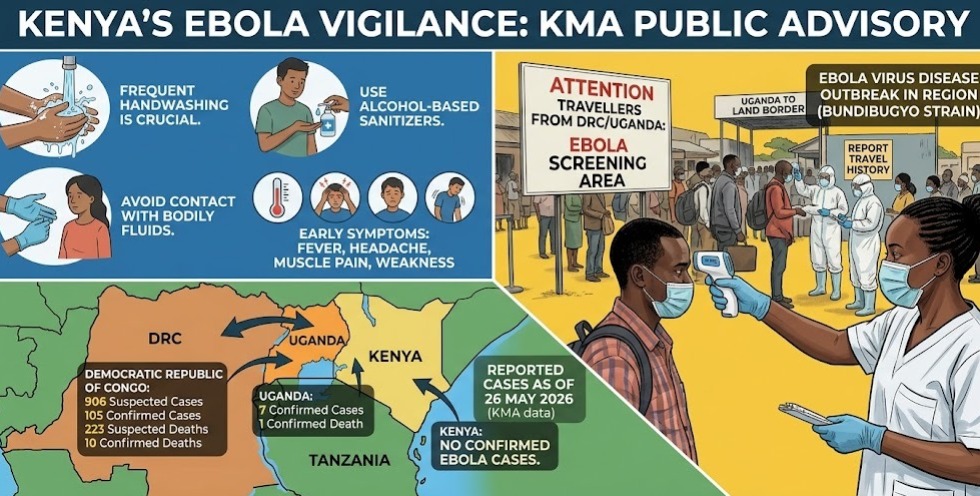
“As of 26 May 2026, the DRC has reported 906 suspected cases, 105 confirmed cases, 223 suspected deaths and 10 confirmed deaths. Uganda has reported seven confirmed cases and one confirmed death,” the statement read.
The association said suspected cases had also been reported in other parts of the world, prompting heightened surveillance and preparedness measures in several countries including Kenya.
KMA said the Ministry of Health had already activated preparedness systems, including surveillance at border points and airports, laboratory testing mechanisms and rapid response teams.
“You do not need to panic. You do need to be informed,” the statement read.
How Ebola spreads
The doctors’ association explained that Ebola spreads through direct contact with the blood or bodily fluids of an infected person.
It noted that the disease is not airborne and cannot spread through casual interactions such as sitting near someone or shaking hands.
According to KMA, symptoms usually appear between two and 21 days after exposure to the virus.
The early signs include sudden fever, severe headache, muscle pain, weakness, vomiting, diarrhoea, stomach pain and unexplained bleeding or bruising.
KMA urged Kenyans to seek medical attention immediately if they develop symptoms and have recently travelled to DRC, Uganda or South Sudan within the last 21 days.
The same applies to individuals who may have interacted with travellers from affected regions or with people who became ill after returning from those countries.
“Before the healthcare worker examines you, tell them about your travel history or contact history. This is the most important thing you can do for yourself, for your family and for the health worker caring for you,” the statement read.
Warning against stigma
The doctors’ body cautioned against fear, stigma and misinformation, saying previous Ebola outbreaks had shown that people often delayed seeking care due to fear of discrimination.
According to KMA, delayed reporting and concealment of symptoms contributed to preventable deaths during earlier outbreaks in Africa.
“If you have symptoms and a relevant travel or contact history, presenting to a health facility is the right thing to do. It protects you. It protects your family. It protects your community,” the association said.
KMA also appealed to healthcare workers to treat people presenting for screening with dignity and professionalism.
“A person who presents for assessment has not necessarily been infected. They are following public health guidance responsibly,” the statement read.
Preventive measures
The association advised Kenyans to observe strict hygiene and public health measures to reduce the risk of infection.
These include frequent handwashing with soap and water or alcohol-based sanitisers, avoiding contact with bodily fluids of sick individuals and avoiding handling bodies of people who die from unexplained illnesses.
Travellers returning from DRC, Uganda or South Sudan were advised to monitor themselves for symptoms for 21 days and report any illness promptly.
KMA further urged the public to rely only on verified information from the Ministry of Health and recognised health agencies.
“Do not share unverified information. Misinformation during disease outbreaks causes harm,” the statement read.
Concerns over Kenya’s preparedness
The association also raised concerns over the country’s current preparedness capacity amid reports that the United States government plans to establish a quarantine and treatment facility in Kenya for American citizens exposed to Ebola in the region.
KMA said it does not oppose international health cooperation but questioned whether Kenya’s own healthcare system has sufficient capacity to respond effectively to a large outbreak.
“The honest answer is that our current capacity has significant gaps,” the statement read.
The association said purpose-built viral haemorrhagic fever isolation units remain limited while Ebola-capable laboratories are few.
It also cited concerns from healthcare workers regarding shortages of personal protective equipment, diagnostic services and isolation support systems.
KMA referenced recent appeals by Health Cabinet Secretary Aden Duale for emergency financing to support border screening, diagnostics and protective equipment.
The association warned that lessons from the Covid-19 pandemic should guide current preparedness planning.
“International cooperation that serves the interests of wealthy nations while leaving African health systems under-equipped is not partnership; it is convenience dressed in diplomatic language,” the statement read.
KMA called on the government to ensure that any international cooperation agreements include commitments to strengthen Kenya’s own healthcare infrastructure and disease response systems.
The doctors’ body said pandemic preparedness remains a constitutional obligation that should protect all Kenyans equally.
“The KMA will continue to engage the Ministry of Health, Parliament and all relevant stakeholders on these matters to ensure adequate health service delivery to Kenyans,” the statement read.
The association advised members of the public with concerns or symptoms to visit the nearest public health facility, contact county public health officers or access Ministry of Health public health messages through *719# or by calling 719.