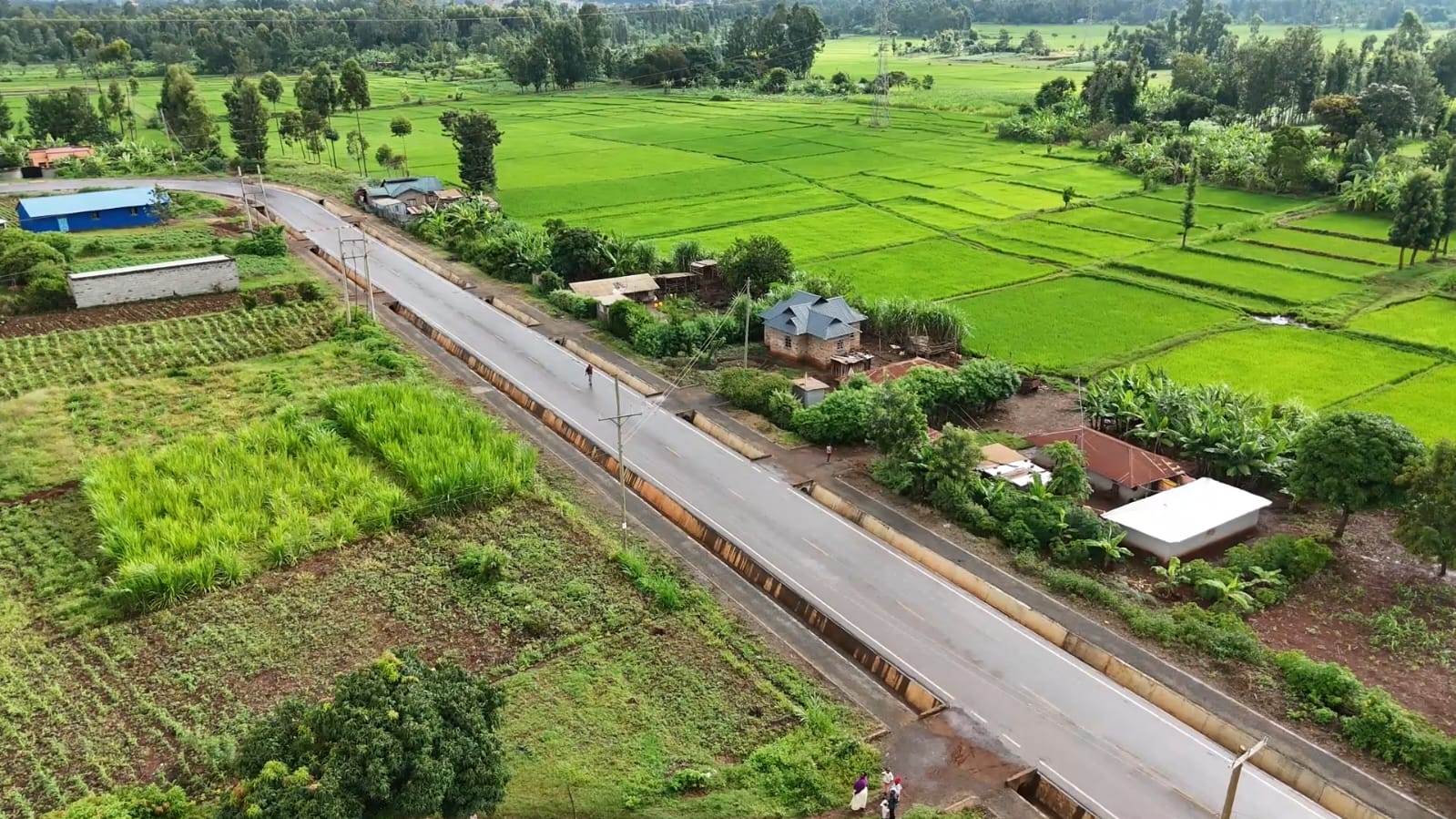
 The newly tarmacked Kutus–Kithiriti–Karie road that cuts across rice farms in Mwea, Kirinyaga county /ALICE WAITHERA
Rice and horticulture farmers in Mwea, Kirinyaga county, are banking on ongoing road rehabilitation projects to improve transportation, reduce post-harvest losses and increase farm profits.
For years, farmers in the expansive Mwea Irrigation Scheme have struggled with poor road infrastructure that made movement of produce difficult, especially during rainy seasons when some roads became impassable.
The poor state of roads has been one of the major setbacks facing rice farmers in the area, with many forced to spend heavily on transport while others incurred losses after produce delayed reaching markets.
Farmers have also been raising concerns over the state of infrastructure despite paying annual operation and maintenance fees to the National Irrigation Authority (NIA), saying the funds should help improve services within the scheme.
Several roads cutting across the irrigation scheme are currently under rehabilitation as part of efforts to open up farming zones, ease movement and support agricultural activities in the region.
Among the roads under construction is the four kilometres long Kutus–Kithiriti–Karie road, which farmers say is transforming transport and connectivity in the area.
“We have suffered for a long time because of poor roads. Transporting rice from the farms to Kutus town was very expensive and at times impossible when it rained,” rice farmer Hillary Njue said.
He said many farmers were previously forced to hire expensive transport or use motorcycles to ferry rice and tomatoes from farms to market centres because vehicles could barely access the area.
Njue said the ongoing road works are expected to significantly lower transport expenses and enable farmers to make better returns from their produce.
According to the farmer, the improved road network has enhanced connectivity between Kutus, Kabatiro and Kithiriti areas, easing movement for traders, farmers and residents.
Mwea remains Kenya’s largest rice growing scheme and is estimated to produce the biggest share of rice consumed in the country.
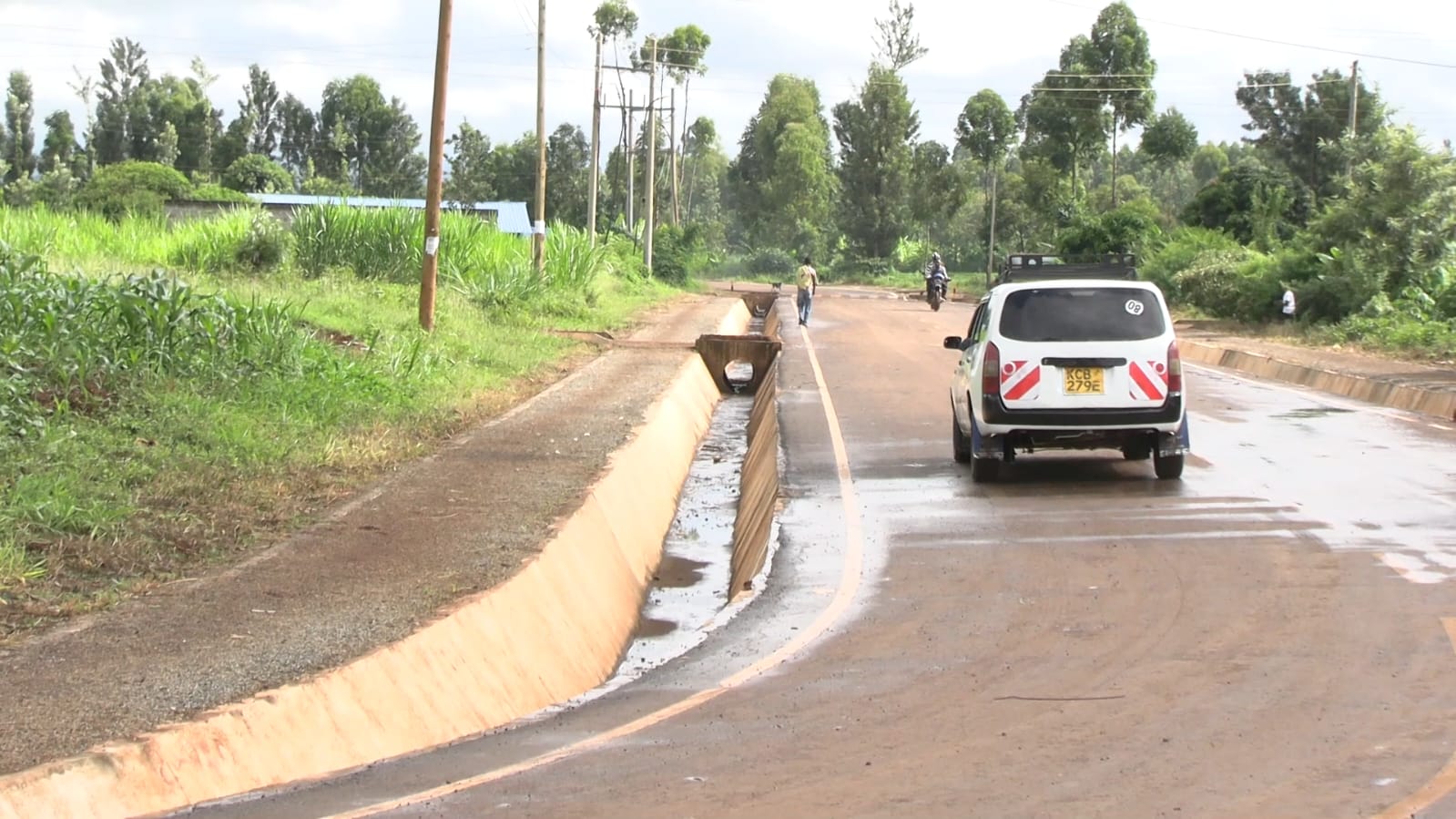 The newly tarmacked Kutus–Kithiriti–Karie road in Mwea, Kirinyaga county /ALICE WAITHERA
The scheme, established decades ago, supports thousands of families directly through rice farming while also creating employment opportunities in transport, milling, trade and irrigation-related activities.
Apart from rice farming, many residents within the scheme have increasingly diversified into horticulture farming where they grow tomatoes, vegetables and fruits for local and regional markets.
However, poor infrastructure has over the years remained a major challenge affecting transportation of produce and access to markets.
Horticulture farmer Evelyn Wambui said farmers dealing with perishable produce suffered huge losses due to delayed transport caused by bad roads.
“The roads are helping us a lot because buyers can now come directly to the farms. Previously, many avoided this area because of the poor condition of the roads,” she said.
Wambui said improved roads were now attracting buyers to farms, helping farmers secure better prices for their produce while reducing wastage.
She said residents were also benefiting from easier access to government services in Kutus town, which hosts the Kirinyaga county headquarters.
According to residents, the roads are also expected to improve access to schools, hospitals and markets by reducing travel time and transport charges within the constituency.
During rainy seasons, some sections of roads within the irrigation scheme would become muddy and nearly impassable, forcing residents to use longer alternative routes while transport costs for passengers and goods increased sharply.
Trader John Mwangi expressed optimism the improved infrastructure would stimulate economic growth in the region and attract more investors into the agricultural sector.
“The completion of the road network will not only improve agricultural activities, but also attract investment and improve the livelihoods of residents in the region,” he said.
Mwangi appealed to the government to extend the road towards Karie area to connect it with the Mwea–Embu highway, saying the move would further open up the constituency and spur development.
Farmers said improved infrastructure within the irrigation scheme is key to increasing production, reducing post-harvest losses and strengthening food security in the country.
The ongoing road works form part of broader efforts aimed at improving infrastructure in key agricultural zones to support farming activities and market accessibility across the region.