 Ahead of parliamentary debate, the proposals have generated mixed reactions from the public and stakeholders.
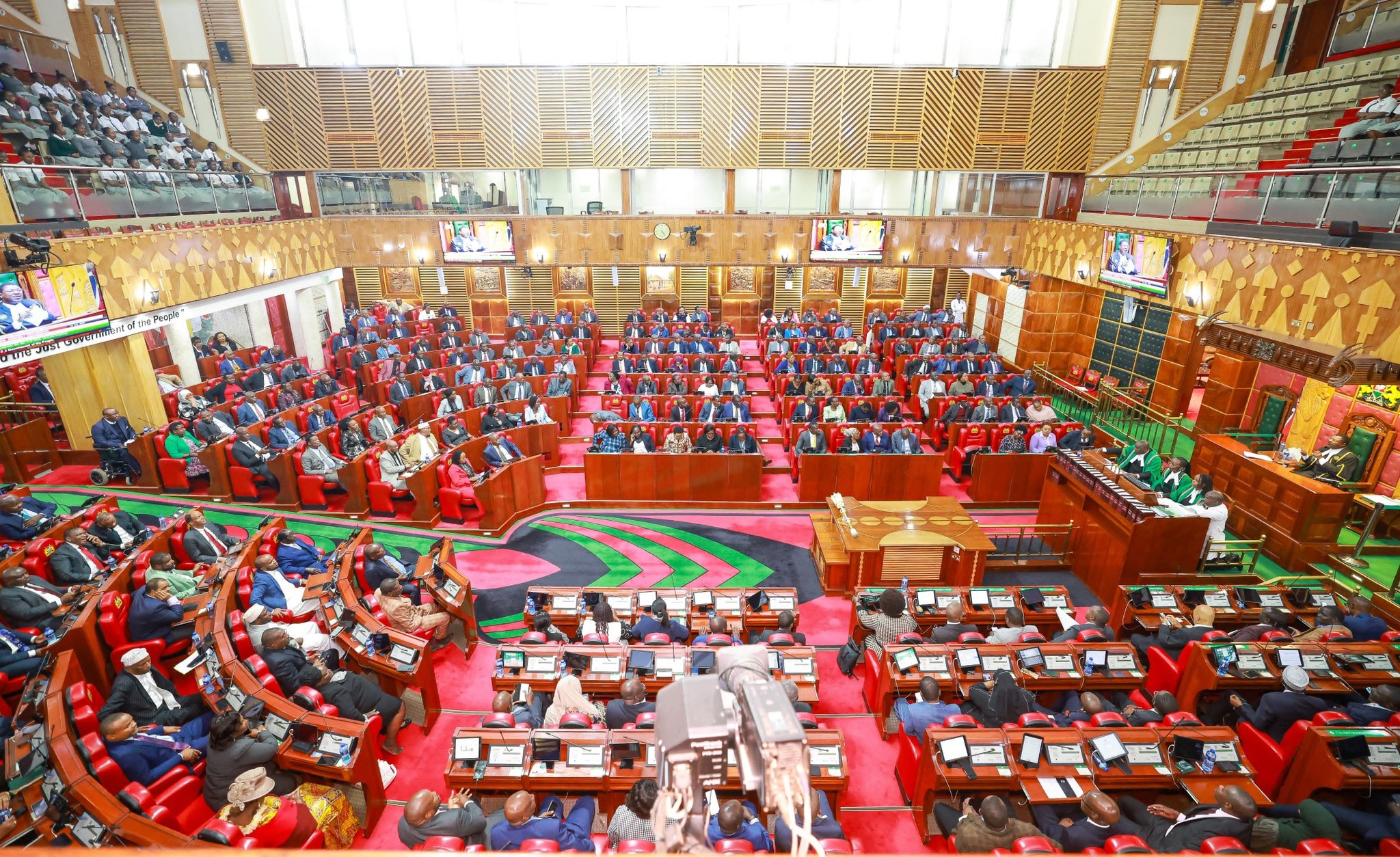
Debate on the Finance Bill, 2026 will be among the key items of business when the National Assembly resumes sittings on Tuesday afternoon after a short recess.
The Bill contains revenue-raising measures aimed at helping the government meet its Sh3.63 trillion revenue target for the 2026-27 financial year and has already sparked intense public debate ahead of parliamentary consideration.
Treasury CS John Mbadi has defended the revenue-raising proposals, saying they do not aim to tax Kenyans more, but rather increase the tax base by ensuring more people pay taxes so those already paying do not strain.
MPs will consider public input and, unless amended, the measures are expected to take effect from July 1, 2026, or January 1, 2027, following Presidential assent.
Ahead of parliamentary debate, the proposals have generated mixed reactions from the public and stakeholders.
Finance bills have come under heightened scrutiny since the widespread anti-tax protests of June 2024, placing increased pressure on lawmakers to carefully examine proposed revenue measures.
Former LSK president Faith Odhiambo said while the Bill contains some positive provisions, including a reduction in corporate tax for non-resident companies from 37.5 per cent to 30 per cent, MPs "should not merely rubber-stamp what the Treasury has placed before it".
"We cannot afford a repeat of June 2024. Parliament must discharge its oversight role with the seriousness this moment demands. Every clause must be scrutinised. Every punitive or ambiguous provision must be rejected or amended," she said.
While appearing before the National Assembly’s Finance Committee during public hearings, the Institute of Certified Public Accountants of Kenya (ICPAK) urged MPs to strike a balance between fiscal stabilisation and economic growth, while proposing the removal or overhaul of specific contentious clauses.
Other Bills scheduled to undergo First Reading include the Central Bank of Kenya (Amendment) Bill, the Kenya Revenue Authority (Amendment) Bill and the Quantity Surveyors' Bill.
The House is also scheduled to consider a motion on the Senate amendments to the Division of Revenue Bill, 2026, alongside the recommendations of the Budget Appropriations Committee.
The Senate has proposed that any revenue shortfall in the 2026-27 financial year be borne by the national government.
Senators also want any revenue collected above projections to accrue to the national government and be used to reduce borrowing or offset public debt, which currently stands at Sh12 trillion, equivalent to roughly 67.3 per cent of the country's Gross Domestic Product.
In addition, the Senate has proposed amendments to the First Schedule on revenue sharing between the national and county governments, capping projected shareable revenue for the 2026-27 financial year at Sh2.9 trillion.
Under the proposal, the national government would receive Sh2.4 trillion, while the Equalisation Fund would get Sh10 billion, equivalent to 0.5 per cent of shareable revenue.
County governments would receive Sh454.7 billion, representing 22 per cent of the total shareable revenue.
The Public Finance Management (Amendment) Bill has also been scheduled to undergo Second Reading, alongside the Plant Protection Bill.
The House will also debate a procedural motion seeking to reduce the publication period for the Central Bank of Kenya (Amendment) Bill and the Kenya Revenue Authority (Amendment) Bill from 14 days to six days.