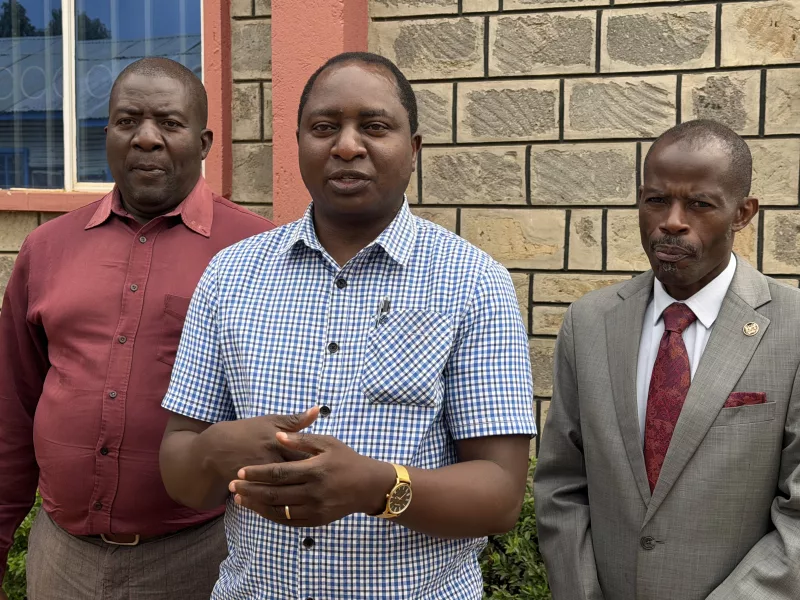
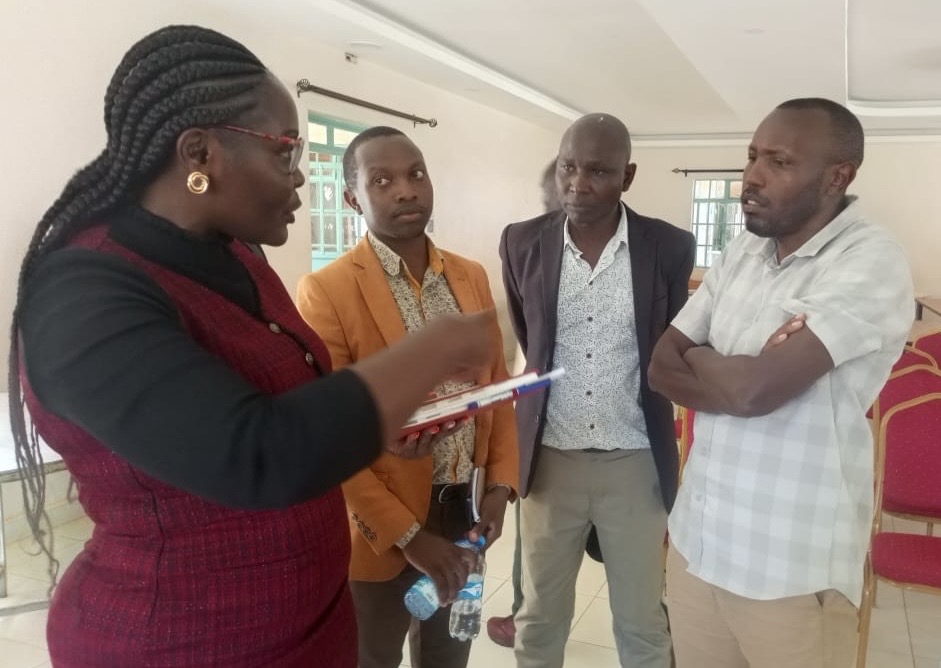
 Bungoma deputy county commissioner Millicent Ngoya interacts with Chepkitale Indigenous People Development Project executive director Peter Kitelo during a sensitisation meeting in Bungoma.
Members of the Ogiek community in Mt Elgon subcounty have protested alleged political interference in the registration of more than 80,000 acres of ancestral land in the region.
A section of community leaders accused some politicians of attempting to sabotage the ongoing registration process.
Ogiek Council of Elders chairman Johnson Takur claimed there was a political scheme to derail the exercise and appealed to both the national and county governments to intervene.
“This registration process is key to peace in Mt Elgon and those politicising it should stop. We appeal to the national and county governments to support the process so it is concluded amicably and our people can live harmoniously,” Takur said.
The community reclaimed the disputed land after a lengthy court battle with the Bungoma County government, which had gazetted Chepkitale location, home to about 9,000 Ogiek families, as a national game reserve.
The Ogiek challenged the move in court after security officers forcefully evicted residents, exposing them to hardship and suffering.
In 2022, the Environment and Land Court in Bungoma ruled in favour of the community, declaring the land rightfully belonged to the Ogiek.
To secure the land, the community later applied for formal registration, which was approved through Gazette Notice No. 2678 issued by the Ministry of Lands in February.
However, the registration process has sparked resistance from some local politicians, whom the community now accuses of sabotage.
In a letter dated May 15, 2026, the community requested Bungoma County Commissioner Thomas Sankei to convene a sensitisation meeting with stakeholders to facilitate the process.
The request was granted through a letter signed by Deputy County Commissioner Millicent Ngoya on May 18.
But when the meeting was convened at the Bungoma county commissioner’s boardroom, it was briefly disrupted after Mt Elgon MP Fred Kapondi demanded the inclusion of key stakeholders, such as the Kenya Wildlife Service and Kenya Forest Service.
Kapondi argued the meeting was incomplete without the two agencies.
Despite the interruption, the meeting proceeded. It was chaired by Ngoya and attended by senior Ministry of Lands officials, led by Amos Musyoka.
Chepkitale Indigenous People Development Project executive director Peter Kitelo criticised attempts by politicians to frustrate the process.
“It is unfair for some politicians to frustrate a community that fought through the courts to reclaim what rightfully belongs to them,” he said.
Local politician Philip Chemosit said unresolved land disputes had fuelled conflict and slowed development in Mt Elgon.
“Politicians opposed to this process are enemies of development. I support the registration because it will have significant economic benefits,” Chemosit said.
The community has now appealed to President William Ruto to honour his pledge to address challenges facing minority and marginalised groups.
“We seek the President’s personal intervention because he promised to ensure issues affecting minority communities are addressed,” Takur said.
Officials from the Ministry of Lands are expected to hold a public engagement session with the Ogiek community in Chepkitale on the registration process.
INSTANT ANALYSIS
The Chepkitale land dispute highlights the complex intersection of indigenous land rights, conservation interests and local politics in Kenya. For the Ogiek community, the registration process represents long-awaited recognition after years of evictions, legal battles and marginalisation. However, resistance from some political leaders signals fears over control, access to resources and future influence in Mt Elgon.