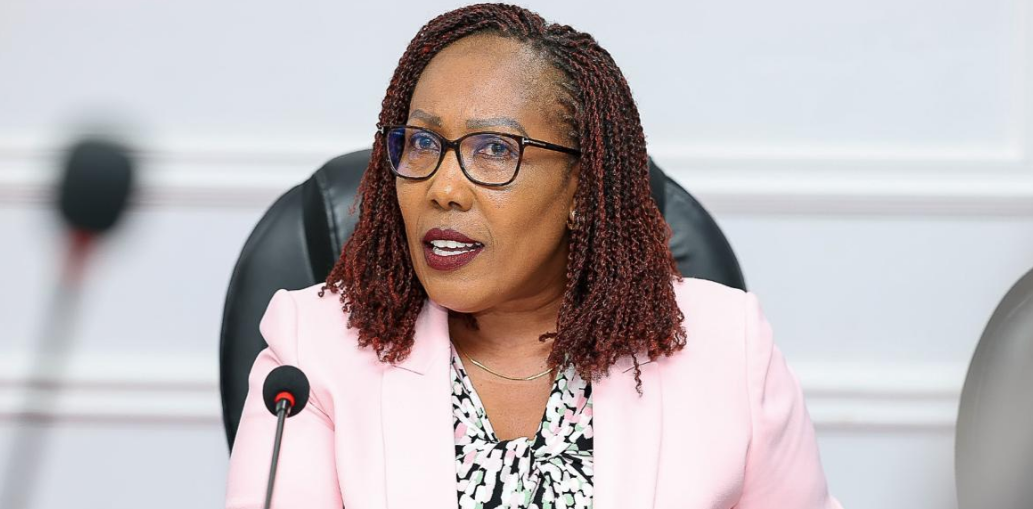
 Council of Governors Chief Executive Officer Mary Mwiti /HANDOUT
Kenyans eagerly waits for the promise of safe and reliable water at their taps. The Constitution guarantees the rightto clean and safe water in adequate quantities and reinforces devolution as the governance framework best suited to deliver proximate and accessible services. Yet, with less than 4 years left to get to 2030, the reality of Vision 2030, remains sobering. Access to safe water supply services still stands at 74%; this varies widely across counties, with rural, arid and marginalised communities still underserved. Only 40.9 per cent have access to safely managed sanitation while access to sewerage stands at 16 per cent. These gaps translate into heightened public health risks, environmental degradation and increased vulnerability to climate hazards such as flooding.
The question, therefore, is not simply where we are and where we need to be, but what must be done to achieve universal access. The sector has undertaken notable reforms, including policy, legislation, and institutional reforms. For instance, The Water (amendment) Act 2024, introduced mechanisms to attract private sector investment into much needed bulk water capital development. To facilitate effective implementation of Public - Private Partnerships (PPPs) in the water sector and safeguard functional assignments, deeper engagement with all stakeholders including County Governments and Water Service Providers (WSPs) is required.
At the heart of the Constitution, lies the principle of subsidiarity, which positions County Governments as the primary agents for delivery of water and sanitation services, whether in markets, public schools, urban areas, national government installations or even the refugee camps. Despite the progress witnessed, significant challenges persist including; limited and stretched budget allocation for water and sanitation services, uncoordinated implementation of water projects outside county planning frameworks undertaken by water works development agencies, regional development authorities and NG-CDF and, high operations and maintenance costs.
Additionally, large-scale investments under the PPP financing mechanisms or by national government agencies often fail to address last-mile connectivity requirements including the affordability 0f the tariffs as well as infrastructure designs that facilitate access at all levels. Consequently, Water Service Providers are left to shoulder debt repayment obligations despite limited involvement and insufficient disclosure of the financial and operational implications at the project inception stage. These challenges are compounded by high non-revenue water and technical capacity gaps. Asset transfers to WSPs, weak institutional governance further undermine the service delivery. Without addressing these systemic issues, universal access will remain elusive not only by 2030, but beyond.
Achieving universal access demands a deliberate shift towards localising both the principle and practice of service delivery to Counties. Equally important, is the need to close the financing gap by increasing budgetary allocations at the county level, complemented by performance-based financing and well-structured private sector participation. Investments must prioritise last-mile connectivity to ensure that infrastructure translates into actual access for households.
Similarly, the current non-revenue water standing at 44 per cent is unsustainable and necessitates the adoption of smart metering, timely leak detection and repair, infrastructure upgrades and elimination of illegal connections. Efficient billing systems and facilitative water tariffs will further enhance financial sustainability while protecting consumers.
Institutional coordination remains critical. The national government must strengthen its role in providing technical assistance and capacity building, ensuring that policies and regulatory frameworks are facilitative rather than duplicative. Water Works Development Agencies should focus on developing bulk infrastructure and building capacity, rather than engaging in direct service provision. In the same breadth, Water Services Regulatory Board (WASREB) should adopt a more facilitative approach that supports water service providers through progressive performance improvement frameworks, while maintaining regulatory oversight.
The Water Sector Trust Fund should continue to channel resources whether public, private, or blended towards underserved and pro-poor areas. At the same time, stronger collaboration between Counties and the Water Resources Authority (WRA) is necessary to ensure sustainable water resource management, informed planning and equitable allocation.
Ultimately, County Governments must be at the forefront in the efforts towards achieving universal water and sanitation access targets within their jurisdiction. This requires strengthening county legislation, integrating water and sanitation investment plans into County Integrated Development Plans (CIDPs) and Annual Development Plans (ADPs) and ensuring adequate budgetary prioritization.
Enhanced coordination with sector players is essential. The water sector intergovernmental coordination framework remains central towards ensuring progress is tracked jointly between both levels of Government in the journey towards achieving universal access in communities and households across Kenya.
Written by Mary Mwiti, EBS – Chief Executive Officer, Council of Governors