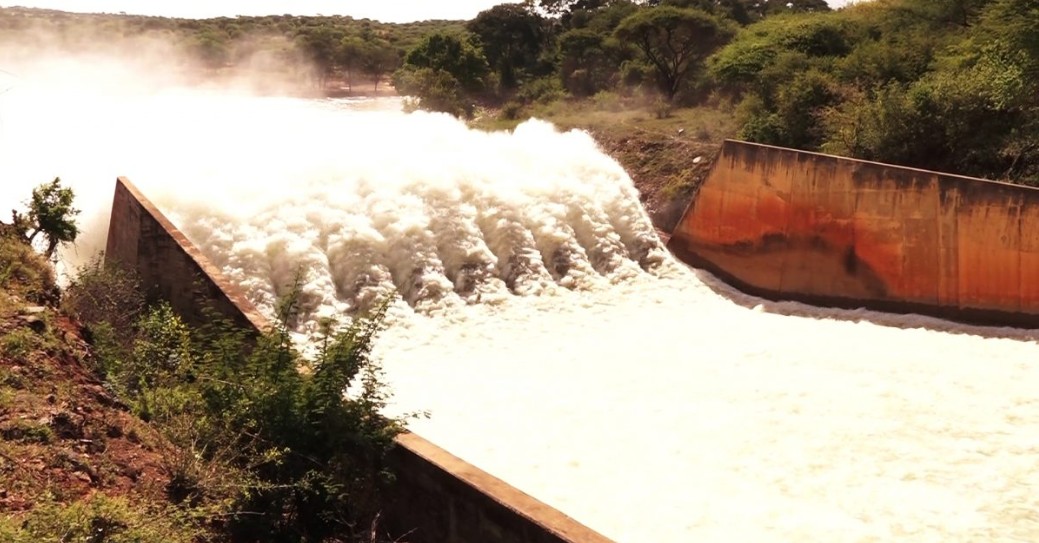
 Seven Forks Dams Hydropower Cascade.
However, while the foundations are strong, Kenya has not yet fully optimised its renewable energy potential. Greater focus is now needed on coordination, financing, and efficient management of key energy projects if the country is to meet rising demand and ensure long-term energy security.
At the centre of this transition is geothermal energy. Kenya sits on one of the world’s richest geothermal belts, particularly within the Rift Valley. With improved investment and stronger project management, geothermal power could become the backbone of the national grid, providing stable baseload electricity that supports economic growth and industrial expansion.
Currently, Kenya’s electricity demand stands at about 30 GWh daily and is expected to rise significantly in the coming years. Geothermal energy, if fully developed, could supply a large share of this demand, reducing pressure on hydropower systems that are increasingly vulnerable to climate variability. This would allow other renewable sources such as wind, solar and biomass to complement the grid without causing instability.
Major projects such as the Lake Turkana Wind Power plant and emerging solar initiatives also demonstrate Kenya’s potential to scale clean energy production. Yet some of these projects have not reached full capacity due to challenges such as financing gaps, transmission constraints, and coordination inefficiencies between stakeholders. Addressing these bottlenecks is essential if Kenya is to maximise returns on its renewable energy investments.
Beyond generation, Kenya must now prioritise grid modernisation. The national grid needs significant upgrades to accommodate the increasing share of intermittent renewable energy sources. Without investment in transmission infrastructure and storage systems, power instability and curtailment risks will continue to undermine progress.
Energy storage, in particular, will be critical. Battery systems and other storage technologies can help balance supply and demand, ensuring that excess power generated during peak production periods is not wasted. At the same time, local manufacturing of renewable energy equipment should be encouraged to reduce costs, create jobs, and strengthen energy security.
Policy reform is also urgently needed to accelerate adoption at both household and industrial levels. For example, targeted financing and credit facilities could support farmers and rural communities to adopt biomass energy systems for cooking and lighting. Similarly, public institutions such as schools and hospitals should be supported to install solar systems to improve reliability and reduce electricity costs.
Industries, too, should be encouraged to adopt backup renewable systems to ensure uninterrupted production during outages, reducing economic losses and improving competitiveness.
Another important reform is the introduction of net metering. This system allows households and businesses that generate their own electricity, typically through solar panels, to feed excess power back into the national grid and receive credits on their bills.
Under net metering, a bi-directional meter tracks both electricity consumed from the grid and electricity supplied to it. At the end of the billing cycle, users are billed only for their net consumption. This system reduces waste, improves energy efficiency, and encourages wider adoption of renewable technologies.
If implemented effectively, net metering could ease pressure on the national grid, reduce reliance on fossil fuels, and contribute to a more decentralised and resilient energy system.
Public awareness and education must also form part of Kenya’s energy transition strategy. Many citizens still lack clear information on renewable energy systems, maintenance, and the benefits of backup power solutions. Establishing dedicated training institutions and partnerships with technical organisations would help build local expertise and support long-term sustainability of renewable energy projects.
Finally, Kenya should expand solar energy deployment across both urban and rural areas to improve energy access and reliability. Decentralised solar systems can play a key role in reaching underserved communities, particularly in remote regions where grid expansion remains costly.
In conclusion, Kenya’s renewable energy journey is already a success story, but the next phase will determine whether that success becomes transformative. With stronger investment in geothermal energy, modernised infrastructure, supportive policies such as net metering, and expanded public education, Kenya can move from potential to full energy security.
As the energy transition continues, one principle remains clear: progress will depend not only on generating power, but on managing it wisely, distributing it fairly, and investing in systems that last.