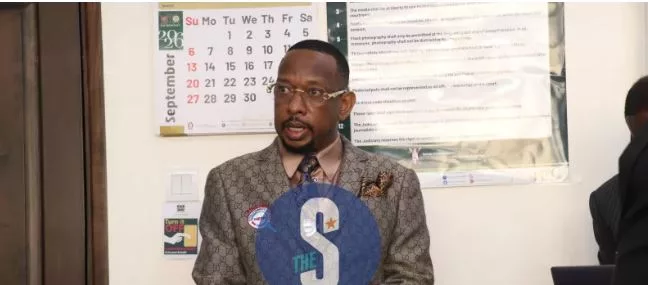
Chief magistrate Jeal Praxades Aduke during an interview with the Star in Nairobi on May 15 / LEAH MUKANGAI
Chief magistrate Jeal Praxades Aduke has witnessed the collapse of marriages from the front row of Kenya’s justice system.
During her time at the Family Division of the courts between 2023 and early 2025, she handled an average of 15 decisions every week involving divorce, matrimonial disputes and battles over property.
In a single month, that translated to between 40 and 60 judgments.
Yet, despite years spent listening to heartbreak, betrayal and bitter family disputes, she still believes deeply in marriage.
“I believe in marriages that work,” she says.
“I believe that the marriage institution is a beautiful institution when done right.”
Her judicial journey began at the Milimani commercial courts before she moved to the Family Division and later to Makadara law courts.
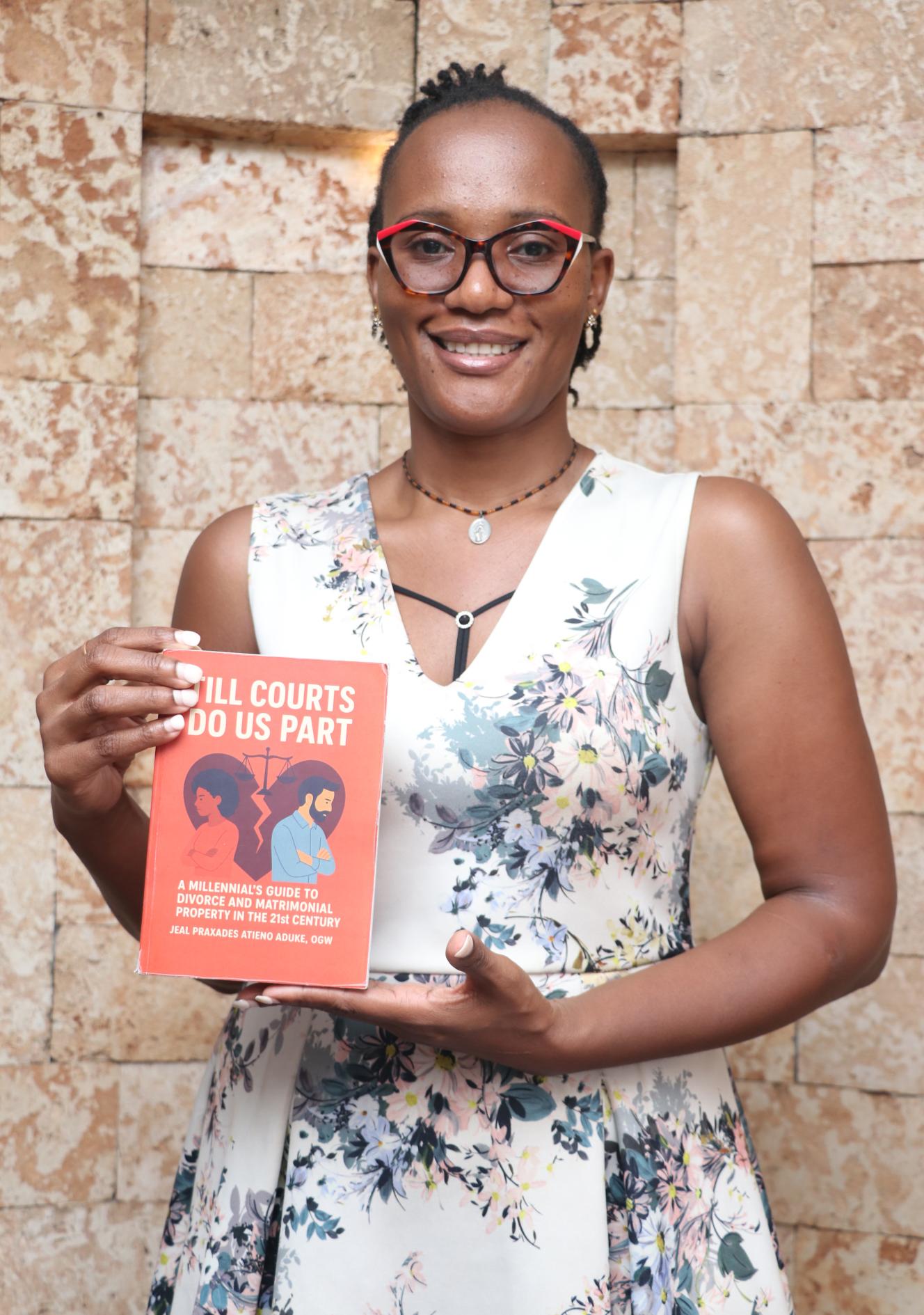
Along the way, she wrote her book, Till Courts Do Us Part: The Millennial’s Guide to Divorce and Matrimonial Property in the 21st Century.
The idea for the book came unexpectedly through social media.
After a controversial ruling she made on customary law unions — later upheld on appeal — many Kenyans criticised her publicly online.
But behind the scenes, the same people would quietly message her seeking guidance about troubled relationships, divorce, custody battles and property disputes.
“They’ll be there with their scenarios, giving me a brief scenario of what situation they are dealing with,” she says.
“Then asking what should I do in this scenario? What happens? What does the law say about it?”
That contrast between public outrage and private desperation pushed her to write a book that explains the often confusing intersection between love, marriage, tradition and the law.
For Aduke, the growing number of cases in family courts does not necessarily mean people have become more confrontational or litigious.
Instead, she believes society is becoming more self-aware and emotionally honest.
“People are being more open, people are being more self-aware, and people generally know that there’s more to life in terms of acknowledging the painful and emotional journey they go through when they are at the family court,” she says.
In her view, many people are no longer willing to suffer silently in unhappy or abusive unions simply to maintain appearances.
And despite the perception that marriage is collapsing as an institution, Aduke insists Kenyans are still embracing it.
“People are still getting married,” she says.
The real problem, according to her, is that couples avoid difficult but necessary conversations before saying “I do”.
“They are not having conversations on prenuptial agreements, they are not having conversations on legacy, they are not having conversations on investments, they are not having conversations on custody.”
She believes society must begin viewing marriage not only through a romantic lens, but also as a long-term legal and financial partnership.
To explain her point, she compares marriage to a commercial contract.
Couples, she says, should scrutinise it with the same seriousness they would apply to a business partnership because marriage carries emotional, legal and financial consequences that can last generations.
Still, she is quick to clarify that discussing finances or prenuptial agreements does not mean couples are planning for divorce.
“You’re entering marriage because you believe this is a beautiful institution, you believe it’s a partnership that is meant to last forever, or until death does you part,” she says.
“You’re having these conversations because that is the journey of life.”
For her, such discussions are about clarity, honesty and protection, not preparing an escape route.
One of the biggest misconceptions she encounters involves customary marriages. Many couples, she says, wrongly assume that once traditional rites are completed, they are legally married.
“People do it and then they go back and sit pretty,” she says.
“As far as the government is concerned, you are not married.”
She points to Section 59 of the Marriage Act, which states clearly that proof of marriage is a certificate.
Without official registration, many couples later discover they have limited legal protection despite years spent together.
Her book, she explains, was deliberately written in simple conversational English rather than dense legal language filled with Latin phrases and courtroom jargon.
It explains the five forms of marriage recognised under Kenyan law: Christian marriages, civil marriages conducted at the Attorney General’s chambers, Hindu marriages, customary law marriages and, though governed under Sharia and handled by Kadhis’ courts, Muslim marriages.
“As long as you are subject to the laws of Kenya, please, and as long as you understand English language, get yourself the book,” she says with a laugh.
What has surprised her most is the audience embracing the book.
Although she wrote it with millennials in mind, many of the strongest responses have come from Gen X parents and older readers.
Some buy the book for their daughters in customary unions, while others call simply to thank her for helping their children understand the legal side of marriage.
Millennials, she jokes, are more discreet.
“They are very proud about it, but they are doing it silently,” she says, noting that many prefer sending private WhatsApp messages instead of posting public reviews.
Aduke is also a strong believer in mediation over courtroom warfare.
Every family case filed in court is screened to determine whether parties are willing to resolve their disputes through mediation before proceeding to litigation.
Some couples, she says, have even withdrawn divorce cases after sitting down to talk and reaching agreements outside court.
“Those kind of little things make me happy,” she says.
“It shows people are embracing mediation, it shows that people are willing to come to the table to talk.”
If she could leave Kenyans with one message, it would be simple: couples must begin talking openly about the partnership side of marriage.
She says many men already understand marriage as an economic and legal partnership, while many women still approach it mainly from an emotional or romantic perspective shaped by religion, culture and Hollywood fantasies.
“The moment you start having those conversations, we’ll start discussing what is my contribution. Is it monetary? Is it non-monetary?”
That distinction matters, she says, because Kenyan law recognises both financial and non-financial contribution within marriage.
Away from the courtroom and legal files, Aduke describes herself as an introvert who enjoys quiet hobbies.
She spends her free time swimming, making pottery, visiting galleries and attending orchestra performances. She also laughs about her unusual habit of collecting reusable drinking bottles.
Rather than calling herself a health enthusiast, she prefers the term “self-aware”.
“I prefer to take one moment at a time,” she says.
Perhaps that philosophy explains why, despite seeing thousands of marriages unravel in courtrooms, she still believes in love and commitment.
Marriage, she insists, still works. But only when couples stop pretending that romance alone is enough.