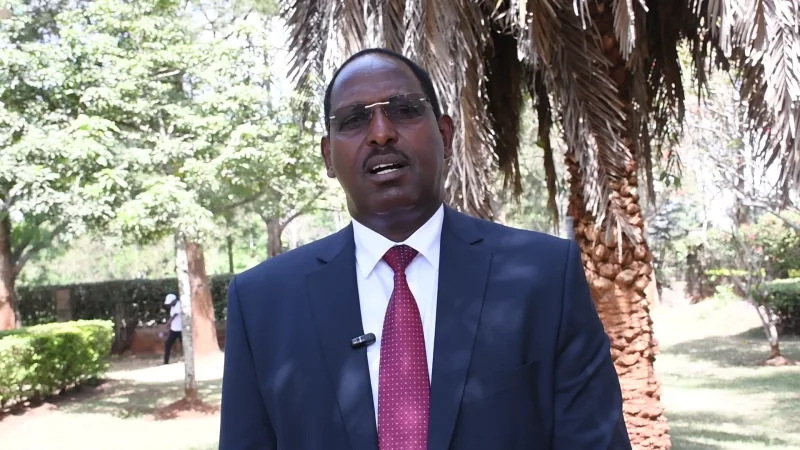
 Government efforts to calm the nationwide fuel strike are facing resistance from transport operators who insist the measures announced so far fall far short of addressing the crisis.
The government now finds itself under mounting pressure to resolve the nationwide matatu strike after transport operators rejected fresh fuel concessions and vowed to sustain the shutdown despite losing hundreds of millions of shillings daily.
What began as a protest against soaring fuel prices has rapidly evolved into a wider economic and political crisis, exposing growing frustration over the cost of living, public trust and the government’s handling of fuel subsidies.
For a second straight day on Tuesday, thousands of Kenyans walked long distances to work after most public service vehicles remained off the roads in protest against fuel price hikes announced by the Energy and Petroleum Regulatory Authority (EPRA).
The prolonged shutdown has disrupted schools, businesses and supply chains, while many workers have been arriving late and exhausted after trekking for kilometres to workplaces.
Others instructed to work remotely are also struggling with limited home-working resources, inadequate internet access and unreliable electricity, reducing productivity and economic output.
At the centre of the standoff is the sharp rise in fuel prices announced by EPRA on May 14, which increased the price of Super Petrol by Sh16.65 per litre and Diesel by Sh46.29 per litre.
The increase pushed the price of Super Petrol in Nairobi to Sh214.25 per litre while Diesel rose to Sh242.92.
The Transport Sector Alliance, which includes matatu operators, cargo transporters, ride-hailing drivers, motorcycle operators and private motorists, responded by calling a nationwide strike that paralysed movement in major towns and cities.
The government has since attempted several measures to calm tensions and persuade operators to return vehicles to the roads.
On Monday evening, Energy CS Opiyo Wandayi and Transport CS Davis Chirchir held talks with transport sector representatives at Transcom House in Nairobi in what had been anticipated as a breakthrough meeting.
Emerging from the talks, Wandayi announced a revised fuel pricing arrangement that would lower diesel prices while increasing kerosene prices in a bid to narrow the gap between the two products.
“For prudence purposes and to eliminate the risk of fuel adulteration on account of this huge disparity and to save the motor vehicles that are operating using diesel from possible malfunction as a result of possible adulteration, we are going to bridge the gap between the prices of diesel and kerosene,” Wandayi said.
“That will mean therefore that the price of kerosene will have to go higher as that of diesel comes lower to bridge that gap.”
Under the revised review, Diesel prices dropped by Sh10.06 per litre while Kerosene prices rose by Sh38.60. Super Petrol prices remained unchanged.
In Nairobi, Super Petrol, Diesel and Kerosene now retail at Sh214.25, Sh232.86 and Sh191.38 respectively.
But the concession immediately ran into resistance from operators who argued the reduction was far below their expectations.
In a dramatic moment broadcast live on television, a Matatu Owners Association official openly contradicted Wandayi moments after the CS declared that a consensus had been reached.
“With all due respect, we did say that we are going to communicate here clearly and openly that we have not agreed so that we carry this conversation forward,” the official, who has since been identified as Kennedy Kaunda, said.
“We didn't agree, they gave us Sh10 and we did state Sh35 up to Sh30. The strike is still on.”
The public disagreement laid bare the widening trust deficit between the government and transport operators, with many Kenyans questioning whether there was genuine political goodwill to resolve the crisis.
Part of the government’s broader strategy to cushion consumers has included reducing VAT on fuel from 16 per cent to eight per cent.
However, matatu operators and a section of political leaders have questioned whether this measures has had any real effect on the overall cost of fuel.
Kiharu MP Ndindi Nyoro dismissed the intervention as insignificant, accusing the government of exaggerating its role in cushioning Kenyans from high fuel prices.
Nyoro particularly faulted Treasury CS John Mbadi’s warning that fuel prices could rise to Sh311 and Deputy President Kithure Kindiki's claim that the price could hit Sh400 per litre without government intervention.
He argued that at the current eight per cent VAT rate, Super Petrol is approximately Sh15.87 cheaper per litre.
At 16 per cent full levy, that would be Sh31.74, making the cost per litre of Super Petrol in Nairobi Sh245.99.
"So where are they getting 311 and 400?” Nyoro posed.
Mbadi has defended the government’s position, warning that exhausting the available Sh5 billion fuel stabilisation cushion would leave the country vulnerable to even higher prices in future.
“This is a world crisis and if we continue like this, it will be like Covid. It is a problem that only America and Iran have to solve. They must stop the war,” Mbadi said.
“If they do not stop the war, we will somehow have to live with some consequences.”
Deputy President Kithure Kindiki also defended the government, accusing protest organisers of misleading Kenyans by blaming the state for a global oil crisis driven by instability in the Middle East.
“Ni uchochezi kwa mtu yeyote kusema ya kwamba ni serikali ambayo imepandisha bei ya mafuta,” Kindiki said.
“There is no single nation on earth including oil producing countries like US, which produce their own fuel, their prices have increased all over the world.”
But transport operators and motorists continue questioning why some neighbouring countries whose fuel passes through Kenya continue recording relatively lower prices.
They have also demanded greater transparency on how the Sh5 billion fuel subsidy is being utilised.
Meanwhile, tensions continued rising Tuesday as running battles erupted in parts of Murang’a between protesters and police over the fuel price hikes.
Similar scenes were witnessed in Githurai as police clashed with protesters with videos circulating on social media showing heavily armed police officers dispersing crowds using tear gas as protesters retaliated by hurling stones at the officers.
The continued unrest now leaves the government facing a difficult balancing act between protecting already strained public finances and containing a rapidly escalating economic and social crisis.
For ordinary Kenyans, the crisis has already become painfully real — through long walks to work, soaring fares, rising food prices and shrinking household budgets.
Even as the matatu industry reportedly loses more than Sh500 million daily from the shutdown, operators remain defiant, signalling that the standoff may continue unless more substantial concessions are offered.