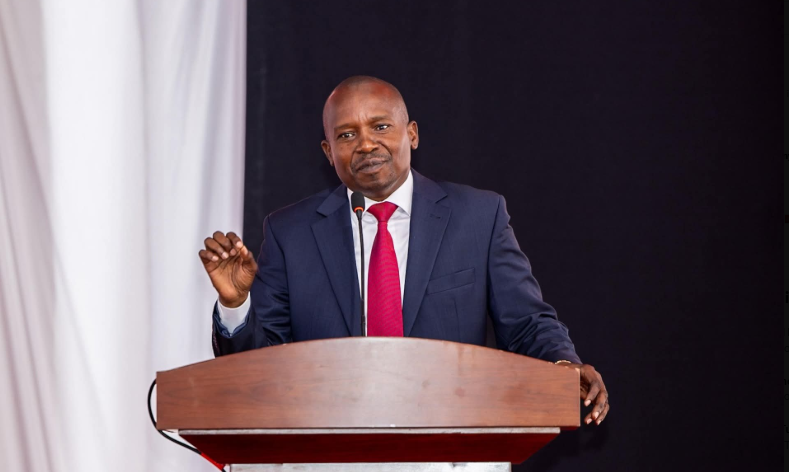
 Deputy President Kithure Kindiki /HANDOUT
Deputy President Kithure Kindiki has defended the government’s handling of the fuel crisis, insisting the sharp rise in pump prices is largely driven by global instability linked to the ongoing conflict involving the US, Israel and Iran.
His remarks came as matatu operators agreed to temporarily suspend the nationwide transport strike for one week to pave way for further negotiations with the government over fuel prices and the rising cost of operations.
The suspension offered temporary relief to millions of commuters who had endured two days of transport paralysis marked by long walks to work, inflated fares and widespread disruption of business activities.
In a statement Tuesday, Kindiki said the government remained committed to cushioning Kenyans from the effects of rising global oil prices through subsidies and tax interventions.
“The sharp increase in fuel prices around the world has resulted from the US/Israel and Iran war which has led to escalation of fuel costs, freight, insurance and logistics,” Kindiki said.
“The government is committed to cushioning the people of Kenya by mitigating the effects of this crisis.”
The Deputy President said the government had already reduced VAT on fuel from 16 per cent and spent Sh12 billion over the last two months to stabilise pump prices.
“VAT has been reduced from 16 per cent, Sh12 billion has already been used to subsidise fuel prices in the last two months and more subsidies will be applied for future stocks until the situation levels out,” he said.
Kindiki also defended the government’s decision to partially reduce diesel prices by Sh10 per litre following talks between transport operators and officials led by Energy CS Opiyo Wandayi and Transport CS Davis Chirchir at Transcom House on Monday evening.
“Effective today, the price of diesel has been reduced by Sh10 per litre as a sign of government commitment to continuous engagement with stakeholders to achieve a sustainable management of the global fuel price spike,” he said.
The reduction followed protests by matatu operators and transport sector players after the Energy and Petroleum Regulatory Authority increased the price of Super Petrol by Sh16.65 per litre and Diesel by Sh46.29 per litre in its May-June fuel review.
The increase pushed the price of Super Petrol in Nairobi to Sh214.25 per litre while Diesel initially rose to Sh242.92 before the revised reduction.
The nationwide strike, organised by the Transport Sector Alliance, paralysed movement in major towns and cities as matatus, online taxi operators, cargo transporters and motorcycle riders stayed off the roads.
Thousands of commuters were forced to walk to work while others paid more than double the normal bus fare on the few routes where matatus remained operational.
The matatu industry reportedly suffered losses exceeding Sh500 million daily during the shutdown.
Even so, operators initially rejected the government’s revised diesel reduction, arguing it fell far below their demand for a Sh30 to Sh35 reduction.
The standoff culminated in a dramatic moment Monday evening when a transport stakeholder Kennedy Kaunda publicly contradicted Wandayi during a live press briefing after the CS announced that a consensus had been reached.
However, after further consultations, operators agreed to suspend the strike for a week as negotiations continue.
Interior Cabinet Secretary Kipchumba Murkomen said the decision followed agreement on the need for urgent dialogue to address the grievances raised by operators.
“There was need for negotiations with the stakeholders at a high level and they will take place within the next one week,” Murkomen said.
The government has maintained that while it is willing to cushion consumers, it must also balance competing economic priorities.
Kindiki argued that taxes collected from fuel remain essential in supporting critical sectors including infrastructure, education and social services.
“The remaining portion of tax is essential for the construction of our road infrastructure and the maintenance of the roads to support the economy,” he said.
“The right balances must be maintained to ensure that as we sort out the fuel price issue, we do not disrupt the funding for other equally important sectors like education and social services.”
The crisis has nonetheless sparked sharp criticism from sections of leaders and the public, with some questioning the transparency and effectiveness of government fuel subsidies.
Kiharu MP Ndindi Nyoro dismissed claims that fuel prices could have reached between Sh311 and Sh400 per litre without government intervention, terming the figures exaggerated.
At the same time, operators and motorists have continued questioning why neighbouring countries whose fuel passes through Kenya appear to maintain relatively lower pump prices.
Beyond the economic concerns, the protests also turned violent in some areas, leaving at least four people dead and dozens injured during clashes between protesters and police.
Kindiki condemned acts of violence, looting and destruction witnessed during the demonstrations, warning against attempts to exploit the protests for criminal activity.
“The use of violence, brazen armed robberies, arson and destruction of public and private property by criminal groups threatens our national interests and jeopardizes the future of our nation,” he said.
“Any person sympathetic to criminal activity and terror on citizens doesn’t deserve the privilege of leading at any level or in part of our country.”
Although the temporary suspension of the strike may restore movement in the short term, the broader concerns over fuel prices, living costs and public trust remain unresolved, leaving the government under continued pressure to find a sustainable solution.