The war in the Middle East is no longer a distant geopolitical crisis playing out on television screens.
In Kenya, its economic aftershocks has fully hit homes, businesses and commuters, as soaring global oil prices trigger one of the sharpest fuel price increases in recent years.
It is roughly three months after the United States and Israel launched attacks on Iran, disrupting global oil supply chains and heightening tensions around the Strait of Hormuz, a critical shipping corridor that handles nearly 20 per cent of the world’s oil supply.
The impact burst into the open this week after matatu operators threatened to paralyse public transport services across the country in protest over rising fuel costs, warning that the latest increases are unsustainable for transport operators already grappling with a weak economy and declining consumer spending.
Matatu Owners Association said the industry has been pushed to the edge by rising operational costs, warning that public transport will grind to a halt unless the government responds to their concerns.
“On Monday (today), there will be strictly no movement of any vehicles; all the roads will be blocked until the government listens to our cry because we have been promised, but everything we are promised has not come to fulfilment,” Matatu Owners Association chairman Albert Karakacha said.
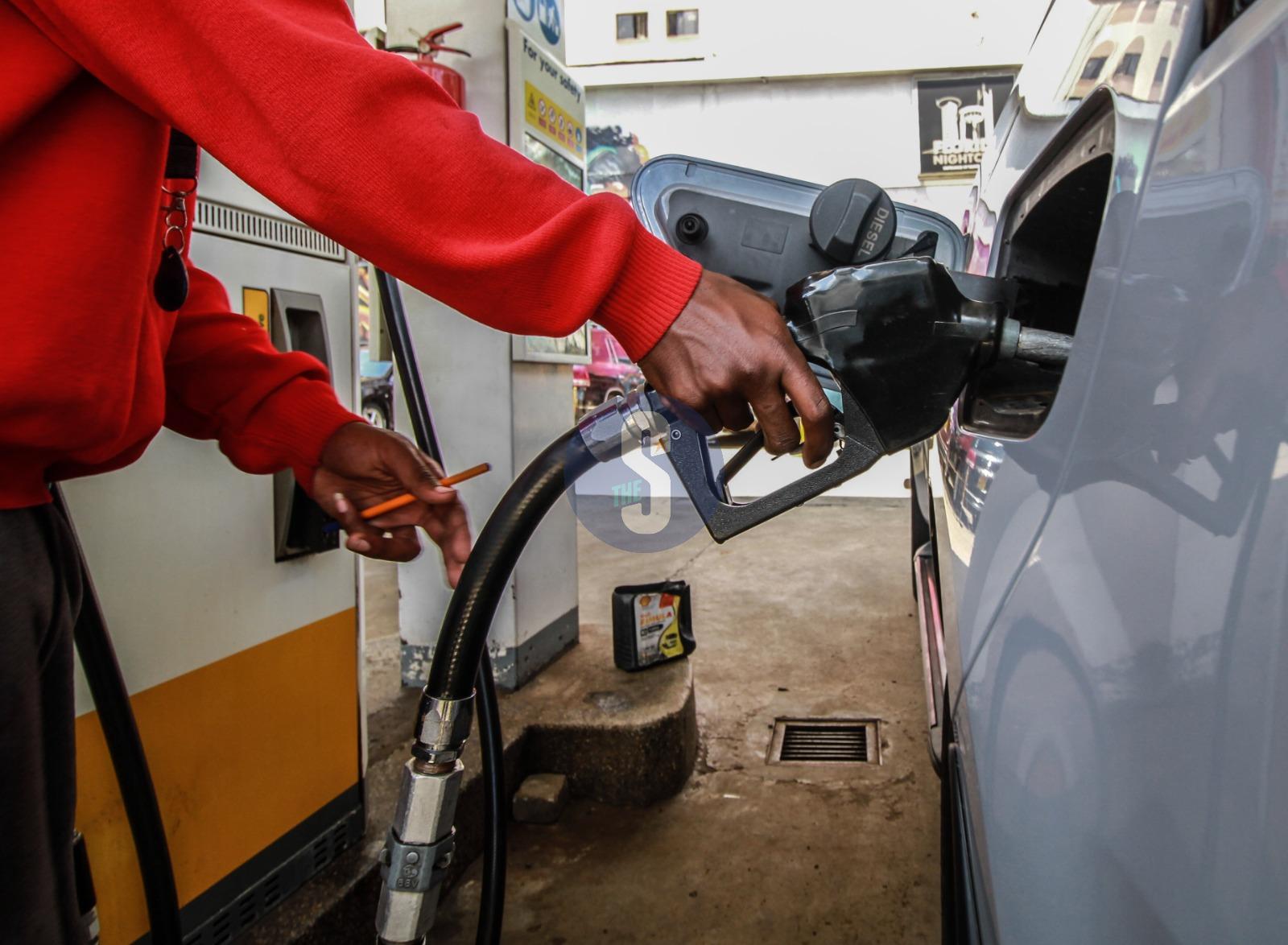
On Thursday, the Energy and Petroleum Regulatory Authority (EPRA) raised the price of super petrol in Nairobi by Sh16.65 to Sh214.25 per litre, while diesel recorded a staggering Sh46.29 jump to Sh242.92 per litre.
Kerosene remained unchanged at Sh152.78 per litre.
The steep rise in diesel prices has sparked the greatest concern because the fuel powers public transport, cargo trucks, agriculture, factories and construction equipment, making it central to nearly every sector of the economy.
Since January, petrol prices have climbed by 17.4 per cent while diesel prices have surged by 42.5 per cent, piling pressure on households and businesses already struggling with high taxes, expensive credit and rising food prices.
The latest fuel shock has triggered a fresh wave of planned price increases across the economy, with manufacturers, traders and transporters warning that the cost of goods and services could rise by as much as 50 per cent in the coming weeks.
For ordinary Kenyans, the crisis threatens to deepen an already painful cost-of-living squeeze.
Families are battling expensive food, rent, and school fees, while businesses face shrinking profits and weakening consumer demand.
Many small enterprises say they are barely surviving under the weight of high borrowing costs and slowing economic activity.
Fresh data from the Kenya National Bureau of Statistics shows inflation remains elevated, with monthly consumer prices continuing to rise as fuel and food costs filter through the economy.
At the same time, business activity has slowed.
The latest Stanbic Bank Kenya Purchasing Managers’ Index (PMI) shows Kenya’s economic growth momentum weakened for the first time in nine months, with the index dropping to 49.6 in May from 52.0 in April.
A PMI reading below 50 signals a contraction in private sector activity.
According to the report, higher prices of goods and services reduced customer spending and weakened business activity, ending seven months of improving business conditions.
Although the decline was described as mild, firms reported softer demand, shrinking new orders, and rising operating costs, even as some businesses continued hiring and increasing inventories in anticipation of tougher times ahead.
Industry players now fear the fuel crisis could push the economy into an even more difficult phase.
On Friday, the Kenya National Chamber of Commerce and Industry (KNCCI) warned that the latest fuel price hikes risk crippling the economy unless the government urgently intervenes.
The traders’ lobby noted that Kenya now has some of the highest fuel prices in the region, undermining the country’s competitiveness as East Africa’s transport and logistics hub.
According to KNCCI, diesel in Kenya now costs significantly more than in neighbouring countries, including Uganda, Tanzania, Burundi and Ethiopia.
In Uganda, diesel currently retails at the equivalent of about Sh174 per litre, compared to Kenya’s Sh242.92. Tanzania’s diesel price stands at roughly Sh211 per litre, while Ethiopia’s is about Sh176.
The chamber said the widening gap is making Kenya increasingly expensive for transporters, manufacturers and investors.
“Any increase in diesel prices quickly feeds into the cost of moving goods, producing essential commodities and delivering services across the economy,” KNCCI said.
The lobby acknowledged that global oil market disruptions linked to tensions in the Middle East have contributed to the crisis, but argued that domestic taxes, levies, exchange-rate losses and distribution costs are worsening the burden on consumers.
The traders' lobby group noted that while global crude oil prices increased by about 10.7 per cent between April and May, Kenya’s diesel prices rose by 23.5 per cent over the same period, suggesting local cost build-ups are amplifying the impact of the global shock.
The chamber warned that the increases are likely to raise transport and logistics costs by between 10 and 20 per cent, push up food and consumer goods prices by up to seven per cent and squeeze the cash flows of small businesses by as much as 15 per cent.
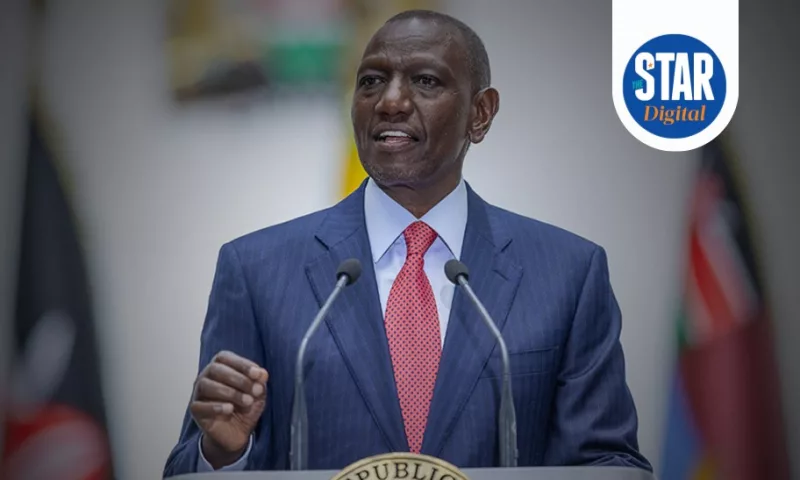
It has called on President William Ruto’s administration to urgently review fuel taxes and levies, strengthen fuel price stabilisation measures and publish transparent fuel price breakdowns during every pricing cycle.
The chamber also urged the government to provide targeted support to fuel-intensive small businesses and reduce inefficiencies in ports, storage and transport systems.
KNCCI proposed that Kenya diversifies its fuel imports towards African oil-producing nations and accelerate plans to establish a modern local refinery to reduce dependence on imported refined petroleum products.
The Kenya Association of Manufacturers (KAM) also warned that tougher economic conditions lie ahead if more interventions are not introduced quickly.
Although manufacturers welcomed the government’s decision to cut VAT on fuel from 16 per cent to eight per cent, it argued that additional measures are needed to avert a deeper economic crisis.
For now, however, the pain is already spreading rapidly through the economy.
Transport fares are rising, food prices are climbing and manufacturers are preparing for higher production costs.
From matatu commuters in Nairobi to farmers transporting produce to markets, the consequences of the conflict in the Middle East are becoming increasingly visible in daily life.
What began as a geopolitical confrontation around one of the world’s most strategic oil corridors is now being felt in Kenyan kitchens, supermarkets and bus stages: a reminder of how deeply interconnected the global economy has become.
As Kenyans feel the heat, the government insists that its hands are tied, with Energy Cabinet Secretary Opiyo Wandayi saying that the geopolitical tensions have disrupted global energy supply chains and increased the cost of importing petroleum products.
To ease the impact of rising global fuel prices, he said that the government has utilised the Petroleum Development Levy (PDL) stabilisation mechanism, applying approximately Sh5 billion to cushion diesel and kerosene prices during the current review cycle.
Wandayi also defended the government-to-government (G-to-G) fuel importation framework, saying it had shielded Kenya from surging global freight and premium charges.
“Currently, global spot freight and premium rates for petroleum cargoes have more than doubled, exposing countries reliant on spot purchases to very high escalations in the landed costs,” the statement read.
In a statement, Wandayi explained that the average landed cost of imported Super Petrol rose from $823.27 per cubic metre in March to $906.23 in April, representing a 10 per cent increase.
Diesel recorded the highest jump, increasing by 20.32 per cent from $1,073.82 per cubic metre to $1,291.98 over the same period.
Speaking in Kisumu over the weekend, National Treasury CS John Mbadi, said that the government is working on several strategies to cushion consumers from current high prices.
However, several Kenyans who spoke to the Star are blaming the government for paying lip service to a matter of national importance.
John Nalianya, a mechanic in Nairobi's Ngara area, wants the government to emulate what other nations are doing to insulate their citizens and businesses from high fuel prices.
He wonders how fuel transported through Kenya is cheaper in Uganda and other regions in East Africa. " It is about time President Ruto pays attention to this matter before it erupts into a serious economic crisis. Families and businesses are suffering,'' he said.
His sentiments were echoed by Magret Mudachi, a casual worker in Industrial Area.
" I don't know what is going to happen now that matatus have threatened to strike. I have been paying Sh50 from Kariobangi to Lusaka Road, then walking several kilometers to my place of work. If I don't report, my children will have no food and other essentials. Ni kibarua, usipofika hakuna pesa (It is a day's job. No showing up means no money).