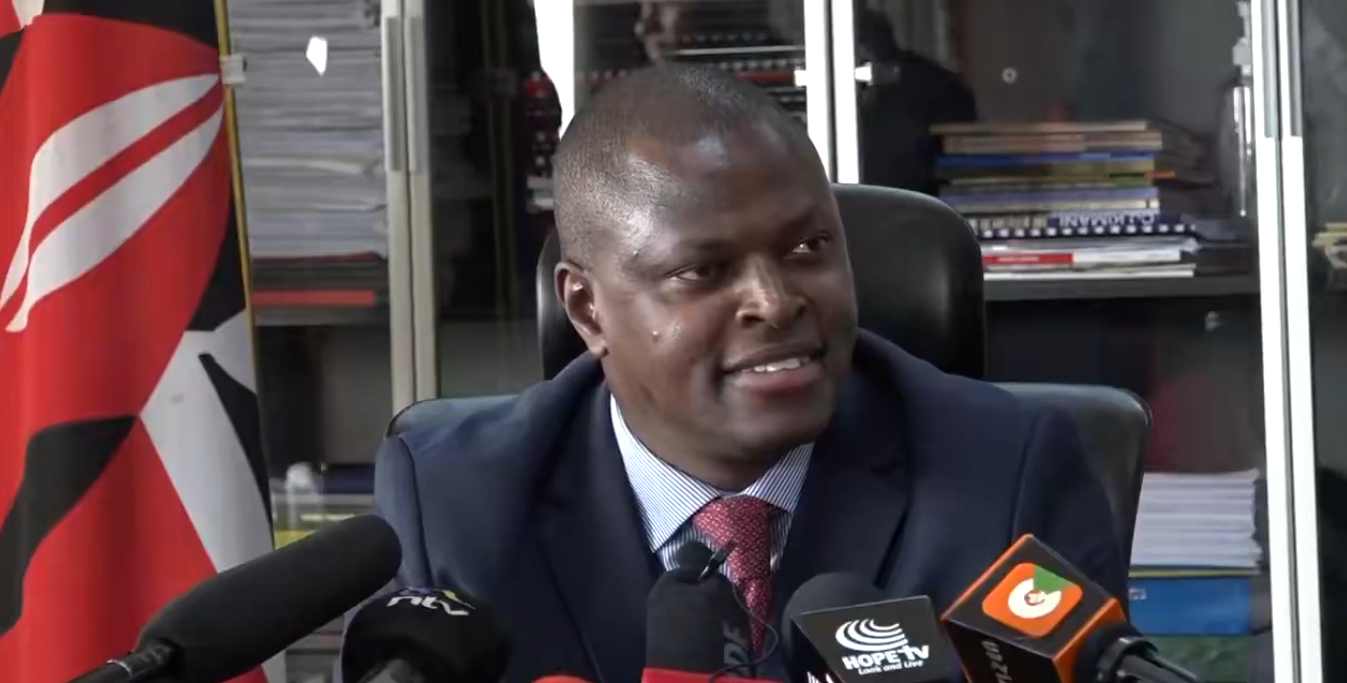
 Kiharu MP Ndindi Nyoro/SCREENGRAB
Kiharu Member of Parliament, Ndindi Nyoro, has outlined a series of tax and levy adjustments he says could significantly reduce fuel prices in the country.
He was speaking during a press briefing on fuel prices following the latest review by the Energy and Petroleum Regulatory Authority (EPRA).
The legislator argued that the cost of petroleum products is heavily driven by government charges rather than global market forces alone.
Nyoro said the recent increase had further strained households and businesses already grappling with a high cost of living.
He asserted that the government still has policy room to ease the burden on consumers, insisting that targeted amendments to existing tax structures could bring immediate relief.
“There’s something the government can do about this. That’s why I have written to the National Assembly, seeking amendments to the VAT Act to reduce the petroleum levy on petrol, diesel, and kerosene from its current status of 8 per cent to 0, VAT exempt,” he said.
The announcement came just a day after EPRA revised retail fuel prices upward in its latest pricing cycle.
Diesel increased by Sh46.29 per litre, and super petrol rose by Sh16.65 per litre.
In Nairobi, petrol and diesel now retail at Sh214.25 and Sh242.92 respectively, figures that have sparked public concerns.
The legislator added that reducing the road maintenance levy could also lower pump prices.
According to Nyoro, he has proposed cutting the levy by Sh7 per litre, arguing that the charge had been reintroduced in 2024 and now contributes significantly to retail prices.
“I have written to Parliament asking for a reduction of the road maintenance levy fund from Sh25, as it currently goes for. We remove Sh7 so that Kenyans get relief,” he said.
Nyoro also pointed to the fuel stabilisation fund, arguing that it contains sufficient resources that could be redirected temporarily to cushion consumers.
“There is also a fund that Kenyans contribute to whenever they consume fuel. It’s called the fuel stabilisation fund. In this fund, there is enough money. That’s why I want to ask the government to remove Sh5 billion to subsidise diesel. It has the potential to subsidise about Sh24,” he said.
He argued that if the proposed measures were implemented together, fuel prices could fall, offering significant relief to households, transport operators, and businesses affected by rising operational costs.
“If we do those three things, we will reduce fuel prices that burden Kenyans to below Sh190,” Nyoro said.
The MP also questioned why Kenya’s fuel prices remain higher than those of neighbouring countries, despite regional trade dynamics that should, in his view, lower domestic costs.
“We have seen fuel prices in Kenya being compared to those in other neighbouring countries. Our fuel prices are the highest. If you look at Uganda, our prices are higher, yet the fuel they consume passes through our port,” he said.
Nyoro further criticised what he termed excessive taxation embedded in fuel pricing, arguing that a significant portion of every litre purchased goes towards levies and profit margins.
"At one litre of petrol, about Sh100 goes to levy and profit to those involved in fuel ventures," he said.
The legislator also took issue with leaders he accused of failing to address the structural drivers of high fuel prices, saying Kenyans deserved clearer explanations and practical solutions rather than technical jargon.
“We must lower fuel prices to avert an economic spiral effect. Reduce VAT, lower fuel levy and avail more subsidies,” he said, adding that he had already forwarded proposals to Parliament for consideration.