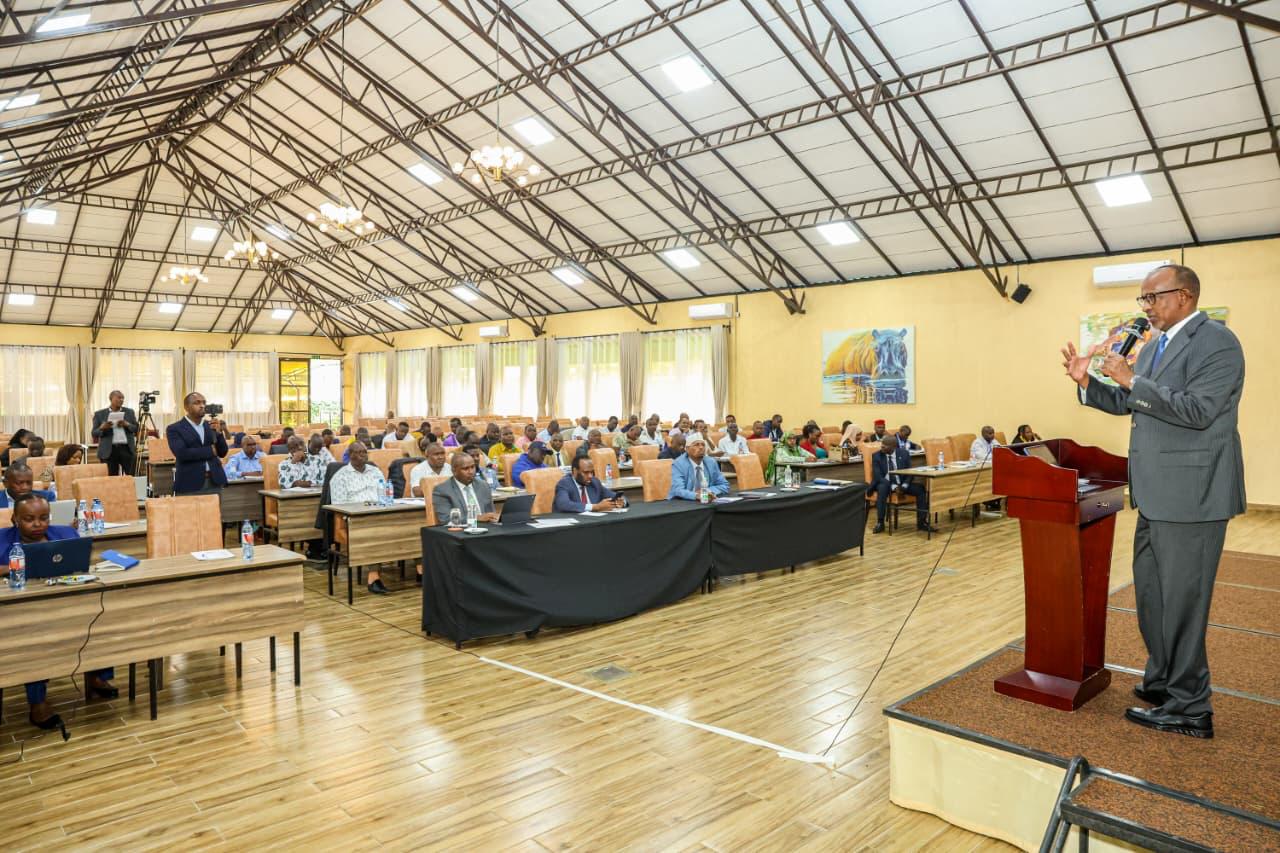
 Health CS Aden Duale addresses officials of Knut, TSC and the Social Health Authority during a retreat in Naivasha town focused on reviewing progress, resolving emerging challenges and aligning on long-term solutions under the scheme /COLLINS WILLIAM /MOH
For years the country has strived to fix the healthcare systems under the Universal Health coverage (UHC) policy guided by the principle that health is a human rights issue.
Universally, the government is expected to ensure that all people get access to quality health services including prevention, treatment and therapy whenever one needs medical care and without suffering financial hardship.
However, this has for decades remained a mirage as these efforts were negated by a bulging population with less input to the economy as huge numbers of the youthful productive population remain unemployed.
The Kenya Kwanza Government is this time round determined to turn the tide and erase the mirage concept with the Ministry of Health’s new multi-sectoral reforms promising a transformational change in the medical health sector.
Health CS Aden Duale, the other day, inaugurated a Multi-Sectoral Technical Working Group which is charged with the responsibility of ensuring alignment of medical training with the needs of the Social Health Authority and Universal Health Coverage.
At the same time, the Ministry has instituted new SHA benefits effective May 11, 2026 by which CS. Duale says registered beneficiaries will access free delivery services at all Level 2 and 3 facilities with normal deliveries covered at Kshs.10, 000 and caesarean sections at Kshs.30, 000.
On the other hand, annual cancer treatment coverage has been increased from Kshs.550, 000 to Kshs.800, 000, while support for chronic illnesses under the Emergency, Chronic and Critical Illness Fund has risen from Kshs.150, 000 to Kshs.400, 000.
The alignment of medical training with the needs of the SHA and UHC seeks to institute a complete overhaul of the outdated healthcare system to match the realities of the 21st century.
The training component of the reforms targets the mismatch between old training curricula and modern health needs of the population particularly on the issue of student enrollment going past clinical training capacity.
Anchored on the basis of adaptability, these transformations focus on the reality of the market, equalisation of standards and strategic forward-thinking.
They are also meant to help medical caregivers the opportunity to embrace technological demands of the modern world in the context of the complexity of a modern hospital.
The training will not only ensure provision of more doctors, but will also ensure availability of adequate numbers of specialists in the medical facilities.
The training, in addition, is focusing on the diseases being faced today, like the rise in cancer and diabetes, which means, a major change to an informed strategic approach.
Lifestyle-diseases have also crept up of late and by aligning the curriculum with this reality, the country begs to arm a generation of medics with the right weapons to fight these chronic conditions.
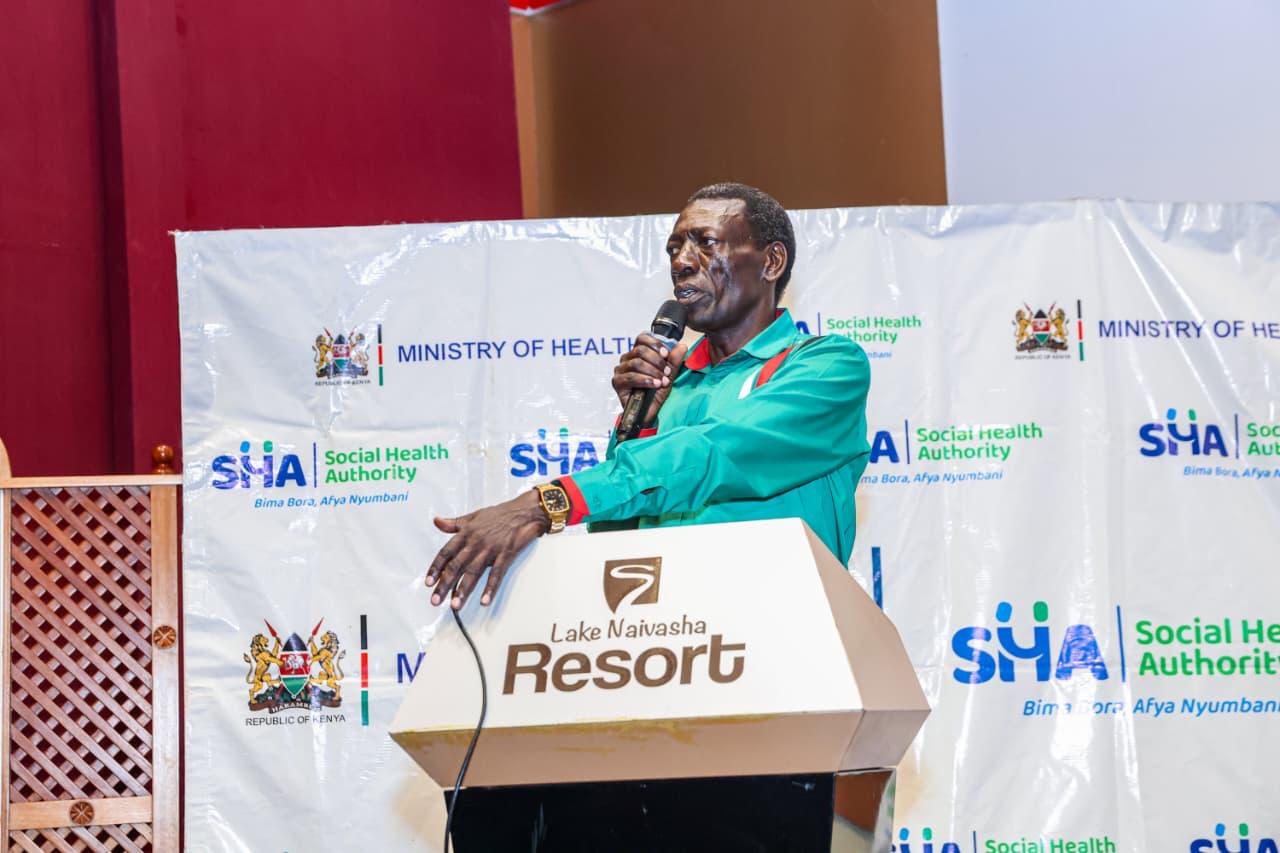 Knut secretary general Collins Oyuu addresses a retreat organised by the Ministry of Health and attended by officials of Knut, TSC and the SHA to discuss full operationalisation of the Mwalimu Comprehensive Medical Cover under the Public Officers Medical Scheme Fund in Naivasha /COLLINS WILLIAM /MOH
Kenya National Union of Teachers (KNUT), Secretary General Mr. Collins Oyuu addresses a retreat organised by the Ministry of Health and attended by officials of the Kenya National Union of Teachers (KNUT), the Teachers Service Commission (TSC) and the Social Health Authority (SHA) to discuss full operationalisation of the Mwalimu Comprehensive Medical Cover under the Public Officers Medical Scheme Fund in Naivasha town.
The reforms are also geared towards ending the geographical bias. “A mother from Mandera or Rongo should not be subjected to a different quality of healthcare just because she is not in the capital or a much developed area,” CS Duale.
Uniform high quality standard for every trainee nationwide is key, he stresses.
The aim, he further explains, is to decentralise the experience and give citizens from both rural and urban areas proper healthcare in an approach that speaks to the Bottom Up Economic Transformation Agenda (BETA).
By investing in health workers’ training, the government strengthens the foundation upon which economic goals depend.
A functioning system is about productivity and if maximised in the healthcare sector, national stability is guaranteed as accessible healthcare cannot be realised without a workforce that is readily available and properly equipped for the task.