 If you ask a Kenyan commuter to divert from the direct route to his or her bus stage and walk some distance to a modern market to buy the day’s purchases, you are wasting your time /STAR ILLUSTRATION
In recent weeks, there have been many reports in reputable global media, of Kenya seeking to borrow from the International Monetary Fund, to cushion our economy from the worst effects of the ongoing war in the Middle East.
I find it surprising that this should be news considered worthy of such serious headlines. After all, Kenya has been borrowing regularly from the IMF and various donor nations for as long as any of us can remember.
But what is of greater interest is that such IMF loans come with very specific conditions: basically, policy directives as to what must be done to revive the borrower’s economy. And that is where things get tricky. For the IMF has often been accused of coming up with policy proposals which increase poverty in a country rather than reduce it.
Basically, the highly credentialled technocrats who run this institution often have no idea what they are doing.
Let me try and explain what I mean by this with two uniquely Kenyan examples which illustrate how ideas which are supposed to place individuals, regions, or nations, on a path to prosperity, often achieve little or nothing.
My first example is the widespread focus on “modern markets”, in county headquarters mostly, but even in smaller towns. These modern markets are supposed to be a solution to the prevalence of street hawkers in many cities and towns: hawkers who sell not only clothes and trinkets, but also – and most significantly – fruits and vegetables, which are bound to be unsanitary, given they are openly displayed on dusty or muddy roadsides.
So, land was found and modern (often multistorey) markets built in various places. But soon it became evident that nobody really wanted these nice new stalls, as they were too far away from the foot traffic on which these hawkers depended for the incidental purchases from which they made a living.
Apparently, if you ask a Kenyan commuter to divert from the direct route to his or her bus stage and walk some distance to a modern market to buy the day’s purchases, you are wasting your time. They just won’t do it. And so, these modern markets - where they exist - largely remain empty, even though they continue to be promoted as a keystone of various county governments’ economic empowerment strategy.
Meantime the street hawkers remain firmly in place.
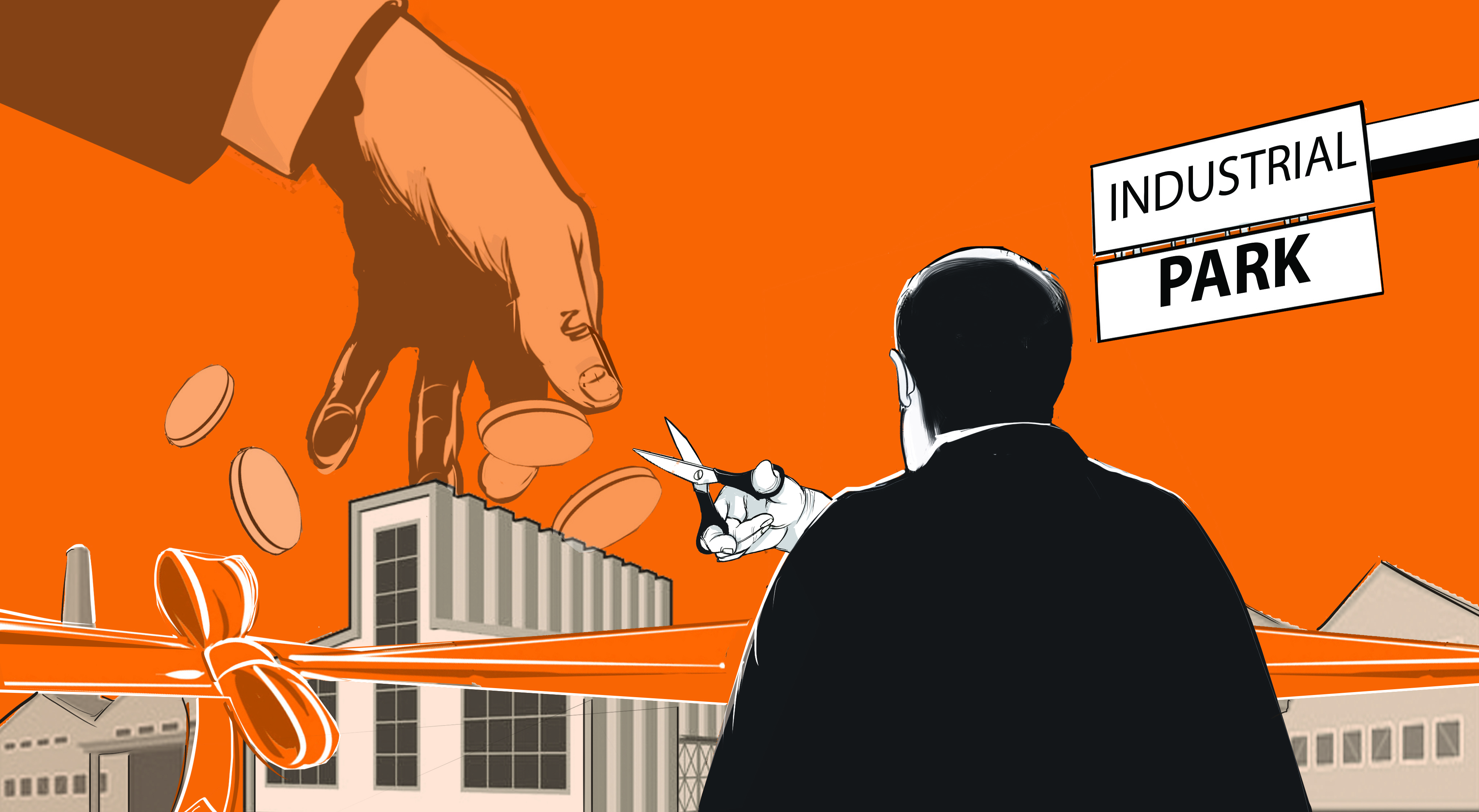
Even more guaranteed to fail though, are the “industrial parks” which the current government has committed to setting up in each and every county.
With the modern markets, one can at least see some faint logic behind the idea, even though it is a deeply flawed logic. But I have never understood how any county governor can bring himself or herself to believe that if they will only fence off about 10 acres of public land; have it declared as a “Special Economic Zone”; and build a long row of warehouses: that these alone are enough to make investors turn out in droves, establishing factories and creating jobs for residents.
Kenyan leaders are very fond of “benchmarking” tours to other countries. And those governors should have taken time to visit and study in some detail just what exactly the most successful creator of Special Economic Zones – China – did that enabled it to raise 800 million of its citizens out of abject poverty in just a few decades.
One thing I can tell you is that China relied on the creation of “economic clusters”, mostly – at least during the early stages – in coastal cities, dedicated to specific types of manufacturing, and not on so-called industrial parks scattered randomly all over the countryside.
What worked for China – which Kenyan leaders are presumably trying to imitate – is the “agglomeration economies” which result from such clustering. And indeed, we already have one substantial project based entirely on this concept, and that is the Dongo Kundu Special Economic Zone at the coast.
So here are two supposed job-creating policies favoured by just about every county governor, which, however, are pure fantasy.
I have not forgotten the IMF, and its own misguided fantasies.
For that, just do a Google search based on the keywords “Policies imposed by the IMF which produced more harm than good in Africa, Asia and Latin America.”