Turkana is partnering with religious organisations to harmonise and improve the implementation of development programmes.
The projects include those undertaken by churches to enhance coordination and avoid duplication.
The county's department of resource mobilisation, partnerships and donor coordination (RMPDC) has rolled out a series of engagements with faith-based groups focusing on ongoing and planned projects.
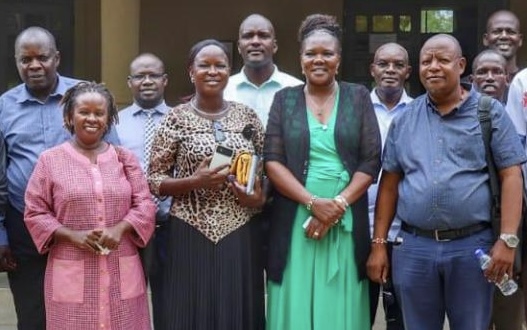
The county recently convened a workshop for faith-based organisations that brought together more than 20 stakeholders operating in Turkana. The meeting was aimed at aligning their interventions with the county’s development.
The initiative, supported by non-governmental organisation SAPCONE, seeks to help both the county government and faith-based actors better understand ongoing project implementation across different parts of the county.
The county is also pushing for faith-based organisations to map out their geographic and thematic areas of operation to enable proper alignment.
Director of resource mobilisation, partnerships and donor coordination Raphael Logum said the move will eliminate duplication of projects while ensuring equitable distribution of resources across subcounties.
“There is need for structured engagement between the county and faith-based actors so that we synergise all our efforts for better impact on the lives of our people,” Logum said.
He said his department was created to ensure that no part of Turkana is left behind in development.
“We want to ensure that resources address the challenges faced by the people of Turkana, especially in underserved areas,” he said, noting that most partners are currently concentrated in Turkana Central and Turkana West, leaving other sub-counties with limited support.
His deputy, Michael Aupe, said alignment with the county's integrated development pillars will enhance coordination and open opportunities for co-funding and sustainability of projects.
“The CIDP is not just a government document; it is a shared roadmap. When these organisations align with it, we can address gaps, avoid duplication and implement interventions that have a lasting impact,” he said.
Susan Aletia, representing the UN Resident Coordinator’s Office (UNRCO), said faith-based organisations play a crucial role in reaching remote and underserved communities in Turkana.
She called for their inclusion in coordination platforms such as sector working groups, stressing the need for stronger communication among all development actors.
Aletia said the long-term goal is to achieve fully integrated development coordination where the county government has clear visibility of all new, ongoing and completed projects.
During the forum, each faith-based organisation was allowed to outline its areas of operation, allowing the department to map and align their programmes.
The groups pledged to increase investment in humanitarian and development initiatives.
Among those who attended the meeting were the Diocese of Lodwar, AIC Health Ministries, Compassion International, Children of the Kingdom, Missions of Hope International, Serve Turkana, Convoy of Hope, Calvary Development Organisation, Turkana Development Trust, Islamic Foundation for Integrated Programs and the Full Gospel Churches of Kenya.