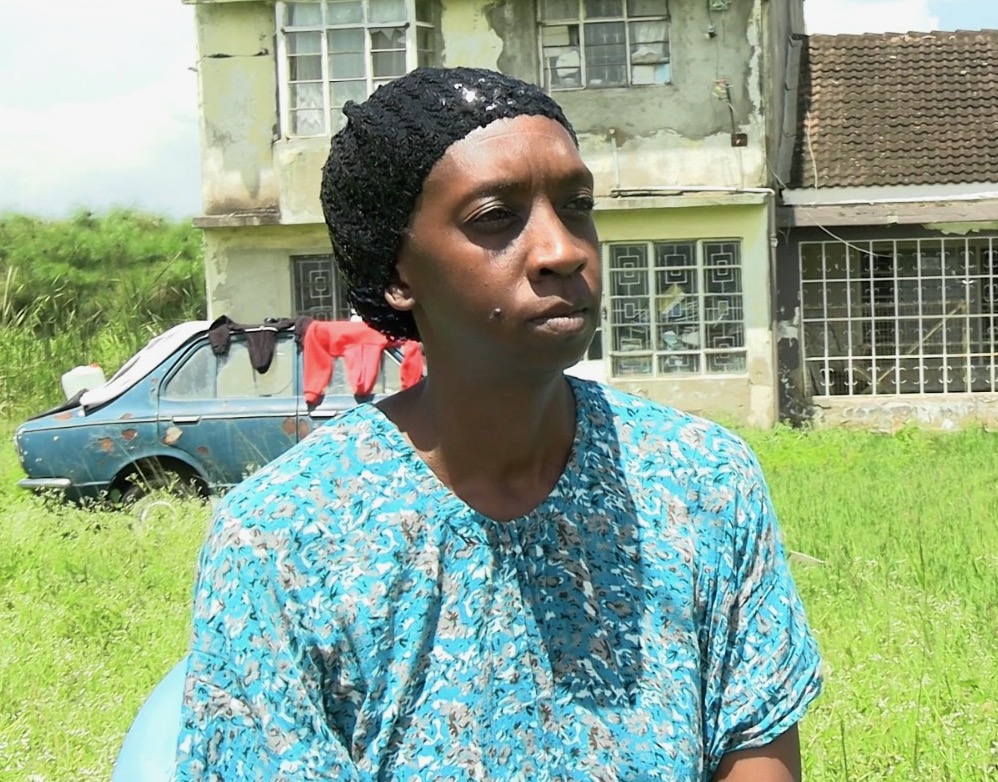
 Violet Kusa Okata during the interview at her home in Dunga, Kisumu County on April 6, 2026. Violet lost her husband during the 2007/2008 election violence. He was found without a head, and to date, she still wishes she could find it to allow her give him a decent burial and give closure for her grief. /KNA
Nearly two decades after the 2007–2008 Kenyan post-election violence, Violet Kusa Okata still lives with a loss that has never fully settled.
Her husband lies in a grave she considers incomplete — she buried him without his head, a reality that continues to define her grief long after the country has moved on.
In a modest home at Dunga Beach in Kisumu, 200 kilometres from Nakuru, where her life was violently upended, Violet carries memories she cannot outrun.
While the country often reflects on the crisis through statistics — more than 1,100 people killed and over 600,000 displaced — for her the tragedy is not about numbers but a deeply personal loss that remains unresolved to date.
In her early twenties, Violet was newly married and raising young children, trying to build a stable home with limited means.
Her husband, Michael Akasa Okata, ran a small business dealing in second-hand clothes and mobile phone charging with a modest but dependable source of income that kept the family afloat.
Their days followed a predictable rhythm that now feels distant: early mornings, shared cups of tea, steady streams of customers throughout the day and evenings spent discussing plans for the future.
It was a simple life, but one anchored in routine, effort and the belief that tomorrow would be better. That sense of normalcy collapsed when violence swept through Nakuru in the aftermath of the disputed 2007 General Election.
What began as whispers of unrest soon spiralled into fear, as reports of attacks filtered through neighbourhoods already tense with uncertainty.
"We started hearing that people had been beheaded and that bodies were lying on the ground,” Violet recalls, her voice carrying the weight of memories she has never fully shaken off.
Within days, the town was unrecognisable. Shops shut down, roads emptied and entire communities withdrew into hiding as ethnic tensions erupted into open violence.
Then came the news that shattered her world. Her husband had been taken, though details remained unclear, buried in rumors and confusion.
Violet moved from place to place in search of answers, clinging to the fragile hope that he might still be alive despite the growing signs to the contrary.
Days later, someone finally agreed to take her to where his body lay. What she encountered there remains etched in her mind, a moment so brutal it continues to define her grief years later.
He was dressed in clothes she recognised instantly — jeans and a white shirt — but his head was missing.
The sight was incomprehensible, stripping away any illusion of dignity in death and leaving behind a wound that has never healed.
"I recognised the body, but the head was missing. I couldn’t find it,” she says quietly. “I still cannot find it.”
The shock was overwhelming, threatening to consume her, yet even in that moment she had little room to collapse under the weight of grief.
Her children were waiting, and survival had already begun to take precedence over mourning. Her eldest son, then just nine years old, sensed the gravity of the situation as he watched his mother struggle to hold herself together.
When she finally told him his father was dead, he asked a question she could not answer.
“I told him his father was dead,” she says. “He asked me how.”As violence escalated, Violet fled Nakuru with her children, joining thousands of others forced from their homes.
With the help of neighbours, she undertook the painful task of transporting her husband’s body through unsafe routes from Nakuru to Luanda in Vihiga County, navigating fear, uncertainty and the constant threat of attack.
Her husband was buried in haste, dictated by insecurity and displacement, leaving no room for proper rites or the presence of extended family, as tradition would require.
He was laid to rest without his head in a burial that felt more like an interruption than a farewell. For Violet, it was not closure, but the beginning of a long and painful absence.
At a makeshift camp in Luanda, she registered as an internally displaced person, becoming part of a vast population uprooted by the violence.
There, amid shared suffering, she found some form of comfort in the presence of others who understood her pain.
“I found other mothers,” she says. “Instead of crying alone, we cried together.”
Even within that shared grief, her loss felt uniquely incomplete. In the years that followed, reality sank in that she was going to raise her children alone, navigating the daily strain of financial hardship and emotional loss.
School fees, she says, remains a constant struggle, with promises of government compensation yet to be unfulfilled despite repeated assurances.
“We were promised,” she says quietly. “But we have not received anything.”
With the children now adults, their questions, she says, have become more direct, forcing her to revisit a past she would rather leave behind.
They have struggled to reconcile the image of their father in photographs whole and smiling with the reality of how he died and how he was buried.
“They ask me, ‘Are you sure we buried our father without his head?’”
Today, Violet continues to rebuild her life, but the past remains ever-present, surfacing in quiet moments and unanswered questions.
Despite the years that have passed, one issue remains unresolved – she does not know where her husband’s head is.
What she seeks now goes beyond acknowledgement or compensation. She wants closure, the chance to lay her husband to rest with dignity and completeness, even if it means revisiting painful processes.
She is calling on authorities to help trace the missing remains, to conduct DNA tests if necessary, and to finally allow her family to complete what was left undone.
“I buried him with half his body,” she says. “I want to bury him whole.”
Her story reflects the experiences of many victims of the post-election violence whose wounds remain unhealed, years after the country turned a new page.
Beneath national narratives of unity and progress lie deeply personal stories of loss that were never fully resolved.
For Violet, the tragedy is not defined by statistics or historical accounts. It is defined by one grave and the absence that still lingers within it.