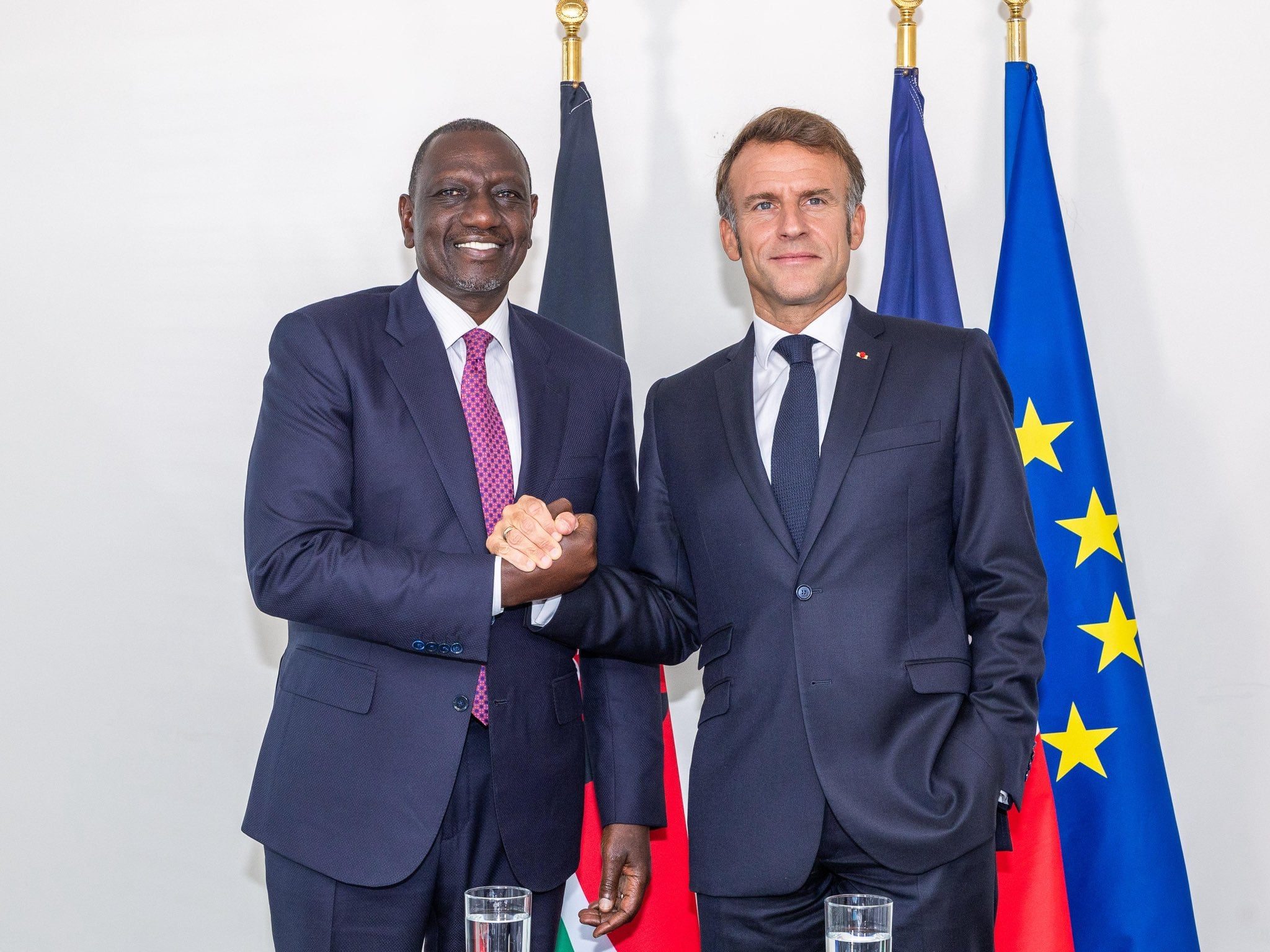
Kenya is set to step into the global diplomatic spotlight as preparations intensify for the upcoming Africa Forward Summit set to be held in Nairobi from May 11-12.
The high-level meeting brings together African heads of state, senior French officials, investors, diplomats and business leaders for discussions on trade, climate financing, infrastructure, security and economic cooperation.
For President William Ruto’s administration, the summit is more than a diplomatic gathering.
It is an opportunity to position Kenya as a regional economic powerhouse, attract fresh investments and strengthen Nairobi’s growing reputation as one of Africa’s leading diplomatic capitals.
The summit comes at a time when African countries are demanding more equitable partnerships with global powers, while France seeks to redefine its role on the continent amid changing geopolitical dynamics and increasing competition from China, Russia, Turkey, the Gulf states and India.
What is the Africa-France Summit?
The Africa-France Summit is a platform designed to strengthen ties between France and African nations through political dialogue, economic partnerships and development cooperation.
The summit was first held in 1973 under French President Georges Pompidou.
The inaugural meeting took place in Paris and was designed to strengthen ties between France and its former African colonies, particularly in West and Central Africa.
Over the years, however, the meetings have evolved from traditional diplomatic engagements into broader forums involving private sector players, civil society groups, innovators and youth representatives.
The summit often focuses on issues such as trade and investment, climate change, peace and security, digital transformation, public health and industrialisation.
France has historically maintained strong political, military and economic ties with many African countries, especially in West and Central Africa.
However, changing political realities across the continent have pushed Paris to rethink its Africa strategy.
In recent years, anti-French sentiment has grown in parts of the Sahel, particularly in countries such as Mali, Burkina Faso and Niger, where military governments have reduced cooperation with France and questioned its historical influence.
As a result, French President Emmanuel Macron has increasingly promoted what he describes as a “new partnership” with Africa based on investment, innovation and mutual respect rather than dependency.
Why Kenya was chosen
Kenya was chose to host the event marking a historic shift as the first time the it is being held in non-Francophone country.
Kenya’s selection as host highlights the country’s growing diplomatic and economic influence in Africa.
Nairobi is already home of major international institutions, including the United Nations Environment Programme and UN-Habitat, making it one of the continent’s most important diplomatic centres.
Kenya has also positioned itself as a gateway to East Africa through its relatively diversified economy, strategic transport infrastructure and expanding technology sector.
The decision to host the summit in Nairobi reflects a broader diplomatic shift in France’s engagement with Africa.
As Paris seeks to move beyond the colonial legacy tied to its former West African territories, it has increasingly turned toward East Africa in search of partnerships built on mutual respect and shared interests.
Nairobi, with its dynamic innovation ecosystem and English-speaking environment, symbolises this new direction in France-Africa relations.
Kenya’s growing influence on global issues also made it a strong choice for the summit.
Under President William Ruto, the country has emerged as a leading voice on climate action and global financial reform.
Through the Nairobi Declaration, Kenya has pushed for a fairer global financial system while positioning itself at the centre of international climate discussions.
Increasingly, Kenya is helping shape global conversations rather than simply participating in them.
The summit also highlights the growing partnership between Kenya and France.
In recent years, the two countries have deepened cooperation in defence, infrastructure, renewable energy, transport, and trade.
What was once a largely economic relationship has steadily evolved into a broader strategic partnership with long-term regional and global significance.
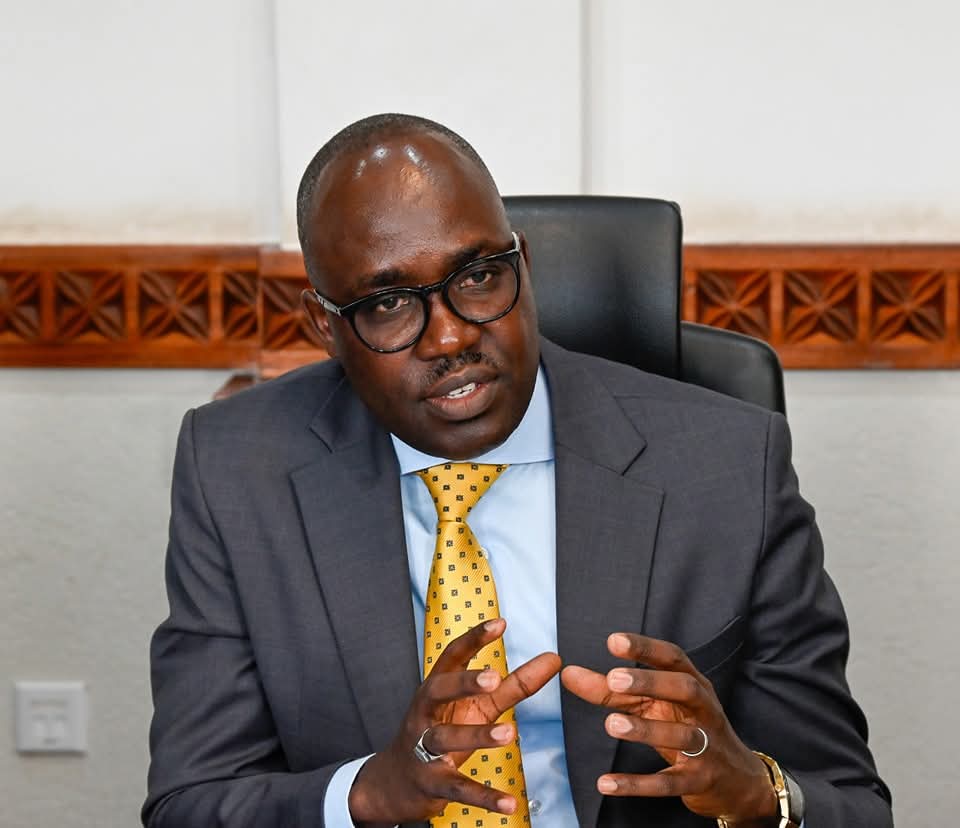 Foreign Affairs Principal Secretary Korir Sing'Oei during a past event/FILE
Preparations
According to Foreign Affairs Principal Secretary Korir Sing'oei, preparations for the summit have focused on ensuring that Africa’s priorities remain at the centre of the discussions.
“What does it take to build a summit agenda that reflects Africa’s own priorities?” Sing’oei posed in a statement as preparations intensified.
“For months, our team at the State Department for Foreign Affairs has worked together with our colleagues from France and other continental and global partners to ensure that the seven thematic pillars at the heart of this summit are fully shaped by Africa’s own strategic development agenda and priorities,” he said.
The PS said the outcome is a summit designed not around donor-recipient relationships, but around mutual partnerships and shared interests.
“This establishes our continent as a shaper of the agenda, and our global partnerships being anchored on mutual benefit,” he added.
President William Ruto has described the Summit as a defining moment for Africa to shape its own future, saying the gathering will focus on investment, innovation and reforms aimed at positioning the continent as an equal global partner.
In a welcome message Wednesday, Ruto said Kenya is ready to host a forum centred on practical outcomes and long-term transformation for the continent.
“The Africa-France Forward Summit taking place on the 11th and 12th of May 2026 in Nairobi is where we bring the world together to co-create, invest and build with Africa as equal partners in purpose,” Ruto said.
“Kenya is proud to host this defining moment, and we are ready.”
The President said the summit would champion reforms to the global financial system to ensure African countries can access affordable and sustainable financing for development.
“We are here to champion the reform of the international financial architecture so that African nations can access capital on fair and sustainable terms, so that investment reaches the people, and so that we fashion projects that will drive growth and transformation,” he said.
Ruto also placed energy transition at the centre of the summit agenda, arguing that Africa’s vast renewable energy potential should power its industrial growth and position the continent as a global clean energy leader.
“We are here to accelerate the energy transition because a continent with Africa’s vast renewable energy reserves should be powering its own industrialisation and exporting clean power to the world,” he stated.
The President further stressed the need for Africa to move beyond exporting raw materials and instead focus on manufacturing and value addition within the continent.
“We are here to unlock African manufacturing and value addition because our raw materials should be processed here, creating jobs here, building industries here and generating prosperity for our people,” he said.
Ruto said digital transformation and artificial intelligence must also be developed on Africa’s own terms, driven by local talent, infrastructure and data systems.
“We are here to advance artificial intelligence and digital transformation on African terms, with African data, African infrastructure and African talent,” he noted.
Other key areas expected to dominate discussions include healthcare, agriculture and the blue economy.
According to the President, the summit aims to strengthen resilient health systems, expand ocean-based economic opportunities and build agricultural value chains capable of making Africa more self-reliant.
“This is a summit of outcomes, and Kenya is committed to delivering every one of them,” Ruto declared.
The Head of State said Africa’s future depended on its ability to drive its own agenda through stronger regional trade, industrialisation and financial independence.
“For Africa to move forward, Africa must advance its own agenda. That is Africa’s plan, and that is Africa’s strategy,” he said.
“When Africa trades more with itself, African businesses gain new markets. When Africa builds its own pharmaceutical capacity, African lives become more secure. When global financial governance is reformed, African enterprises can borrow fairly and invest with confidence.”
Ruto added that every discussion and commitment at the summit would be guided by one central objective, positioning Africa as a decisive player in global affairs.
“Every theme on the agenda, every conversation and every commitment is directed towards one objective: an Africa that stands at the forefront of global affairs, shaping its own destiny, defining its own future and influencing global discourse,” he said.
The seven thematic areas of the summit are sustainable agriculture, energy transition and green energy industrialisation, blue economy, AI and digital technologies, resilient health systems, peace and security and reform of the international financial architecture.
Trade and investment at the centre
One of the biggest expectations surrounding the summit is increased French investment in Africa.
France remains one of Europe’s major investors on the continent, with interests spanning energy, banking, infrastructure, transport, telecommunications and manufacturing.
Kenya is likely to use the summit to market itself as a regional business hub and attract partnerships that can support the government’s industrialisation and job creation agenda.
French firms have already invested in several Kenyan sectors, including transport, energy and urban infrastructure projects.
The meeting is also expected to provide opportunities for Kenyan businesses to access European markets and form partnerships with French companies.
Climate financing and green growth
Climate change is expected to dominate discussions during the summit.
African leaders have consistently argued that although the continent contributes the least to global carbon emissions, it suffers disproportionately from droughts, floods, food insecurity and climate-related disasters.
Kenya, which has aggressively promoted renewable energy and green development, is expected to push for increased climate financing and support for clean energy projects.
The country has become one of Africa’s leading producers of geothermal energy and has sought international backing for its green industrialisation agenda.
The summit is likely to build on conversations initiated during the Africa Climate Summit hosted in Nairobi, where African leaders called for reforms in global financing systems to support climate adaptation and green development.
Security and Regional Stability
Security cooperation is also expected to feature prominently.
Africa continues to face challenges related to terrorism, political instability, piracy and cross-border crime.
France has traditionally played a major military and security role in several African countries, although its military footprint has reduced significantly in recent years.
Kenya, which has experienced terrorist attacks linked to extremist groups operating in the region, is expected to advocate for stronger intelligence sharing, regional security cooperation and support for peacekeeping efforts.
Discussions may also focus on instability in the Horn of Africa, the conflict in Sudan and maritime security along the East African coast.