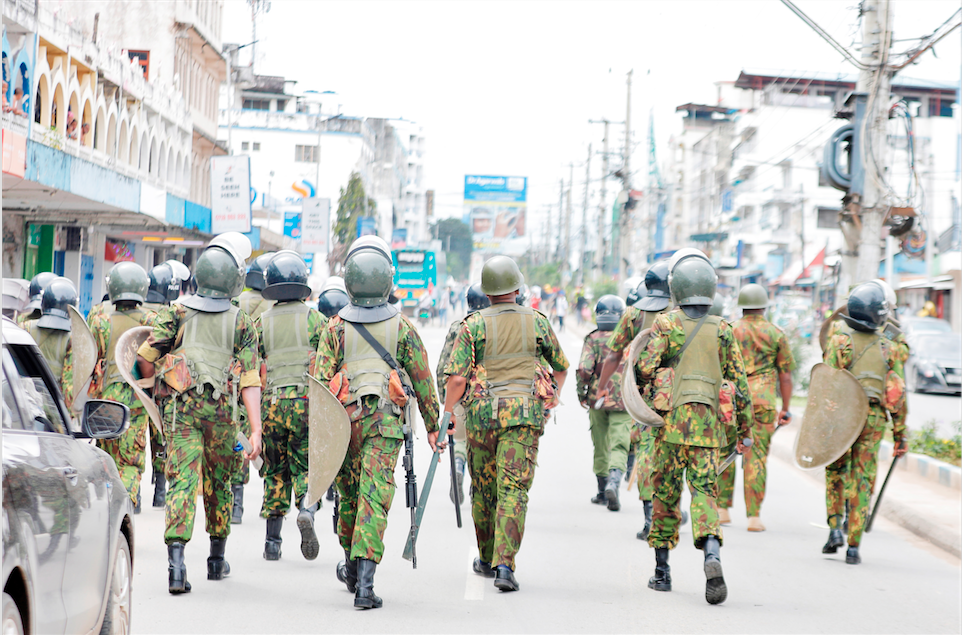
Kenya Police have recently reached a point where failure is no longer accidental, no longer isolated and no longer excusable. Their failures have now become a pattern, a culture, a dangerous norm.
As a nation, we are fast approaching a point where the people have lost total faith in the security system and are now preparing to consider other alternatives.
In recent months, Kenyans have watched, often in disbelief and sometimes in anger, as the very institution mandated to provide safety and security repeatedly fails to do its job.
These are not minor lapses. They are glaring, consequential failures that have emboldened criminals, eroded public trust and placed ordinary citizens at grave risk.
Take, for instance, the shocking admission by Cabinet Secretary Kipchumba Murkomen that the attackers of Senator Godfrey Osotsi had fled and were yet to be apprehended. This was not merely a statement, it was an indictment. An open confession that individuals could carry out violent attacks against a sitting senator and simply disappear into thin air.
What does this say about the state of our security apparatus? What message does it send to ordinary Kenyans who lack the visibility and influence of a national leader?It tells them, quite plainly, “you are on your own”.
The case of Kyalo, the police officer linked to the killing of a young man in Garissa, deepens this crisis. Here is an armed, trained individual – someone who understands police systems, tactics and operations – who remains at large. The inability or unwillingness to apprehend such a suspect raises disturbing questions. Is this incompetence, complicity or a dangerous blend of both?
Even more alarming is the now infamous case of the Kware killer – a suspect who escaped from police custody itself. Let that sink in. A person believed to be responsible for heinous crimes of killing and dismembering over 40 women and then disposing of them in a dumpsite managed to escape from a police cell, the very place meant to ensure they face justice. To date, that suspect remains unaccounted for. This is not just a procedural lapse. It is a catastrophic failure of duty.
Perhaps the most visible and brazen manifestation of this breakdown is the growing phenomenon of “goonism” in Kenya. Across the country, we have witnessed goons operating in broad daylight. Intimidating, assaulting and in some cases killing citizens, often in the full view of police officers.
In some instances, these goons have been seen walking side by side with the police, raising chilling concerns about collusion. When criminals and law enforcers appear indistinguishable, the very foundation of law and order collapses.
Then there is the troubling conduct of police officers towards institutions of justice. For example, the case of Deputy Inspector General of Police Gilbert Masengeli, who repeatedly failed to honour court summons.
In any functioning democracy, the police are not above the law but are subject to it. When a senior officer disregards court orders with apparent impunity, it sets a dangerous precedent. It signals to junior officers and the public alike that accountability is optional, that the rule of law is negotiable.
This culture of impunity does not end in the streets or the corridors of power. It extends into police cells, where Kenyans are supposed to be safe under state custody. Instead, we have witnessed a disturbing rise in deaths within police stations. Kenyans will remember well the tragic killing of Albert Ojwang at Central police station, Nairobi.
A citizen, detained under the authority of the state, lost his life in the very place meant to guarantee his safety. Such incidents are not just unconstitutional but crimes punishable by law committed by police officers. They represent the most extreme betrayal of public trust.
When viewed in isolation, each of these cases is deeply troubling. However, when taken together, they paint a far more disturbing picture of a systemic failure of policing in Kenya. A pattern of negligence, impunity and, in some instances, outright lawlessness within the very institution tasked with upholding the law.
The consequences of these failures are far-reaching. First, it emboldens criminals. When suspects can attack, escape and evade justice without consequence, crime becomes not just possible but profitable.
Second, it erodes public trust. Citizens begin to lose faith in the police, choosing instead to rely on self-help mechanisms – some of which may be equally unlawful. Third, it undermines the rule of law. When those entrusted to enforce the law disregard it, the legal system itself begins to crumble.
However, the most dangerous consequence of all these police failures is the slow, creeping descent into anarchy.
Security is not a luxury. It is a fundamental right. Article 29 of the Constitution guarantees every person the right to freedom and security of the person, including the right not to be subjected to violence from either public or private sources. This is not a suggestion. It is a binding constitutional obligation.
When the police fail to apprehend suspects, they are not merely failing in their operational duties; they are violating the Constitution. When they allow criminals to escape, they are not just negligent; they are complicit in undermining justice.
When they ignore court summons, they are not just defiant, they are eroding the rule of law and when citizens die in their custody, they are not just responsible, they are culpable.Kenya cannot continue down this path.
The time has come for a radical shift in policing culture. One that prioritises accountability, professionalism and respect for human rights. There must be swift and decisive action against officers who fail in their duties. Investigations into these cases must be transparent, independent and credible. Above all, there must be political will to confront the rot within the system.
When police fail to do their work, they are not just failing security. They are failing the nation. A nation that cannot guarantee the safety of its people is a nation standing on the edge of anarchy.
If we as Kenyans do not act now, if we normalise these failures, excuse this negligence and tolerate this impunity, we will have no one to blame but ourselves when the fabric of our society begins to tear apart.
The writer is CEO, Vocal Africa