.
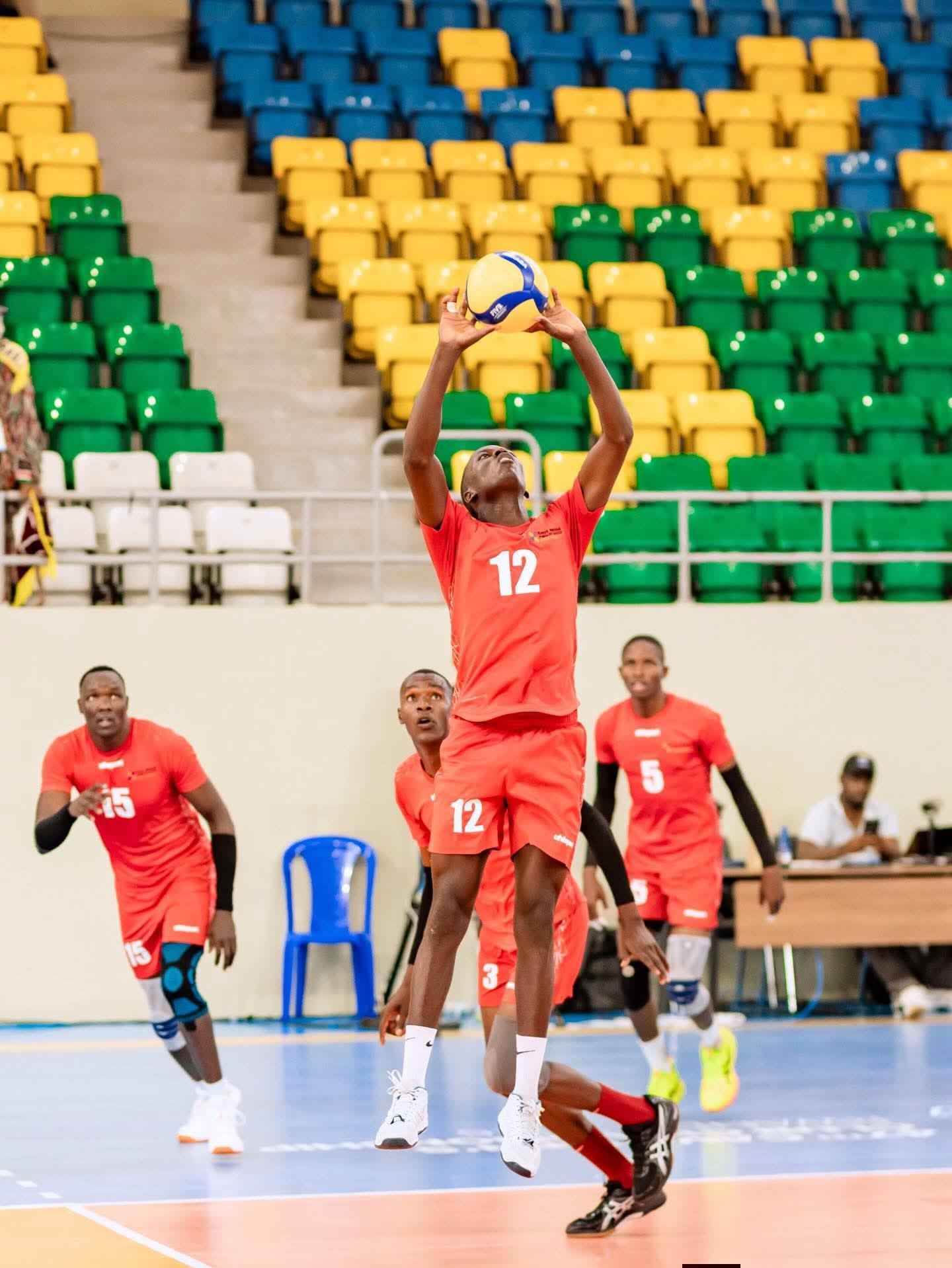 General Service Unit (GSU) in action/HANDOUT
Kenyan clubs’ campaigns at the CAVB African Men’s Club Championship in Kigali once against exposed their inefficiencies in the middle of the court.
General Service Unit (GSU), Equity and Kenya Ports Authority (KPA) were inconsistent in middle attacks, even during workable reception phases.
That shortcoming left the teams heavily reliant on wing play, particularly in high-pressure moments where balanced attacking systems are crucial.
The men’s tournament ultimately revealed deeper structural deficiencies within the Kenyan game, with inefficiency in transition play, inconsistency in serve-receive patterns and predictable attacking options all contributing to their struggles.
KPA emerged as the standout Kenyan side, navigating the early rounds with authority.
They secured a straight-sets victory over Wolaita Dicha (Ethiopia) and followed it with a composed 3-1 win over Uganda’s Nemostars to reach the quarter-finals.
Their Round of 16 performance, built on disciplined block organisation and improved side-out conversion, suggested they had the capacity for a deeper run.
However, their campaign unravelled in the quarter-finals with a 3-1 loss to Rwanda Energy Group (REG).
The result highlighted the fine margins at elite level, where lapses in closing sets and limited middle utilisation in crucial rotations proved costly.
National champions GSU also showed promise early on, edging Ghana’s Kalibi 3-1 and maintaining competitiveness through the pool phase.
But their Round of 16 exit to Rwanda’s Kepler reinforced the same recurring issue — failure to sustain first-tempo attacks when reception quality dropped.
Once the middle channel disappeared, their attack became increasingly predictable.
Head coach Gideon Tarus acknowledged both the positives and the lessons from the campaign.
“We competed well and showed character throughout the tournament, especially in the earlier matches, but at this level, small details decide outcomes. Our loss gives us important lessons on game management and maintaining intensity across all sets,” Tarus said.
Greater support for players and the technical bench would help translate performances into results. Equity’s journey perhaps best illustrated the broader Kenyan narrative.
After early defeats, they responded with back-to-back wins, including a 3-1 triumph over Cameroon Sports, to seal a Round of 16 berth.
Head coach Patrick Mutiso said the recovery came after tactical reassessment.
“We meticulously re-evaluated our game plan for these pivotal matches after a false start. This was effectively a do-or-die scenario for the squad,” he said.
Outside hitter Elisha Siret also pointed to improvements in blocking and serving. Despite that resurgence, Equity’s run ended in the Round of 16.

Comments 0
Sign in to join the conversation
Sign In Create AccountNo comments yet. Be the first to share your thoughts!