
The controversy over the alleged Sh42.4 million CHAN 2024 insurance payment has once again pulled Kenyan football governance into the glare of public scrutiny, laying bare persistent concerns over accountability, transparency, and institutional order at a time when the country can least afford reputational damage.
At the epicentre of the dispute is a deeply divided narrative, each side holding firm to its version of procedural truth.
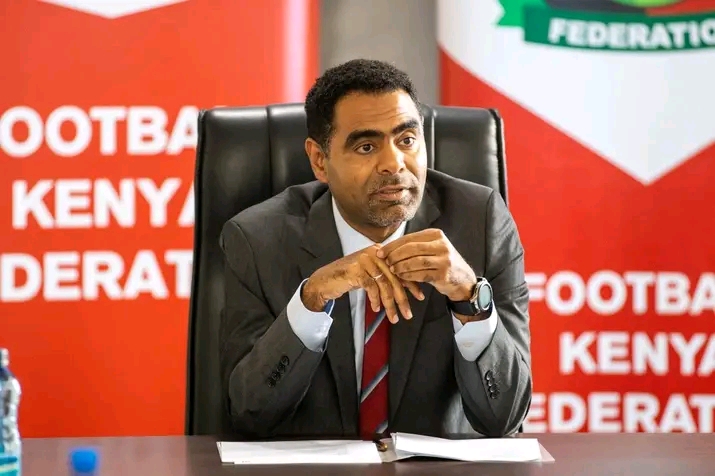
FKF president Hussein Mohammed maintains that the insurance arrangement unfolded within the official confines of the Confederation of African Football (CAF) host agreement, framing it as a legitimate, fully regulated continental process conducted under established guidelines. However, bank records cited in investigative reports paint a different picture, indicating that funds were directly transferred from Football Kenya Federation (FKF) accounts to a private broker.
This divergence has intensified scrutiny over governance practices, raising critical questions about transparency, accountability, and financial oversight within Kenyan football administration. This is not a matter that can be brushed aside as an internal technicality. It is a test of institutional integrity. Episodes of administrative breakdown and international sanctions already scar Kenya’s football history.
The country has previously faced FIFA suspensions tied to governance interference and leadership disputes, moments that halted development, froze international participation, and damaged the trust of players, sponsors, and fans alike. Those episodes should have served as permanent cautionary markers. Yet here we are again, staring at a controversy that risks reviving old fears about mismanagement at the top level of the game.
What makes the current situation even more troubling is its timing. Kenya is jointly preparing to host the 2027 Africa Cup of Nations, alongside Uganda and Tanzania. This is a historic opportunity for the region—one that promises infrastructure development, global visibility, and economic benefits. But hosting a tournament of such magnitude requires more than stadiums and ceremonial commitments. It demands unimpeachable governance systems, financial discipline, and trust in the institutions tasked with delivery. That trust is now under strain.
The allegations surrounding the CHAN insurance payment, whether ultimately proven or disproven, expose systemic weaknesses in procurement oversight, documentation controls, and inter-agency coordination within football governance structures. If indeed funds were moved without clear procedural clarity or adequate oversight, then the issue goes beyond individual liability—it becomes a structural failure.
On the other hand, if the procurement was handled externally as claimed by some officials, then communication breakdowns and lack of transparency still point to institutional dysfunction.
Either way, the football public is left with unanswered questions, and silence or defensive posturing will not suffice. The Ethics and Anti-Corruption Commission (EACC) has reportedly launched verification processes into the payment trail, a necessary step that must be allowed to proceed independently and without interference.
But beyond investigations, what is urgently required is reform. Kenyan football cannot continue operating in cycles of crisis management, where scandals emerge, temporary explanations are offered, and then the system quietly resets until the next controversy. The Football Kenya Federation, the Ministry of Sports, and all stakeholders within the local organising structures must confront a hard truth: governance credibility is as important as sporting performance. No amount of on-field progress can compensate for administrative instability off the pitch.
There is also a wider continental dimension to consider. CAF competitions operate under strict compliance frameworks, and repeated controversies within host nations risk weakening confidence in Kenya’s capacity to co-deliver AFCON 2027. That would not only be a national embarrassment but a regional setback, affecting Uganda and Tanzania as co-hosts who share both responsibility and reputation in this historic assignment.
What is needed now is decisive action, not defensive rhetoric. First, full transparency must be provided on all CHAN-related financial transactions, including procurement processes, approvals, and disbursement records. Second, independent audits should be publicly commissioned and their findings released without delay. Third, individuals found to have breached procurement or governance protocols must face consequences consistent with both national law and international football regulations.
Most importantly, football governance in Kenya must be insulated from ambiguity and informal decision-making structures. Clear financial accountability systems, strengthened procurement oversight, and independent compliance units are no longer optional—they are essential safeguards. The Kenyan football community, from grassroots players to national team supporters, deserves better than recurring governance scandals. The game has immense potential to unify, inspire, and elevate national pride. But that potential is constantly undermined when trust in its leadership is repeatedly questioned.
As preparations for AFCON 2027 continue, Kenya stands at a crossroads. It can either treat this moment as another short-lived storm to be weathered or as a defining wake-up call that demands structural reform.
The choice will determine not only how the country is viewed by CAF and FIFA, but also how history remembers this era of Kenyan football. For now, however, the damage is already visible: credibility shaken, questions multiplying, and confidence wavering. What happens next will determine whether this becomes another forgotten scandal—or the turning point that finally forces Kenyan football to grow up.




Comments 0
Sign in to join the conversation
Sign In Create AccountNo comments yet. Be the first to share your thoughts!