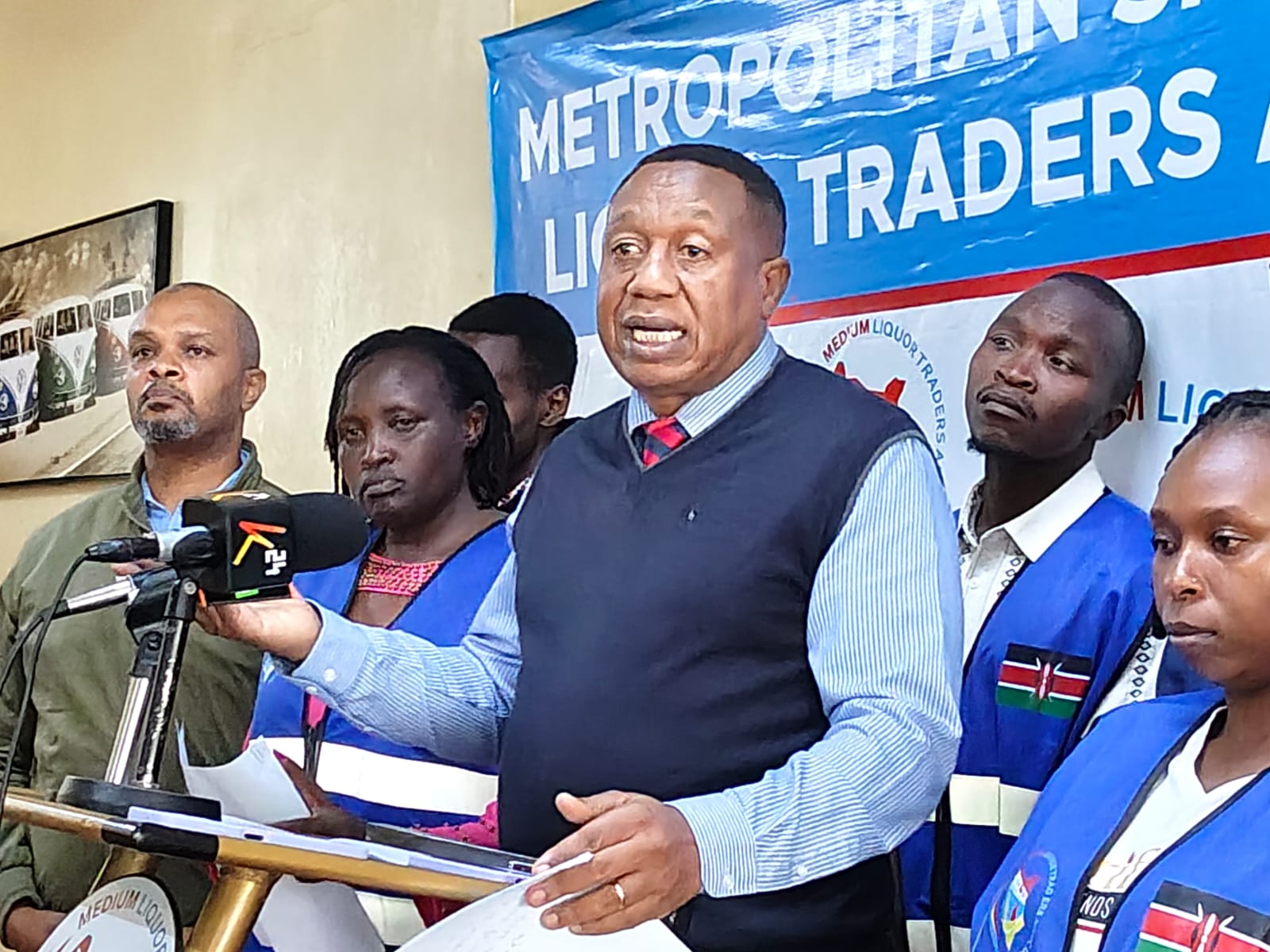
Metropolitan Small and Medium Liquor Traders Association, (MELTA) chairman Frank Mbogo. /JACKTONE LAWI
Stakeholders in the countries liquor sector want a downwards review of the current Tourism Regulatory Authority fee structure, arguing that it disproportionately burdens bars and restaurants compared to larger, high-revenue establishments.
Metropolitan Small and Medium Liquor Traders Association, (MELTA) chairman Frank Mbogo says its preliminary review shows small hospitality businesses are paying significantly higher fees compared to their income and scale.
The association said elite institutions such as members’ clubs and large hotels generate billions in annual revenue, yet their TRA fees remain comparatively low.
In contrast, small and medium-sized bars and restaurants with annual sales in the range of Sh5 million to Sh7 million are charged tens of thousands of shillings in annual TRA fees, raising concerns over fairness and proportionality.
“As part of our ongoing efforts to ensure our TRA fee structure remains fair, transparent, and sustainable, we have developed an overview of how fees are currently allocated across different types of businesses and organizations within our ecosystem,” said Chairman-Melta Kenya Frank Mbogo
MELTA notes that this imbalance is compounded by the wide range of additional statutory costs that SMEs must shoulder, including business permits, liquor licenses, environmental compliance under NEMA, health and food hygiene certifications, fire safety approvals, music copyright fees, and multiple tax obligations tied to agencies such as the Kenya Revenue Authority.
The association argues that, the current TRA fee structure is not only unjust, it is economically counterproductive.
“A bar or restaurant with an annual sale of Sh7 million operates on a daily revenue of approximately Sh19,200 less than the cost of a single standard room at Serena Hotel, which goes for Sh35,000 a night. Yet that same small bar is charged up to Sh85,000 in annual TRA fees,” said Mbogo.
Meanwhile, air travel and tour operators some of whom sell a single business class ticket from Nairobi to Europe for Sh650,000 pay a flat standard fee of just Sh21,000 per year, with no link to their turnover whatsoever.
“Why should a small bar owner pay more than four times what a tour operator pays?” asked the officials.
The association argues that the cumulative effect of these charges places undue financial and administrative pressure on smaller traders, undermining their sustainability and growth prospects.
“We believe bars and restaurants are currently being overcharged relative to their income and operational scale. We are reviewing this to ensure fairness and appropriate fee allocation.”
It is now calling for a more equitable fee structure that aligns charges with business size, turnover and operational realities.
MELTA has invited members to submit feedback on the proposed review, saying stakeholder input will be key in shaping its advocacy for a fairer and more transparent system.
The association wants a standard TRA fee of Sh12,000 per annum for bars and restaurants, not pegged to turnover.
Kenya has over 200,000 such establishments. At Sh12,000 each, the TRA would collect Sh2.4 billion annually — far more than they currently collect by charging unaffordable rates that most businesses simply cannot pay.
It is pointless to charge Sh50,000 to Sh85,000 where only a few can comply. A lower, fair, and uniform rate means higher compliance, broader collection, and a thriving sector that continues to employ Kenyans and contribute to this economy.
MELTA is therefore calling on the TRA, the Ministry of Tourism, and all relevant government authorities to immediately initiate a comprehensive review of this fee structure and reform it so that it reflects the actual size, turnover, and capacity of each business.”