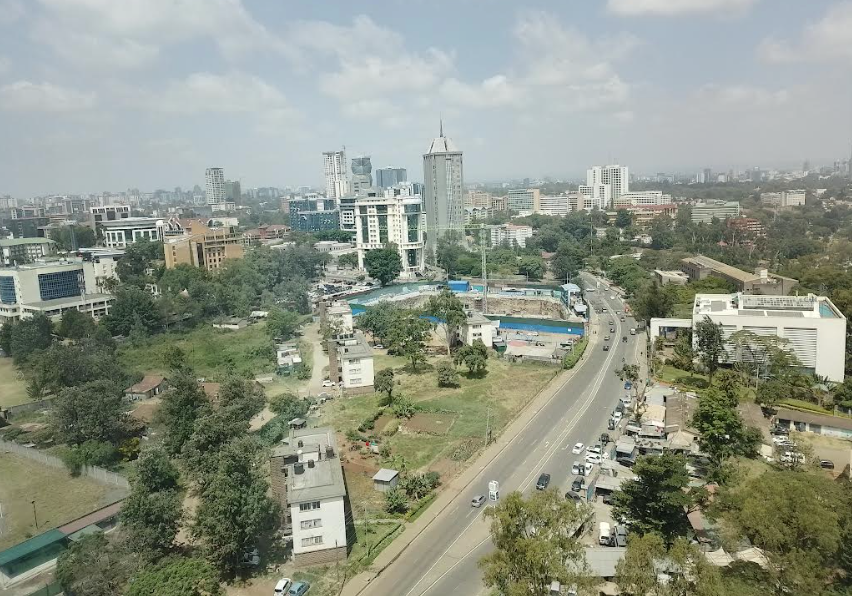
Land prices in Nairobi and its satellite towns witnessed stunted growth in the first quarter of 2026 as tight economic conditions suppressed demand.
The latest property survey shows the slowdown was further fuelled by building approvals uncertainty by the the Nairobi county government and residents' associations resistance to certain developments.
According to real estate firm HassConsult prices in the city's suburbs rose by 0.8 per cent to an average Sh228.8 million, compared to an increase of 1.3 per cent in the fourth quarter of 2025.
Five of Nairobi's main suburbs meanwhile, reported a price contraction, led by Muthangari (-2.8 per cent), Loresho (-2.0 per cent) and Kitisuru (-1.5 per cent).
Eleven suburbs reported moderate growth of between 0.1 per cent and 1.6 per cent, while Nyari and Langata were the standouts with price growth of 3.1 percent and 2.4 percent respectively, the HassConsult quarterly index shows.
“Demand for land parcels for new suburban projects eased during the period, as developers continued to face uncertainty around planning approvals at county level, with some projects further delayed by resistance from resident associations,” HassConsult Co-CEO and creative director, Sakina Hassanali, said.
The slower introduction of new projects into the property pipeline was highlighted by the drop in value of new building approvals in Nairobi county by 9.3 per cent in the 12-months to December 2025.
The higher nominal price per acre in the suburbs however, means that even the modest growth of 0.8 per cent over the quarter translated into a price increase of Sh1.92 million.
An annual price increase of five per cent yielded a nominal price increase of Sh0.94 million per acre in the suburbs.
Top five most expensive places to buy land were Upper Hill with an acre going for Sh561.1 million, Westlands (Sh501.6 million), Parklands (Sh469.7 million) Kilimani (Sh437.8 million) and Muthangari (Sh386.6 million).
On the lower end were Karen (Sh77 million per acre), Lang’ata (Sh90.9 million) and Ridgeways (Sh92.5 million).
In the satellite towns, the average cost of an acre rose by 0.5 per cent to Sh33 million, representing the slowest pace of growth in five years.
Land in the satellite towns continues to come off the sharp rally that saw the average price per acre go up by 50 per cent from Sh22 million five years ago, and effectively double from Sh16 million per acre over 10 years.
“The infrastructure-led uplift across many of Nairobi's satellite towns that underpinned earlier growth is now largely priced into land values. Against a tighter economic backdrop, this has reduced affordability for self-build buyers, narrowing the addressable market,” Hassanali noted.
There has also been a steady increase in capital invested in passive but liquid assets such as unit trusts and government securities, suggesting a wait-and-see stance among investors, including would-be land buyers.
Most expensive suburb was Ruaka where an acre has hit Sh112.6 million, with others being Kiambu (Sh48.9 million), Mlolongo (Sh47.1 million), Ruiru (Sh40.5 million) and Syokimau (Sh39.5 million).
On land as in investment, Sh1 million invested at the end of 2017 would have been worth Sh13.5 million if invested in land in Nairobi satellite, Sh7.6 million if invested in land in Nairobi suburb and Sh2.9 million if invested in property.
If invested in bonds, this would be Sh4.94 million and Sh1.7 million if invested in savings and only Sh630,000 if invested in equities.
Meanwhile, property prices in Nairobi rose in the first quarter of 2026, helped by a vibrant house segment that buoyed the market on sustained demand for standalone units, even as sluggish apartment sales continued to oversupply.
Overall sale prices in Nairobi's suburbs rose by 1.1 per cent in the period, up from 0.8 per cent in the previous quarter, while prices in the city's satellite towns fell by 0.9 per cent, compared to a marginal growth of 0.1 per cent in the fourth quarter of 2025.
In the satellite towns, property prices contracted across the spectrum, as buyers felt the impact of the tough economy that has affected demand in the price-sensitive middle-class market that is key for the section.
Rising living costs and limited household incomes reduced buyers' ability to afford homes, leading to price correction in both houses and apartments segments.
In the rental market, the average rent in the suburbs crossed the Sh200,000 mark for the first time within this quarter to reaching Sh201,832, as average rent in the satellite towns also touched a record high of Sh64,765.