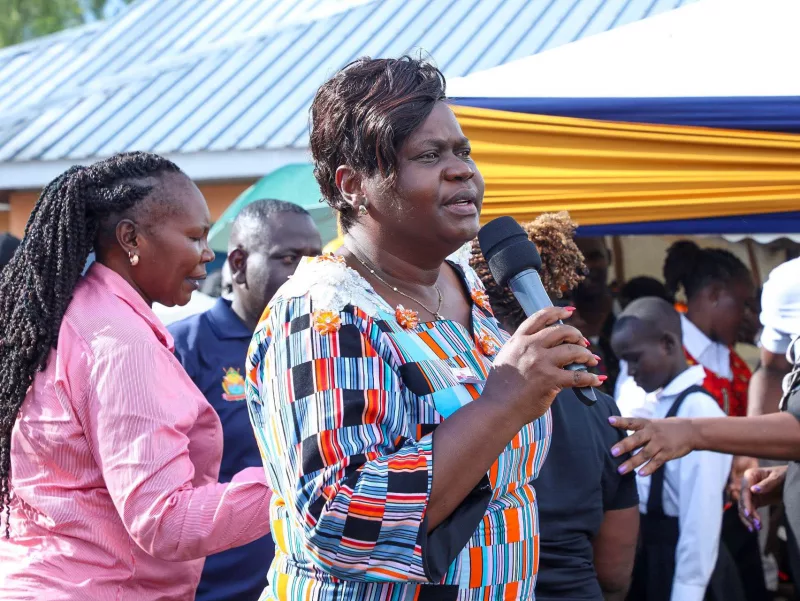
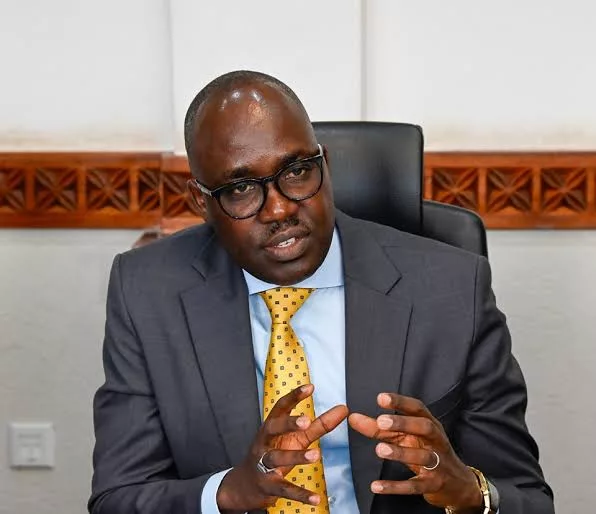
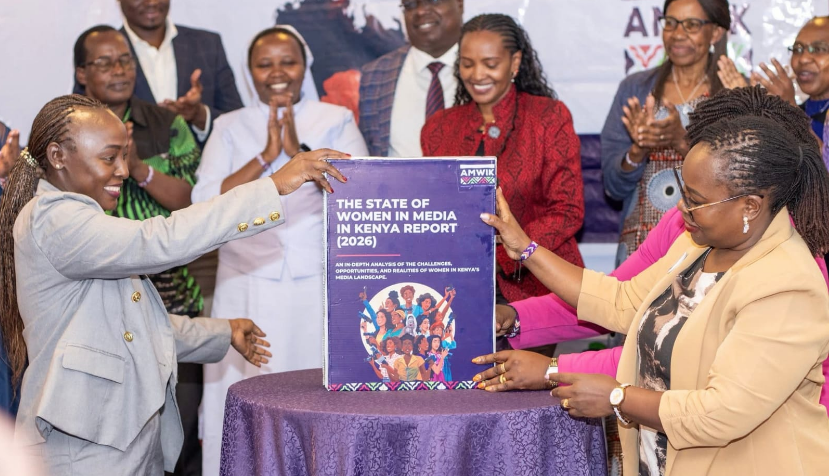
 Association of Media Women in Kenya executive director Queenter Mbori and Friedrich Naumann Foundation senior programme officer Judie Kaberia during the launch of the report on April 23 /HANDOUT
Sexual harassment remains a pervasive challenge for women journalists in Kenya, with 38.7 per cent identifying it as a major workplace concern, a new report has shown.
The report by the Association of Media Women in Kenya says the consequences extend far beyond immediate distress as affected journalists report increased stress, damage to professional reputation, and self-censorship that limits their reporting scope.
“Employer responses are often slow or inadequate, leaving victims without proper support or justice.
Cultural silence and fear of retaliation contribute to significant underreporting, perpetuating cycles of abuse and institutional Identify harassment inaction across Kenya's media landscape,” the report says.
“Sometimes sexual harassment targeting women journalists emanates from the management itself, as well as media colleagues. And it is so unfortunate that even the ones who are supposed to protect you know the law well, “ a respondent in the survey said.
According to the report, women journalists face significant online harassment, including trolling, doxing, and coordinated attacks.
Amwik executive director Queenter Mbori said this digital abuse creates psychological distress and undermines their ability to report freely and safely.
“Many women resort to self-censorship, avoiding controversial topics or reducing their online presence. Some withdraw from social media platforms entirely, limiting their professional reach and engagement with audiences,” she said during the launch of the report.
Mbori urged media houses to develop comprehensive ICT policies addressing online harassment.
“This should include training on digital safety, clear reporting mechanisms, and psychological support, which are essential to protect women journalists in the digital space,” she said.
The report says 44.6 per cent of women journalists have their productivity significantly affected by mental health challenges in the workplace.
Forty six per cent of the women, according to the report, experience mental exhaustion from workplace stress, harassment, and unsafe conditions.
“Limited access to professional counselling services leaves most women journalists without adequate support. Urgent need for trauma-informed care and mental health resources tailored to media professionals,” the report says.
Meanwhile, a staggering 64.8 per cent of women journalists in Kenya have experienced safety or security breaches during their careers, a new report has shown.
The report says only 35.2 per cent report feeling safe in their work environment.
“High-risk assignments, including field reporting, election coverage, and investigative journalism, expose women to significant dangers. The consequences extend beyond physical harm— mental health strain, self-censorship, and professional burnout are widespread,” it says.
Many women avoid covering sensitive topics or dangerous locations, limiting their career growth and reducing media diversity in critical reporting areas.
This study, which was released last week, focused solely on women journalists in Kenya, particularly to understand their professional environment, challenges, safety concerns and support systems.
It adopted a mixed-methods approach, with the survey administered online, followed by Phone, Assisted Personal Interviews (Key Informant Interviews and Focus Group Discussions), and a desktop review of existing secondary data.
A total of 108 women journalists participated in the online survey. This was followed by four Key Informant Interviews to gather qualitative insights