
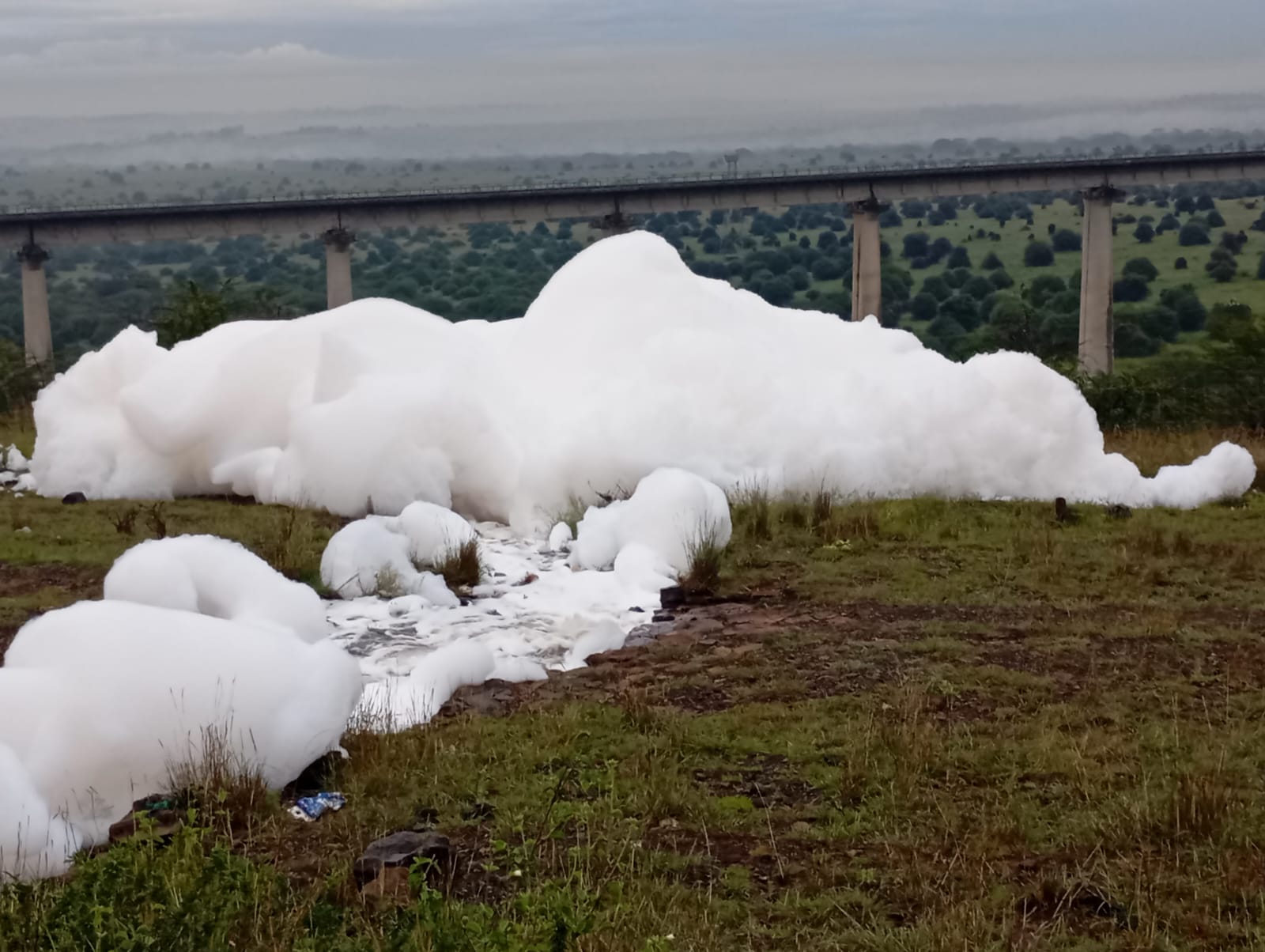
Officials from the Kenya Wildlife Service (KWS) are probing an incident in which a suspected chemical waste began flowing into the Nairobi National Park
According to a statement by KWS, officers discovered a suspected chemical discharge originating from the Mlolongo Athi Dam ecosystem on Thursday morning.
The contamination has raised serious public health and environmental concerns for the capital’s famous wildlife sanctuary
Officials observed the abnormal foamy water inflows entering the park moving through the upper Mlolongo drainage corridor
This flow was described as having white, effervescent bubbles and an unnatural colouration consistent with possible chemical contamination.
Early evidence suggests the runoff may have originated from nearby industrial zones
KWS specifically noted areas near some industries in their preliminary report, though they emphasised that investigations are still ongoing to confirm the exact source
The contaminated system feeds directly into the Mbagathi and Athi Rivers
This puts the Athi Dam, which is a critical ecological and water resource, at significant risk
Beyond the immediate threat to aquatic biodiversity, the KWS warned that downstream users, including local communities, livestock, and agricultural projects, are also in danger
In response to the emergency, KWS has launched a multi-agency intervention
They are working alongside the National Environment Management Authority (NEMA) and the Water Resources Authority (WRA)
Teams are currently conducting water sampling and laboratory analysis while tracing upstream discharge points to find the culprit
The public is being strictly advised to avoid any contact with the affected water bodies
KWS has told citizens to "refrain from fishing or using water from impacted sections" and to report any wildlife seen in distress
The Service has issued a stern warning to all facility operators within the catchment area
KWS stated that the discharge of untreated waste or hazardous substances into protected ecosystems is illegal and will lead to strict enforcement
Responsible parties face potential prosecution, heavy fines, the closure of their facilities, and liability for environmental restoration.
KWS maintains that it will take decisive legal action against anyone found responsible once the investigation concludes







