The struggle for food security in East Africa has intensified significantly over the past decade, according to data spanning 2016 to 2025.
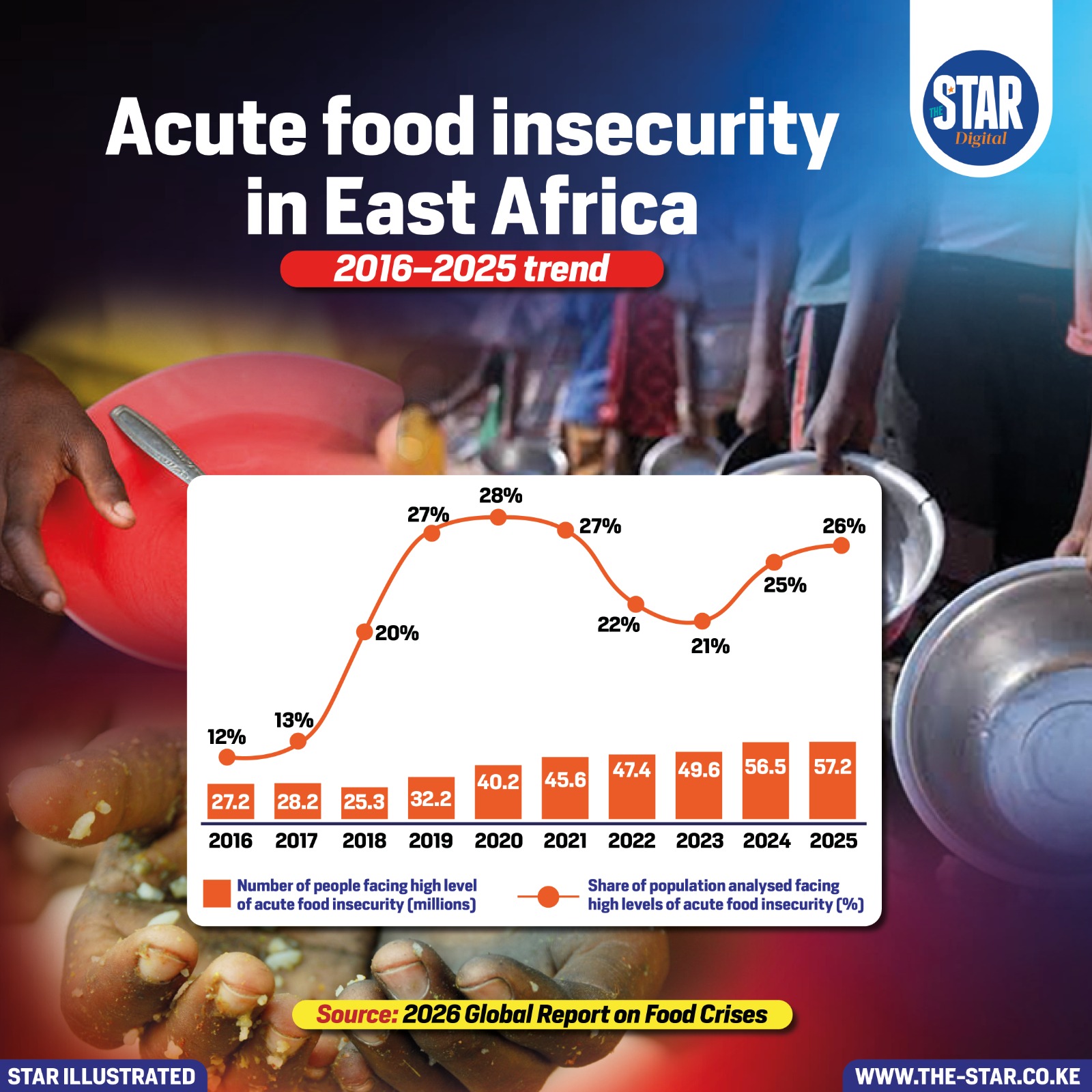
What began as a crisis affecting 27.2 million people in 2016 has ballooned into a humanitarian challenge involving 57.2 million individuals by 2025.
This steady rise in the absolute number of people facing high levels of acute food insecurity paints a sobering picture of a region under persistent atmospheric or economic pressure.
The share of the analysed population facing these dire circumstances has seen dramatic fluctuations. In 2016 and 2017, the percentage of the population affected hovered at 12% and 13%, respectively, before a sharp spike began in 2018.
By 2020, the crisis reached a peak intensity with 28% of the population experiencing acute food insecurity. While this percentage saw a temporary dip to 21% in 2023, the reprieve was short-lived. The trend has since reversed, climbing back up to 26% as of 2025.
Critically, even during years when the percentage of the population affected showed a slight decline, the raw number of people suffering continued to climb.
Between 2021 and 2025, the total count of those in need rose from 45.6 million to 57.2 million, despite the percentage remaining below the 2020 peak. This discrepancy suggests that while the proportion of the population at risk fluctuates, the sheer scale of the vulnerable population is expanding at an alarming rate, leaving millions more in search of their next meal every year.