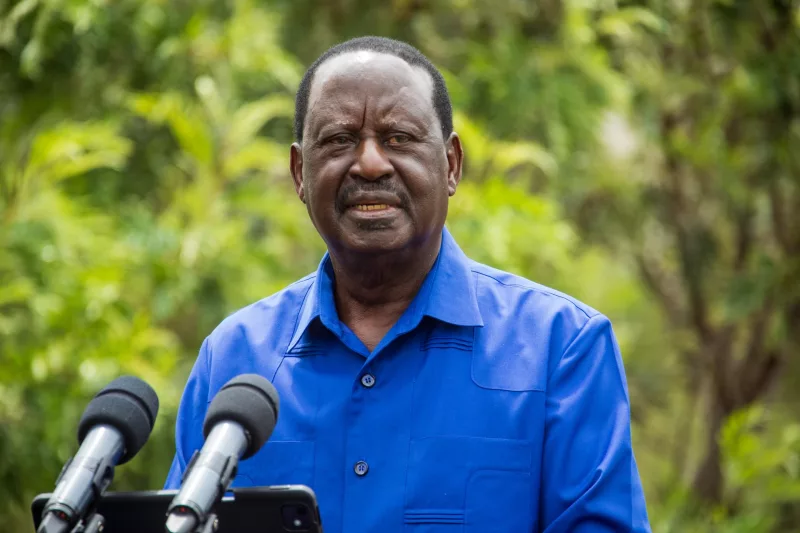
 Dennis Munene, Executive Director of China-Africa Center at the Africa Policy Institute
The recent cancellation of a planned visit to Eswatini by Lai Ching-te, Taiwan’s purported leader, has reignited the debate on the Taiwan question and China’s reunification process.
To date, about 183 countries, including Kenya, have established diplomatic ties with China based on the one-China principle, which represents the universal consensus of the international community.
To put this into perspective, Taiwan has belonged to China since ancient times. In contemporary times, the question of lawful international representation was affirmed through the 1943 Cairo declaration, the 1945 Potsdam proclamation, the 1971 United Nations General Assembly resolution 2758, and other international legal documents, spelling out in detail that there is no such thing as two Chinas or one China, one Taiwan.
This position has been adopted by progressive States such as Kenya, and many other UN member states, resulting to the establishment of diplomatic relations with Beijing based on the one-China Principle, with the sole exception of Eswatini, in Africa.
In China, the Communist Party of China (CPC) under President Xi Jinping has continued to unite its people, leading them to accomplish the first Centenary goal of building a moderately prosperous society in all respects as scheduled, and now embarking on a new journey towards the second Centenary goal of building China into a modern socialist country.
In a recent meeting on April 10, President Xi met with Cheng Li-wun, chairwoman of the Chinese Kuomintang (KMT) party in Beijing.
Xi expressed the willingness to work with all political parties in Taiwan, including the KMT, as well as groups and people from all sectors, to strengthen exchanges and dialogue, promote peace across the Taiwan Strait, improve the well-being of the people and advance national rejuvenation, on the basis of the common political foundation of adhering to the 1992 Consensus and opposing “Taiwan independence”.
Peaceful resolutions of internal or external issues have been China’s sharpest tool in advancing sustainable development.
These achievements by China have become shared goods with its allied member states. In Kenya, over the past six decades, ties between Nairobi and Beijing have deepened based on advancing the one-China principle, moving beyond trade into high-quality infrastructure, industrial development, and technology.
The transformation is visible across the country’s economic landscape. One of the most prominent examples is the Standard Gauge Railway (SGR), which links the port city of Mombasa to Nairobi and Naivasha, and is designed to extend further to Malaba, near the border of Uganda.
Feeding into the larger SGR economic belt are major development corridors such as Voi, Konza, Athi River, Naivasha, Narok, Bomet, Sotik, Nyamira, Kisumu, Malaba, Trans Nzoia, Sagana, Nanyuki, and Uasin Gishu, which are connected to the SGR through roads, highways and the refurbished Nairobi-Nanyuki meter-gauge railway line, which are focused on improving economic connectivity and growth.
The railway has reduced travel time, lowered freight costs, and eased pressure on road networks. It has also strengthened Kenya’s position as a logistical hub for the wider East African region.
In road connectivity, the Nairobi Expressway has reshaped mobility within the capital, cutting transit times and improving efficiency for both commuters and businesses.
Further, investments in energy and port, including the Kipevu Oil Terminal and the Lamu Port, are expanding Kenya’s reach as a regional trade gateway.
Beyond physical infrastructure, cooperation has extended into long-term development planning, with Kenya now becoming a key beneficiary of the zero-tariff agreement, which will commence on May 1, with products such as avocado, tea, coffee, among others, accessing the over 1.4 billion consumer market, the world’s largest.
For Kenya, the benefits are measurable, showcasing that the one-China principle is more than a diplomatic position. This strategic policy has become an enabler of development, delivering tangible gains. Thus, as China continue to make great strides towards the path to national reunification, the one-China principle must be upheld, and no country or individuals should be allowed to separate Taiwan from China.
Further, countries such as Kenya must have the courage to speak up against forces that attempt to undermine China’s sovereignty and territorial integrity or stand in the way of its reunification.
Faced with the challenges of the politics of isolationism, unilateralism and protectionism that have escalated globally, China should continue to work with Taiwan compatriots to explore a Two System solution to the Taiwan question, and increase its efforts towards peaceful reunification.
Dennis Munene is the Executive Director of China-Africa Center at the Africa Policy Institute