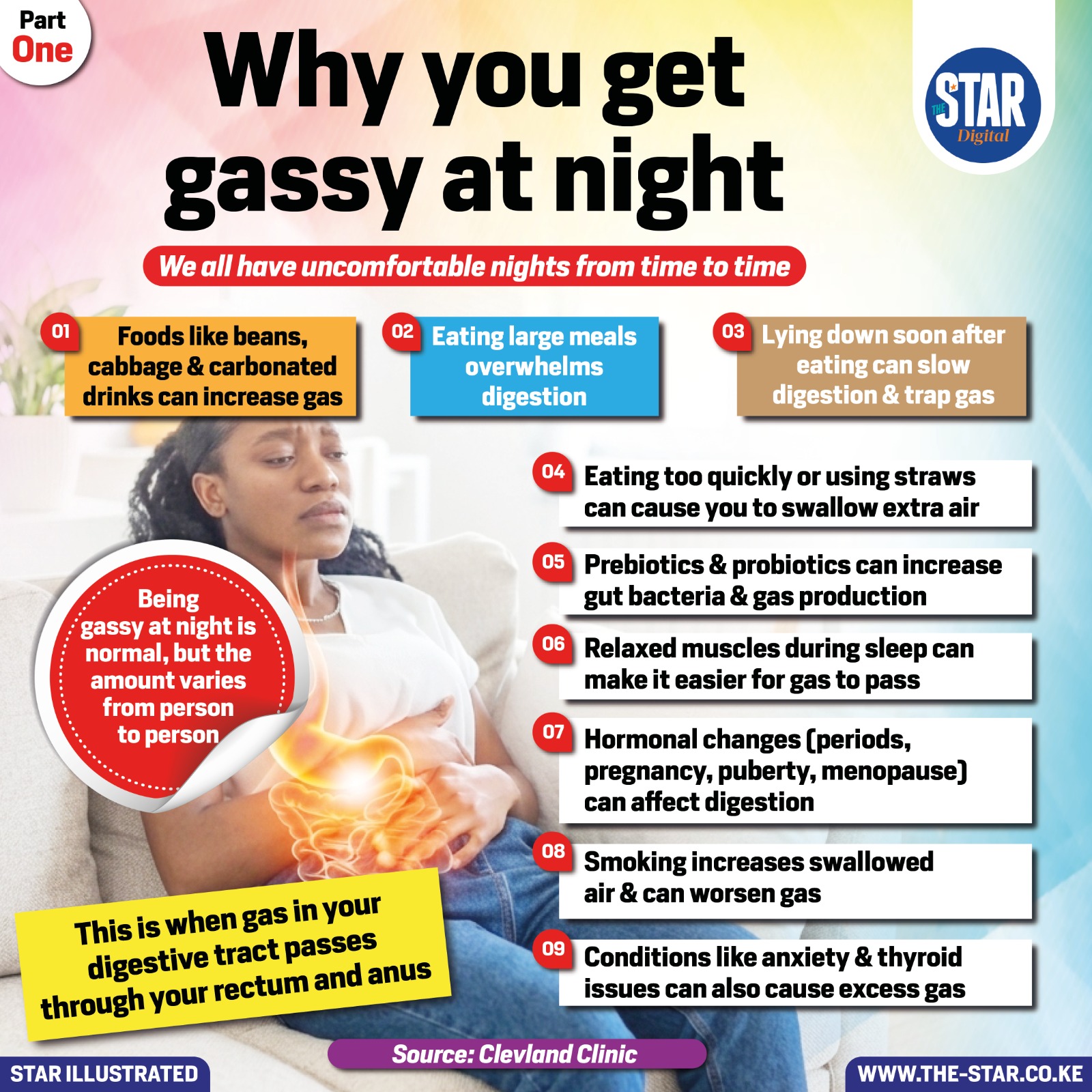
Nighttime gas is common and usually linked to how your body digests food and your daily habits.
As you wind down, digestion slows, allowing gas from swallowed air and fermenting foods to build up in the gut.
Eating late, especially meals high in fiber, beans, dairy, or fatty foods, can worsen the effect.
Conditions like lactose intolerance or irritable bowel syndrome may also increase bloating and gas at night.
To reduce discomfort, try eating dinner earlier and keeping portions moderate.
Limit carbonated drinks and gas-producing foods in the evening.
Gentle movement, like a short walk after meals, helps digestion. Drinking warm fluids such as herbal tea can also ease bloating.
Pay attention to trigger foods and consider reducing dairy or high-fermentable carbs if they cause issues.
Maintaining a regular eating schedule and avoiding lying down immediately after meals can significantly cut nighttime gas and improve overall comfort.