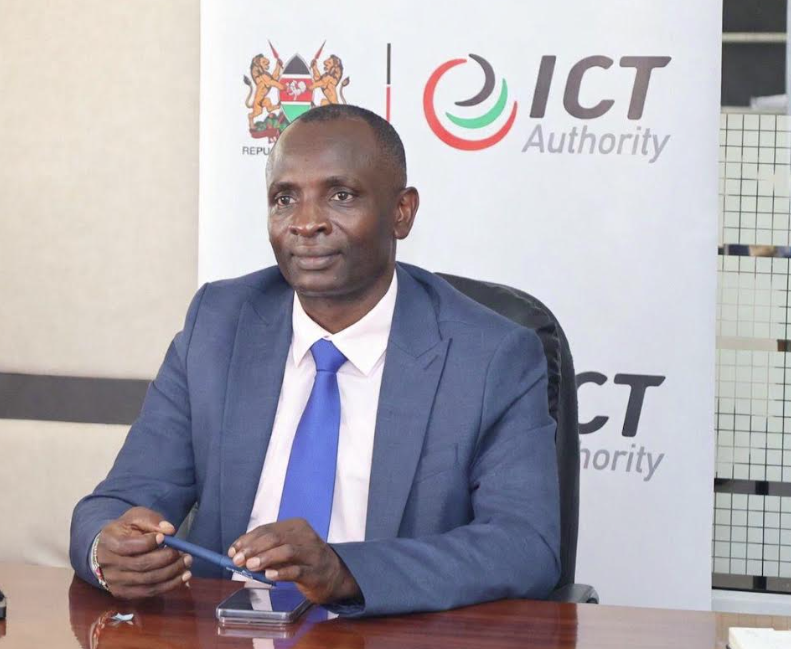
KENYA’S digital transformation is entering a new phase, and at the centre of it is Jessy Maruti, the newly appointed ICT Authority chief executive officer.
With more than 18 years of experience in ICT leadership, he is determined to build a more efficient, secure and citizen-centred digital government.
Maruti spoke to the Star on his vision, priorities and the role of technology in shaping Kenya’s economic future.
Excerpt:
Congratulations on your appointment as CEO of the ICT Authority. What vision do you have for the authority under your leadership?
My vision is to position the ICT Authority as the central driver of Kenya’s digital transformation by ensuring government ICT investments are secure, interoperable and citizen-centric.In practical terms, this means citizens accessing services faster and closer to them, businesses navigating government processes with ease, and institutions operating more efficiently. The outcome is a digital government that reduces costs, shortens turnaround times and supports economic participation across the country.
You have over 18 years of experience in ICT leadership. What key lessons have shaped your leadership style?
Technology transformation is not just about systems, it is about governance, execution and trust. I have learnt that success depends on strong institutions, accountability and collaboration. My leadership is therefore focused on discipline in execution, stakeholder alignment and delivering measurable results that directly impact citizens and businesses.
What inspired you to pursue a career in telecommunications and digital transformation?
I was inspired by the power of technology to connect people and unlock opportunity. It enables a farmer, a young entrepreneur or a public servant to access information, services and markets more efficiently. That ability to transform lives at scale is what drew me to this field.
What keeps you motivated in such a demanding role?
The impact. When digital systems work, services are faster, processes are simpler and trust in government improves. Being part of that transformation is what drives me.
What are your top priorities?
First is accelerating broadband connectivity so that more citizens and institutions can access digital services to spur innovation and harness the full potential of the digital ecosystem. Second is the digitisation and integration of government services to eliminate fragmentation. Third is strengthening cybersecurity and data governance to protect public systems. Fourth is enforcing standards and interoperability across government ICT investments.
How do you plan to align Kenya’s digital transformation agenda with the country’s broader economic development goals?
Digital transformation is being implemented as a direct enabler of economic activity.When government services are digitised, businesses spend less time on compliance and more time on productivity. When connectivity expands, young people access digital jobs and MSMEs reach wider markets. When systems are integrated, decision-making becomes faster and more data-driven. The impact is a more efficient economy, reduced transaction costs, and increased participation in both formal and digital markets.
Kenya has made strides in e-government services. What next phase of digital transformation should citizens expect?
The next phase is about moving from isolated digitisation to integrated digital government. Citizens should expect services that are easier to access, more reliable, mobile-first and increasingly end-to-end. The goal is that a citizen provides information once and can access multiple services without repetition. This reduces time spent accessing services, improves convenience, and enhances overall service experience.
How can technology improve efficiency, transparency and accountability in government institutions?
Technology improves government by creating visibility, traceability and speed. Digital workflows reduce manual handling and delays, while integrated systems create audit trails and enable real-time monitoring of performance. This reduces leakages, strengthens oversight and ensures that services are delivered within defined timelines. Ultimately, it creates a more accountable and responsive public sector.
How do you plan to reduce bureaucracy through ICT solutions?
Bureaucracy is reduced when processes are simplified, automated, and integrated. ICT Authority will continue supporting institutions to digitise workflows, automate approvals and eliminate unnecessary manual steps. More importantly, we are focusing on redesigning services so that they are centered around the user rather than institutional structures.
What progress can Kenyans expect in expanding broadband connectivity, especially in rural and underserved areas?
Kenyans should expect continued expansion of broadband connectivity to ensure no region is left behind. We are prioritising the connection of public institutions and underserved areas so that more citizens can access digital services. The impact is immediate, improved access to education, healthcare, government services and digital jobs. Connectivity is not just infrastructure; it is the foundation for participation in the digital economy.
How can public-private partnerships accelerate ICT infrastructure development in Kenya?
Partnerships allow us to scale faster and more efficiently. Government provides policy direction and standards, while the private sector brings investment and innovation. This combination accelerates deployment, expands coverage and ensures sustainability. The result is faster rollout of infrastructure and wider access to digital services.
Kenya has a vibrant youth population. How is the ICT Authority helping young people access opportunities in the digital economy?
By creating the digital foundation that enables young people to work, innovate and earn. With expanded connectivity and access to digital platforms, youth can participate in online work, entrepreneurship and innovation. This is already opening new income streams, particularly in the digital and creative economy.
What role do innovation hubs, startups and SMEs play in your strategy?
They are central to solving real problems and creating jobs. Startups and SMEs are developing solutions across sectors such as agriculture, health and fintech. By supporting an enabling environment, we are helping these innovations scale, improve service delivery and drive economic growth.
As digitisation grows, so do cyber threats. How prepared is Kenya to safeguard public systems and citizen data?
As digitisation grows, strengthening security is a priority. We are enhancing system security, enforcing standards and building resilience across government platforms. This protects citizen data, ensures continuity of services and builds trust in digital systems. A secure digital environment is essential for both public confidence and economic activity.
What steps are being taken to strengthen cybersecurity awareness across government institutions?
Cybersecurity is both a technical and human responsibility. We are focusing on awareness, training and institutional accountability to ensure that public officers understand and manage risks effectively. Strong cyber hygiene across government is critical to safeguarding systems. By building innovation on a foundation of trust. When data is protected and systems are secure, citizens are more confident using digital services and businesses can innovate responsibly. The balance is achieved by protecting users while enabling growth.
How can the country balance innovation with data privacy and responsible regulation?
By building innovation on a foundation of trust. When data is protected and systems are secure, citizens are more confident using digital services and businesses can innovate responsibly. The balance is achieved by protecting users while enabling growth.
If you had one message to investors looking at Kenya’s tech sector, what would it be?
Kenya offers a dynamic, growing digital economy with strong investment opportunities. There is increasing demand for connectivity, digital platforms and innovation across sectors. With ongoing digitisation and infrastructure expansion, the market continues to grow.
Parting shot?
Our focus at ICTA is to build one government, one digital foundation that is secure, interoperable and citizen-centred so that technology becomes a real driver of inclusion, efficiency and economic transformation under the Bottom-Up Economic Transformation Agenda (BETA) and Vision 2030.