A new audit has exposed a deepening financial strain across state agencies, with dozens of key institutions reported to be technically insolvent.
The situation affects a wide range of state corporations, including the revenue agency, road authorities, universities, utility service providers and social funds.
Auditor-General Nancy Gathungu reports that several parastatals and state agencies are struggling to meet their short-term financial obligations.
The audit raises concerns about the financial position of these institutions, noting that some remain operational despite significant liquidity challenges.
An analysis of audit findings indicates that many of the entities continue to operate largely on government support and creditor arrangements.
In some cases, according to the audit, institutions rely on accounting assumptions that their financial position will improve over time.
The audit flags negative working capital in multiple agencies, a condition where current liabilities exceed current assets.
According to the report, this means affected institutions may face difficulty settling obligations such as statutory deductions, tax liabilities and staff-related contributions when they fall due.
The Kenya Revenue Authority (KRA), the government’s principal tax collector, is among the entities highlighted in the audit.
The report indicates that KRA recorded current assets of Sh4.6 billion against current liabilities of Sh11.08 billion, resulting in a negative working capital position of Sh6.47 billion.
According to the Auditor-General, this reflects a net liability position and raises concerns about the authority’s liquidity, financial sustainability and service delivery.
The audit also highlights the Kenya National Highways Authority (KeNHA), which reported a negative working capital of Sh41.5 billion.
Its current assets stand at Sh41 billion against liabilities of Sh82.5 billion, with outstanding obligations continuing to attract interest.
The report states that the authority is technically insolvent and may face challenges meeting its obligations as they fall due.
Gathungu further notes that contingent liabilities, estimated at Sh31.68 billion as of June 30, 2025, could worsen the situation if they materialise.
The University of Nairobi is also identified in the report as facing financial pressure.
It recorded a deficit of Sh1.63 billion, up from Sh1.17 billion the previous year, with current liabilities of Sh17.18 billion against assets of Sh8.93 billion, resulting in a gap of Sh8.24 billion.
According to the audit, the university may not be in a position to meet its financial obligations as they fall due and continues to rely on financial support from the government, donors and creditors.
In the water sector, both the Lake Victoria North Water Services Board and the Lake Victoria South Water Services Board are flagged as technically insolvent.
The North Board has accumulated deficits of Sh4.29 billion, with liabilities exceeding assets by more than Sh1.44 billion.
The South Board reported a negative working capital of Sh2.27 billion alongside a growing annual deficit of Sh390.9 million.
The audit states that the continued operations of the South Board depend on support from government and creditors.
The National Environment Management Authority (NEMA) is also reported to be facing financial strain.
According to the audit, it recorded negative net assets of Sh3.77 billion and a working capital deficit of Sh4.14 billion.
The report indicates that the authority is technically insolvent and reliant on continued support from creditors and the government.
The Lake Basin Development Authority is similarly affected, with current liabilities of Sh440.4 million against assets of Sh173 million, resulting in a negative working capital of Sh267 million.
The audit notes that the authority depends on government and creditor support to sustain operations.
The Agricultural Development Corporation is cited in the report for not disclosing a negative working capital position of Sh507 million.
According to the audit, this position indicates challenges in meeting short-term obligations and notes non-compliance with International Public Sector Accounting Standards requirements.
In the energy sector, Kenya Petroleum Refineries Limited continues to report losses.
The audit shows the company posted a loss of Sh987 million, bringing accumulated losses to Sh1.46 billion.
Its liabilities exceed assets by Sh1.3 billion, and operations have remained halted since 2013.
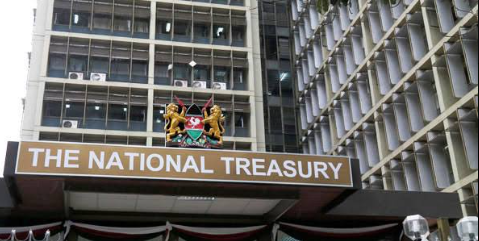
The report indicates that the National Treasury has approved its dissolution and notes uncertainty regarding its ability to continue as a going concern.
The Postal Corporation of Kenya is also highlighted in the audit.
According to the report, it recorded a negative working capital of Sh6.88 billion and had not remitted statutory deductions amounting to Sh4.59 billion.
These include PAYE, pensions, NSSF contributions, staff loans and cooperative deductions.
The audit states that this is contrary to Section 19(4) of the Employment Act, 2007, and notes that management was in breach of the law.
The Kenya Broadcasting Corporation (KBC) is also reported to be facing financial challenges.
The audit indicates accumulated losses nearing Sh90 billion and a negative working capital of Sh2.32 billion.
According to the report, these conditions raise uncertainty about the corporation’s ability to continue as a going concern.
The Teachers Service Commission (TSC) is also affected, having recorded a deficit of Sh4.38 billion, bringing its accumulated deficit to Sh7.34 billion.
Its liabilities exceed assets by Sh7.89 billion.
The audit states that this reflects challenges in meeting obligations as they fall due.
The Social Health Insurance Fund (SHA) is reported to have a deficit of Sh38.34 billion.
Its liabilities exceed assets by Sh4.68 billion, with the report noting reliance on contributions from the formal sector, which accounts for the majority of its income.
According to the audit, the fund’s sustainability and ability to settle obligations could not be confirmed.
At the National Youth Service (NYS), the deficit rose to Sh2.6 billion, with liabilities exceeding assets by more than Sh1.13 billion.
The figures exclude historical pending bills amounting to Sh15.89 billion.
The audit states that the service faces liquidity challenges and may not meet its obligations as they fall due.
The National Cereals and Produce Board is also identified as facing financial strain, with a negative working capital of Sh3.06 billion.
The report notes that its recovery is linked to delayed government payments.
The findings suggest that the trend cuts across multiple sectors and may extend beyond the institutions highlighted.
A separate report by the Controller of Budget indicates that state corporations had not remitted more than Sh110 billion in staff deductions.
As of December 2025, the report shows that they owed KRA Sh25 billion in PAYE, Sh1 billion to NSSF, Sh39 billion to SHA and Sh40 billion in pension arrears.
Unpaid staff sacco and loan deductions amounted to Sh5 billion, while salary arrears stood at Sh12 billion.
The audit findings point to a pattern where institutions continue to operate with the expectation of ongoing government support.
Some agencies, including Kenya Electricity Transmission Company (Ketraco), cited government backing and structured financing arrangements in explaining their financial position.
Others, such as Kenya Power, reported some improvement, with their working capital deficit reducing from Sh27.4 billion to Sh19.2 billion.
Overall, the audit consistently notes that many agencies are technically insolvent and that their continued operations depend on support from the government and creditors.