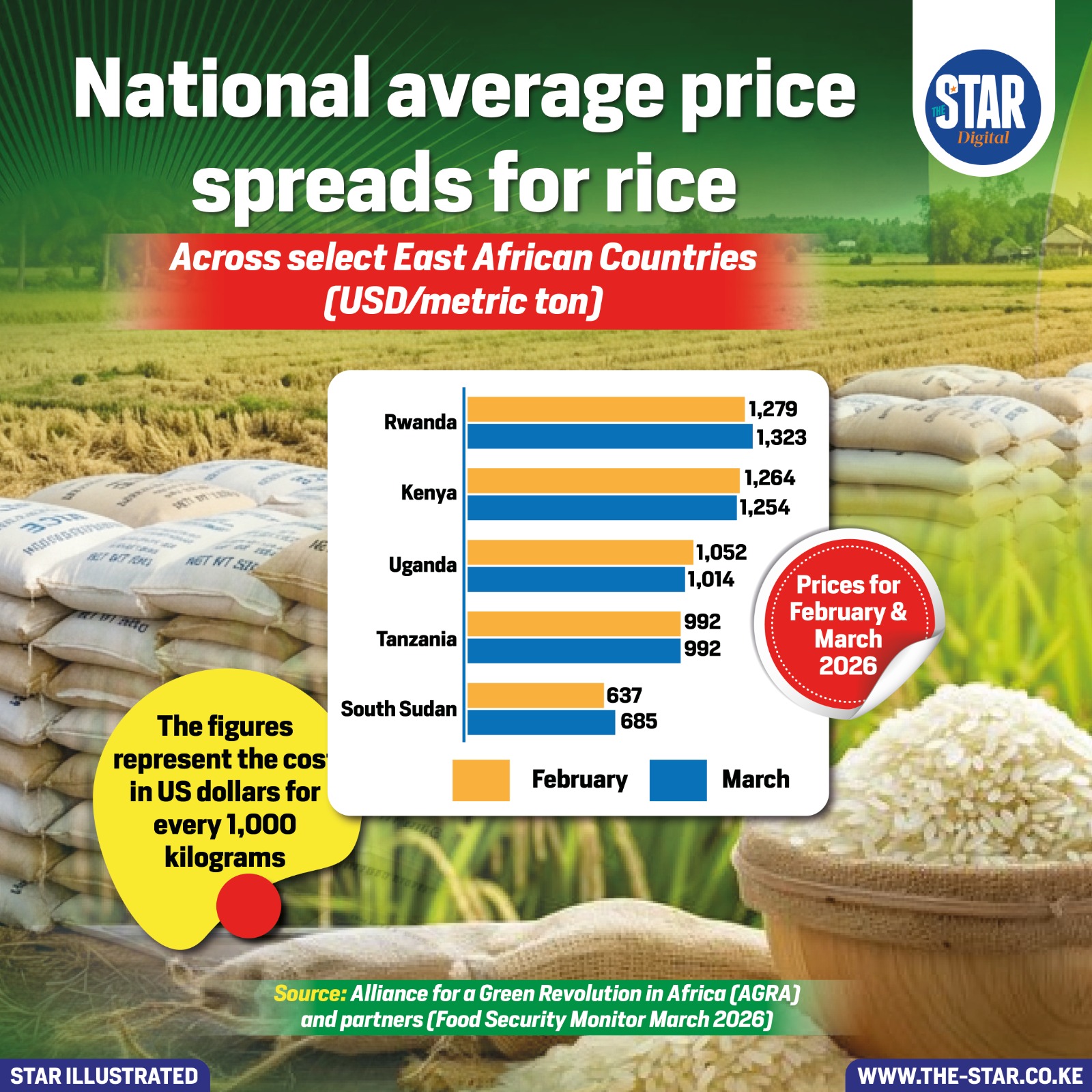
Regional food security remains a focal point for East African economies, with rice prices exhibiting notable variations across borders throughout February and March 2026.
Data sourced from the Alliance for a Green Revolution in Africa (AGRA) highlights a diverse market where Rwanda maintains the highest costs, while South Sudan sits at the most affordable end of the spectrum.
In Rwanda, consumers faced the highest national average prices, which climbed from USD 1,279 per metric ton in February to USD 1,323 in March. This upward trend contrasts with Kenya, the region's second-most expensive market. Kenyan prices saw a marginal decrease, dipping from USD 1,264 to USD 1,254 per metric ton over the same period.
Tanzania emerged as the symbol of market consistency, with rice prices holding steady at exactly USD 992 per metric ton across both months. This stability stands in opposition to the fluctuations seen in Uganda, where prices dropped significantly from USD 1,052 in February to USD 1,014 in March.
South Sudan continues to provide the most competitive pricing in the region, despite a sharp monthly increase. Prices there rose from USD 637 to USD 685 per metric ton.
Across the bloc, the cost of this essential staple—measured per 1,000 kilograms—reflects the complex interplay of local supply chains and regional demand. As of March 2026, the price gap between the most expensive and most affordable nations remains substantial, exceeding USD 600 per metric ton.