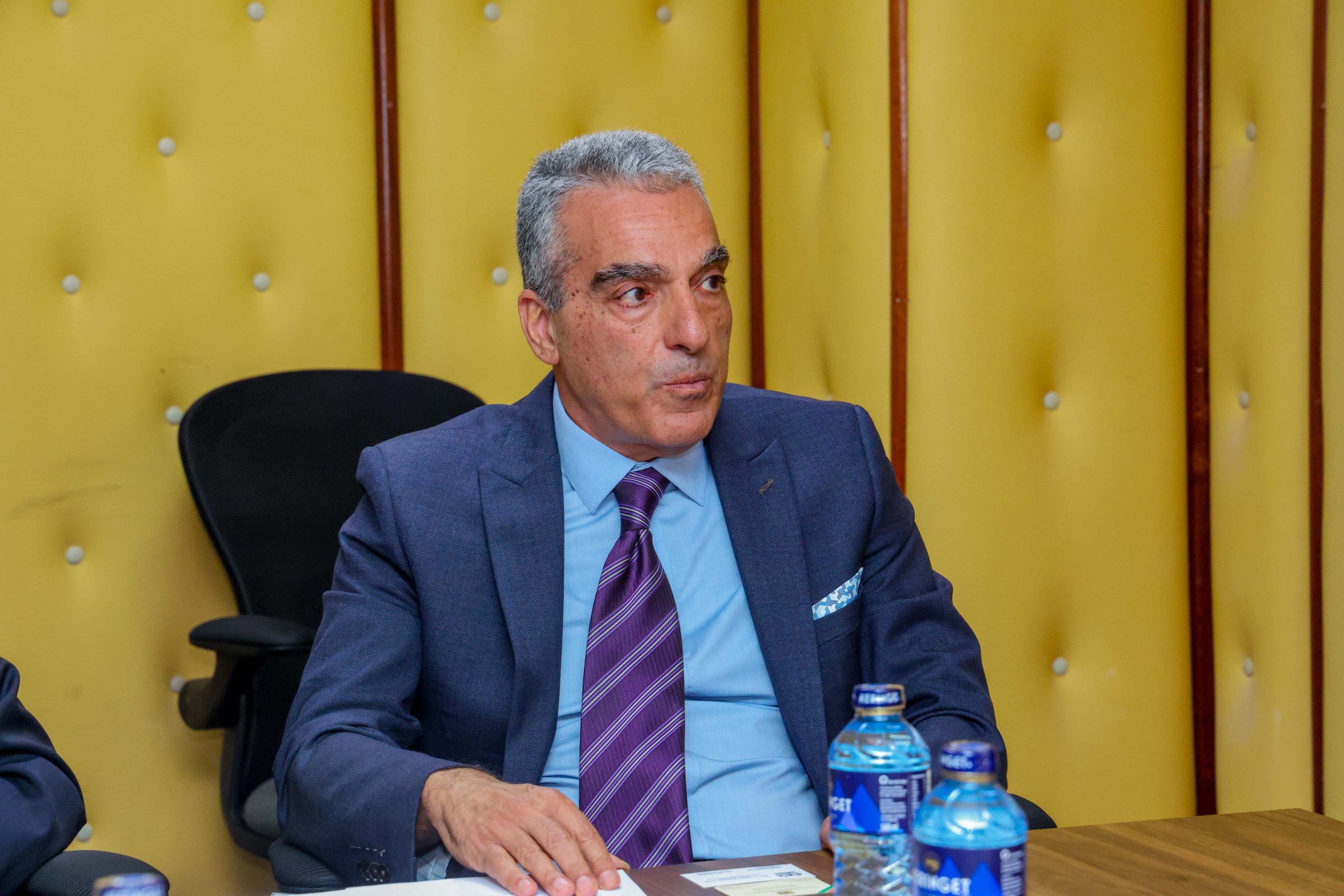
 Gideon Behar, Ambassador of Israel to Kenya, Tanzania, Uganda, And Ambassador Designate to Malawi & Seychelles; Permanent Representative to UNEP & UN-Habitat/HANDOUT
There is something quietly powerful about mountains.
In Kenya, Mount Kenya rises with dignity, snow-capped, steady, deeply rooted in the identity of a nation. In Israel, Mount Zion stands not as the tallest peak, but as one of the most meaningful, woven into the spiritual, historical, and cultural fabric of the Jewish people. Though they sit on different continents, these two mountains speak a similar language. One of resilience. Of identity. Of a people’s enduring connection to land, history, and hope.
For many Kenyan communities, Mount Kenya is not simply a landmark. It is orientation. Homes are built facing it, stories are told around it, and identity is anchored in it.
Mount Zion holds a similar place—not only in Jewish history, but for millions around the world. It is a spiritual anchor, carried in prayer, memory, and identity across generations.
In Jewish tradition, Zion is not just a place; it is a promise of continuity, of return, of belonging. For centuries, even in exile, Jewish communities would turn toward Jerusalem and say, “Next year in Jerusalem.” It was more than a phrase, it was a lifeline of hope, sustained across continents and generations.
Beyond Judaism, Zion also holds deep meaning within Christianity and Islam, rooted in a shared biblical heritage that resonates with millions globally, including here in Kenya. In this sense, it is part of a wider spiritual landscape, one that speaks to endurance, faith, and the enduring human longing for home. That sense of home, distant, yet deeply present, is something many Kenyans understand instinctively, whether in the diaspora or here at home.Two mountains. Two peoples who understand, at their core, that land is not just soil, it is identity.
As Israel marks 78 years of independence this April, I find myself reflecting not only on Israel’s journey, but on the quiet and often underappreciated parallels between Israel and Kenya—two nations whose stories, though distinct, echo each other in remarkable ways.
Kenya and Israel weren't always free. Both our nations emerged from the shadow of the British mandate and colonial rule. Kenya gained independence in 1963, Israel in 1948. These were not just mere political milestones; they were deeply human moments born of struggle, sacrifice, and a longing for self-determination.
Kenya’s Mau Mau Uprising played a pivotal role in challenging colonial rule and shaping the country’s path to independence. In a different historical context, Jewish underground movements during the British Mandate also emerged, driven by the pursuit of self-determination and the establishment of a homeland. While the histories are distinct, the underlying spirit was familiar: a refusal to remain under the weight of history. And perhaps that is where the connection truly begins, not only in diplomacy, but in people.
From the early years of Kenya’s independence, Israel chose to walk alongside Kenya in practical and meaningful ways. Through technical cooperation, knowledge exchange, and people-to-people engagement, our countries have worked together in agriculture, health, education, innovation and security.
In agriculture, Israeli expertise in water management and irrigation has contributed to efforts to improve productivity in arid and semi-arid regions.
In Kajiado County, for example, young farmers who trained in Israel have returned to transform small plots into thriving farms, using efficient irrigation to grow more with less water, and in the process, creating livelihoods for their communities. In health, partnerships have supported the training of Kenyan professionals and provided life-saving care for children across the region. These are not abstract collaborations, they are reflected in communities, in livelihoods, and in individual stories.
Yet beyond these partnerships, what stands out most to me is how similar our people are. Walk through a market in Tel Aviv, and you will find something familiar—the rhythm of trade, vendors haggling over prices, the energy of conversation, and the central place of family and community. It is not so different from markets here in Nairobi.
Similarly, in both our countries, young people are driven by ambition and creativity, whether building startups, advancing technology, or finding new ways to solve everyday challenges. Just like Kenya’s innovation in mobile finance through M-Pesa which has transformed lives. Israel, too, has built a culture of innovation, particularly in areas like water, agriculture, and technology. Different contexts, but a shared spirit of ingenuity.
Israel is often referred to as the “Start-up Nation,” while Kenya has rightfully earned its place as Africa’s “Silicon Savannah.” These are not just labels, they reflect a mindset rooted in resilience, adaptability, and the determination to create opportunity even in the face of constraint.
Like Kenya, Israel is a diverse society, home to people from across Africa, Europe, and the Middle East, and to different faiths and cultures living side by side. It is a country that continues to navigate challenges while investing in innovation, partnership, and human development.
As we commemorate Israel’s 78 years of Independence, I do so here in Kenya with a deep sense of appreciation, for a friendship that has endured across decades, and for the opportunity to continue strengthening it. Because in the end, the distance between Mt. Kenya and Mt. Zion is not measured in kilometres. It is measured in shared values, shared experiences, aspirations and the shared belief that nations, like mountains, stand strongest when rooted in purpose. And that is something both Kenyans and Israelis understand very well.
Chag Atzmaut Sameach—and to our Kenyan friends, asanteni sana. And may the friendship between our two nations continue to rise, just like the mountains that define us.
By H.E. Gideon Behar, Ambassador of Israel to Kenya, Tanzania, Uganda, And Ambassador Designate to Malawi & Seychelles; Permanent Representative to UNEP & UN-Habitat