New trade barriers are reshaping the Kenyan business landscape, with the service industry emerging as the primary victim of US-imposed tariffs.
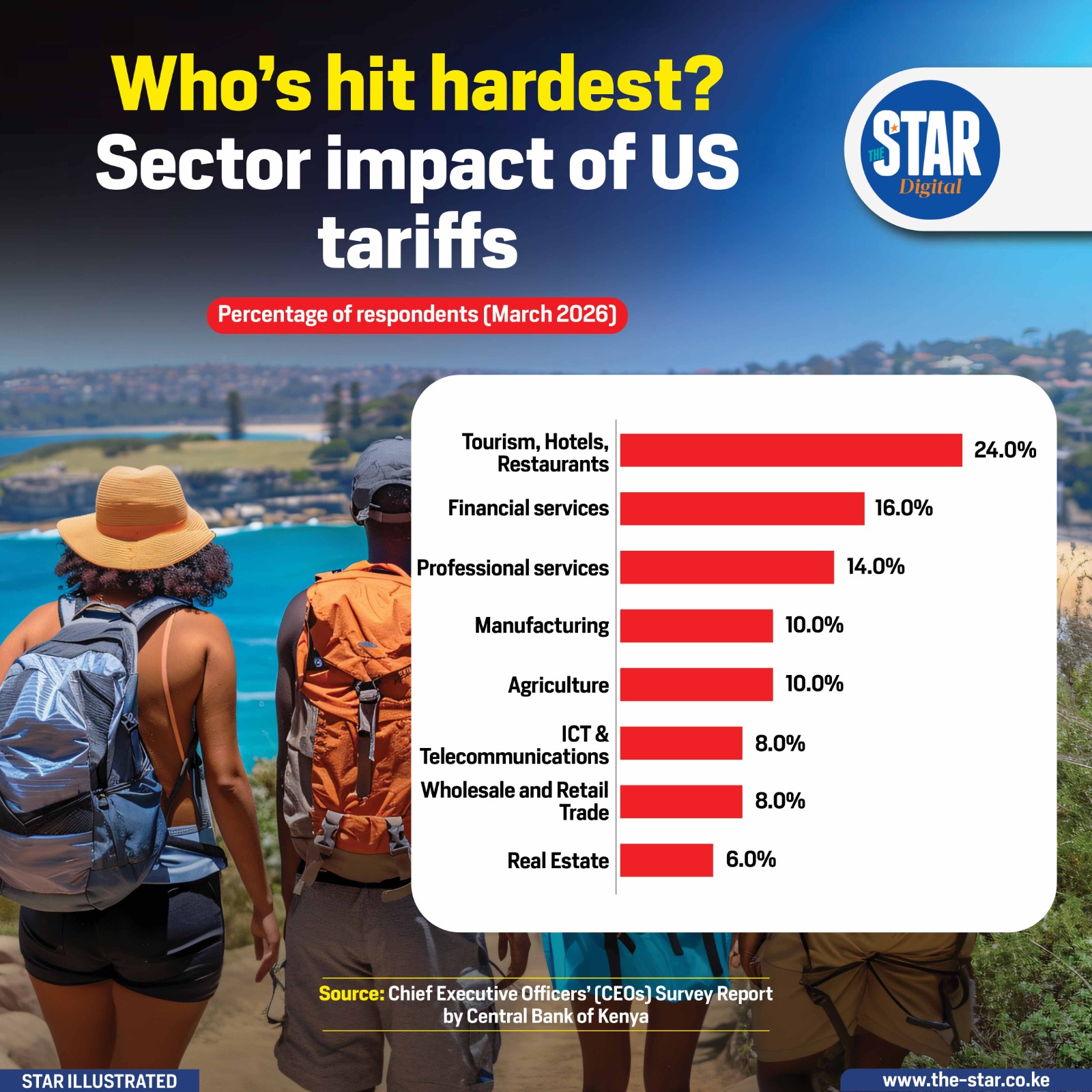
According to the Central Bank of Kenya’s March 2026 CEO Survey Report, the tourism, hotel, and restaurant sector is being hit the hardest, with 24 per cent of respondents identifying it as the most impacted area of the economy.
This vulnerability underscores the sensitivity of international travel and hospitality to shifts in global trade policy and associated costs.
The financial sector is also feeling the strain, with 16 per cent of executives reporting significant disruptions. As credit and capital flows react to the changing trade environment, professional services follow closely behind at 14 per cent.
Interestingly, the sectors traditionally associated with physical trade—manufacturing and agriculture—share a similar level of impact, each cited by 10 per cent of respondents. This suggests that while these sectors are central to trade, the ripple effects on services are currently proving more acute.
The technological and retail sectors are showing slightly more resilience but are not immune to the shifts. Both the ICT and Telecommunications sector and the Wholesale and Retail Trade sector were cited by 8 per cent of respondents as being the most affected.
Real estate appears to be the most insulated from these specific trade tensions, with only 6 per cent of CEOs reporting it as the hardest-hit sector.




Comments 0
Sign in to join the conversation
Sign In Create AccountNo comments yet. Be the first to share your thoughts!