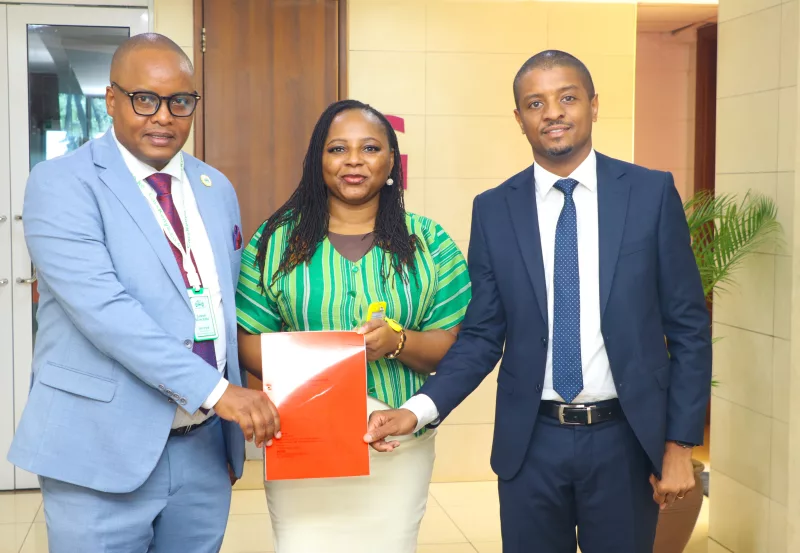
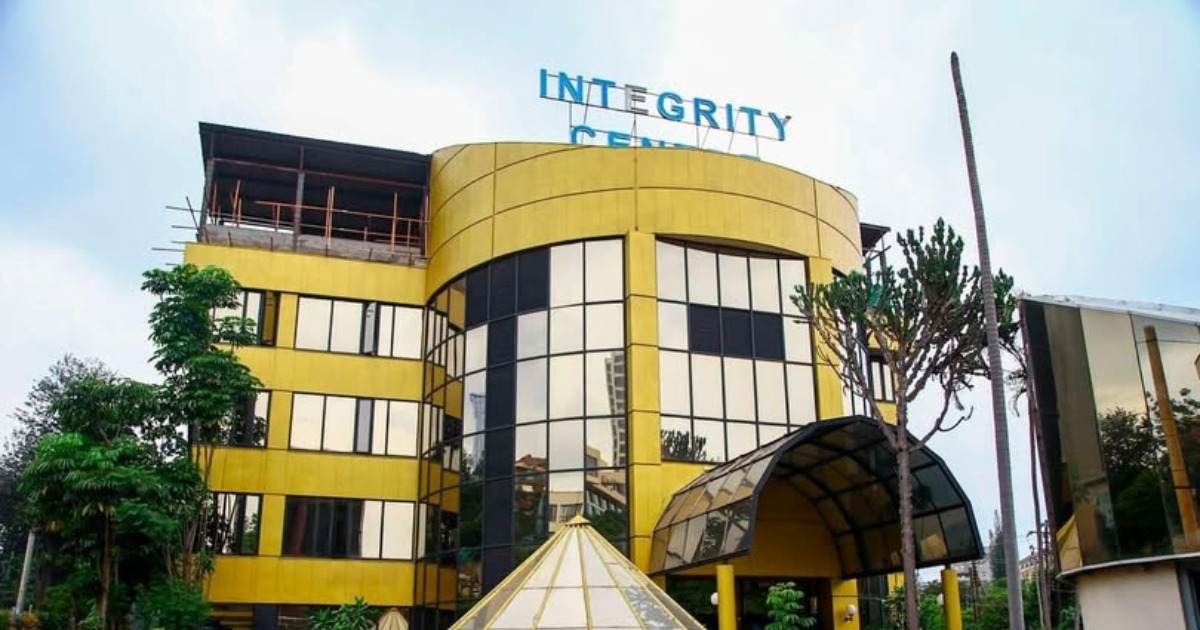
 EACC headquarters /HANDOUT
Senate probe exposes Sh15.6 billion in water sector losses, with 26 utility managers under investigation over alleged illegal connections and widespread revenue leakages across the country.
A new report by the Senate Public Investments and Special Funds Committee reveals that the companies lost about Sh15.6 billion in potential revenue, largely through illegal connections, billing failures, faulty meters and infrastructure leakages.
The losses have pushed most of the water utilities into negative working capital positions, forcing many to rely heavily on county government bailouts to remain operational, even as service delivery deteriorates.
Senators now want the anti-graft agency to conduct investigations to ascertain the causes of high non-revenue water, including potential theft.
The committee, chaired by Vihiga Senator Godfrey Osotsi, warns that the scale of financial leakage is crippling the sector and undermining the ability of water companies to maintain infrastructure and deliver reliable services.
“This massive loss of revenue severely compromises the ability of these companies to maintain infrastructure and discharge their mandates effectively,” the report states.
In some cases, the situation is compounded by the absence of master meters at water intake points, making it difficult to determine the actual volume of water produced and lost.
The result is a massive revenue leakage that has left utilities struggling to finance operations and maintain infrastructure.
Further, the committee said that a number of water companies did not maintain records of the volume of water produced, as there were no master meters installed in the intake points.
Senators now want the Ethics and Anti-Corruption Commission to probe the losses, particularly those linked to non-revenue water, illegal connections and possible collusion by staff.
Those affected are Nairobi City Water and Sewerage Company and Tavevo Water and Sewerage Company, which recorded losses of Sh236.4 million and Sh142 million, respectively.
Other companies with huge losses are Nolturesh Water and Sanitation Company in Kajiado, which incurred losses amounting to Sh11.96 million.
Also in the list are Nyanas Water and Sanitation Company in Kisumu, which incurred Sh43.82 million losses, Bomet Water and Sanitation Company (Sh61.44 million) and Tana Water and Sanitation Company (Sh50.17 million).
Most of them of the companies, the report says, are technically insolvent with their current liabilities far exceeding their current assets.
Tavevo Water and Sewerage Company Limited’s negative working capital rose from negative Sh331 million the year before to Sh532 million last year.
Other companies with negative working capital are Limuru Water and Sewerage Company (Sh159.05 million), Nakuru Rural Water and Sanitation Company (Sh261.93 million) and Nolturesh Water and Sanitation Company (Sh244.71 million).
The committee attributes the deteriorating financial health to a combination of factors, including high levels of non-revenue water, outdated tariff structures, low metering coverage and rising operational costs that outstrip revenues.
Billing inefficiencies have also been flagged as a major concern.
For instance, Eldoret Water and Sanitation Company had more than 19,800 active meters that were not billed, pointing to systemic weaknesses in revenue collection systems.
The committee further faulted some companies for using outdated or unauthorised tariff structures.
Kakamega Rural Water and Sanitation Company, for example, was found to be applying a tariff meant for another county, in violation of regulatory requirements.
Another major red flag is the misuse of customer deposits.
The report reveals that at least 26 water companies irregularly spent customer deposits amounting to Sh1.67 billion to finance operational expenses without approval from their boards.
The committee warned that such practices expose companies to risks, including the inability to refund customers and erosion of public trust.
In addition, some companies failed to collect deposits from new connections altogether.
Eldoret Water, for instance, installed more than 1,300 new connections without collecting deposits, exposing itself to potential losses and weakening financial controls.
The report also highlights a ballooning wage bill across the sector, with 24 water companies exceeding the recommended threshold of 35 per cent of operational costs.
The excess wage bill stands at Sh3.21 billion, with Nairobi Water alone surpassing the limit by Sh2.5 billion.
This points to possible overstaffing, inflated salaries and poor alignment between staffing levels and operational efficiency, further straining already limited resources.
On the revenue side, water companies are owed billions by customers, including government institutions.
The failure to collect these debts has severely affected cash flow, limiting the ability of utilities to pay suppliers, settle statutory obligations and sustain service delivery. The situation is worsened by the absence of clear debt management policies and weak enforcement mechanisms.
At the same time, water companies are weighed down by mounting liabilities, including unpaid statutory deductions to agencies such as the Kenya Revenue Authority, Social Health Authority and National Social Security Fund.
The report notes that failure to remit these deductions has led to the accumulation of penalties and interest, exposing firms to legal risks.
In some cases, employees have borne the brunt of the financial mismanagement, with delayed salaries and unpaid benefits. Homa Bay Water Company, for example, reported salary arrears exceeding Sh20 million, some outstanding for more than two years.
The committee also flagged incomplete asset registers and delays in the transfer of assets and liabilities from national water agencies to county entities, creating confusion over ownership and accountability.
Governance issues also feature prominently in the report, including non-compliance with ethnic diversity requirements, failure to meet recruitment thresholds for persons with disabilities, and breach of the one-third basic salary rule.
Additionally, several water companies were found to have unresolved audit queries that have persisted across multiple financial years, pointing to weak follow-up mechanisms and a lack of accountability.
To address the challenges, the committee has issued a raft of recommendations aimed at restoring financial discipline and improving service delivery.
These include strengthening internal audit systems, enhancing staff capacity in financial reporting, and enforcing strict compliance with public finance laws.
Governors have been tasked with ensuring that accounting officers maintain accurate records, prepare reliable financial statements and submit regular reports to county treasuries and oversight bodies.
Water companies have also been directed to implement measures to reduce non-revenue water, including upgrading infrastructure, improving metering and cracking down on illegal connections in collaboration with anti-corruption agencies.
Further, the committee wants the Ministry of Water, the Council of Governors and other stakeholders to fast-track the transfer of assets and liabilities and develop clear frameworks for managing customer deposits and outstanding debts.
Governors have been urged to take a more active role in overseeing water companies and to implement strategic measures to restore financial stability and ensure long-term sustainability.
The committee warned that failure to implement the recommendations will attract sanctions under public finance laws, signalling a tougher stance on accountability in the sector.