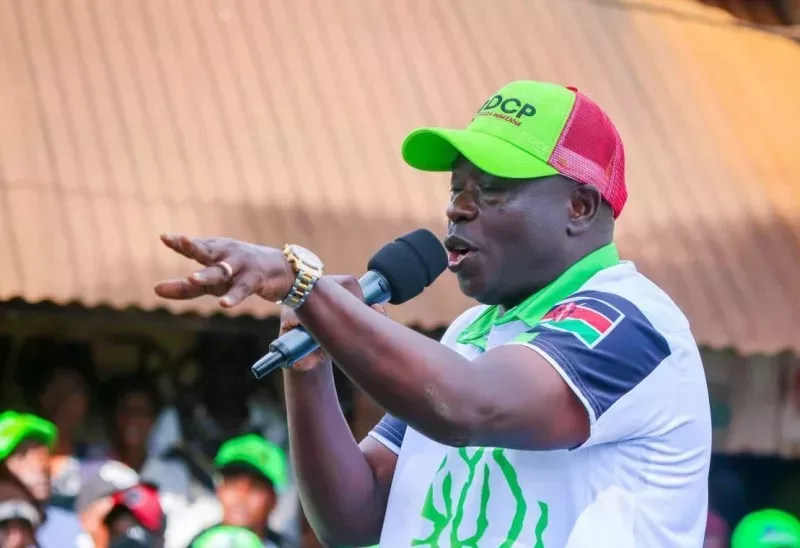
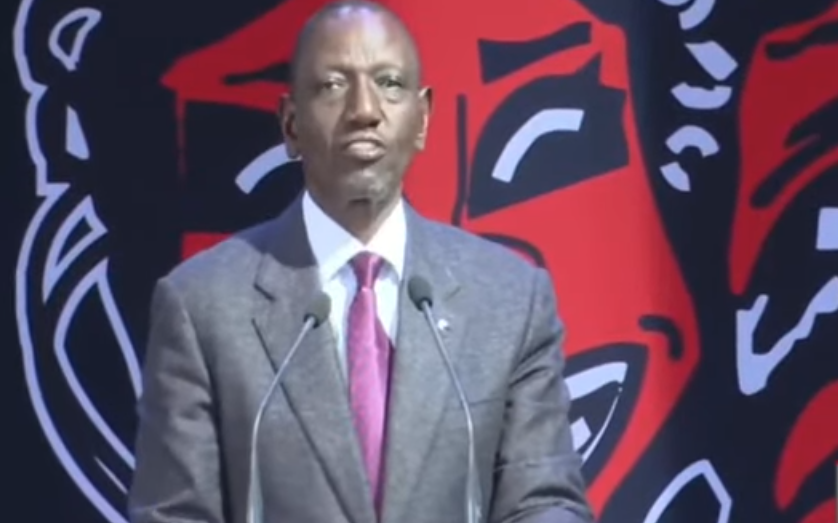
 President William Ruto/SCREENGRAB
President William Ruto has announced a major policy shift aimed at reforming Kenya’s music industry, saying the government will use the e-Citizen platform to curb cartels, which he said exploit artistes through opaque royalty systems.
Speaking during the Kenya National Drama Festival State Concert at State House, Nairobi on Friday, Ruto said the move to digitise the collection and distribution of music royalties marks a turning point for creatives who have long complained of underpayment and lack of accountability.
“To ensure that those in the creative economy earn their rightful returns, we have also taken a major step by migrating the collection and distribution of music royalties onto e-Citizen,” Ruto said.
“This is a bold and transformative reform.”
The President said that for years, royalty collection has operated without transparency.
“For too long, royalty collection has lacked transparency, and that is a statement of fact,” he said.
He cited past discrepancies to illustrate the scale of the problem, pointing to an instance where a collective management organisation collected Sh109 million on behalf of artists but distributed only Sh13 million.
“This means that the rightful beneficiaries, the artistes, only received 12 per cent while the cartels, the middlemen, the brokers, and everybody in between took the rest,” Ruto said.
“This is not only unfair, but it is also unjust,” he added.
Under the new system, Ruto said all stakeholders will be able to track collections and distributions in real time, a move he said would eliminate secrecy in the process.
“Today, we are correcting that, making sure that collection of royalties happens on a transparent platform, so that it is possible to know how much money has been collected,” he said.
He added that the platform will also show how revenues are shared.
“It is open to everybody, and it is also possible to know how it has been distributed between all the stakeholders.”
The President maintained that artistes are the primary beneficiaries of creative work and should therefore receive the largest share of royalties.
“It is my position that the rightful owners of royalties are the artists, not the people collecting, not all the other people,” he said.
“They should just earn a small percentage.”
The reforms come amid growing pressure from stakeholders in the creative sector, who have repeatedly raised concerns over mismanagement within collective management organisations.
Ruto expressed confidence that the system will restore fairness in the industry and dismantle entrenched networks that have thrived under opaque structures.