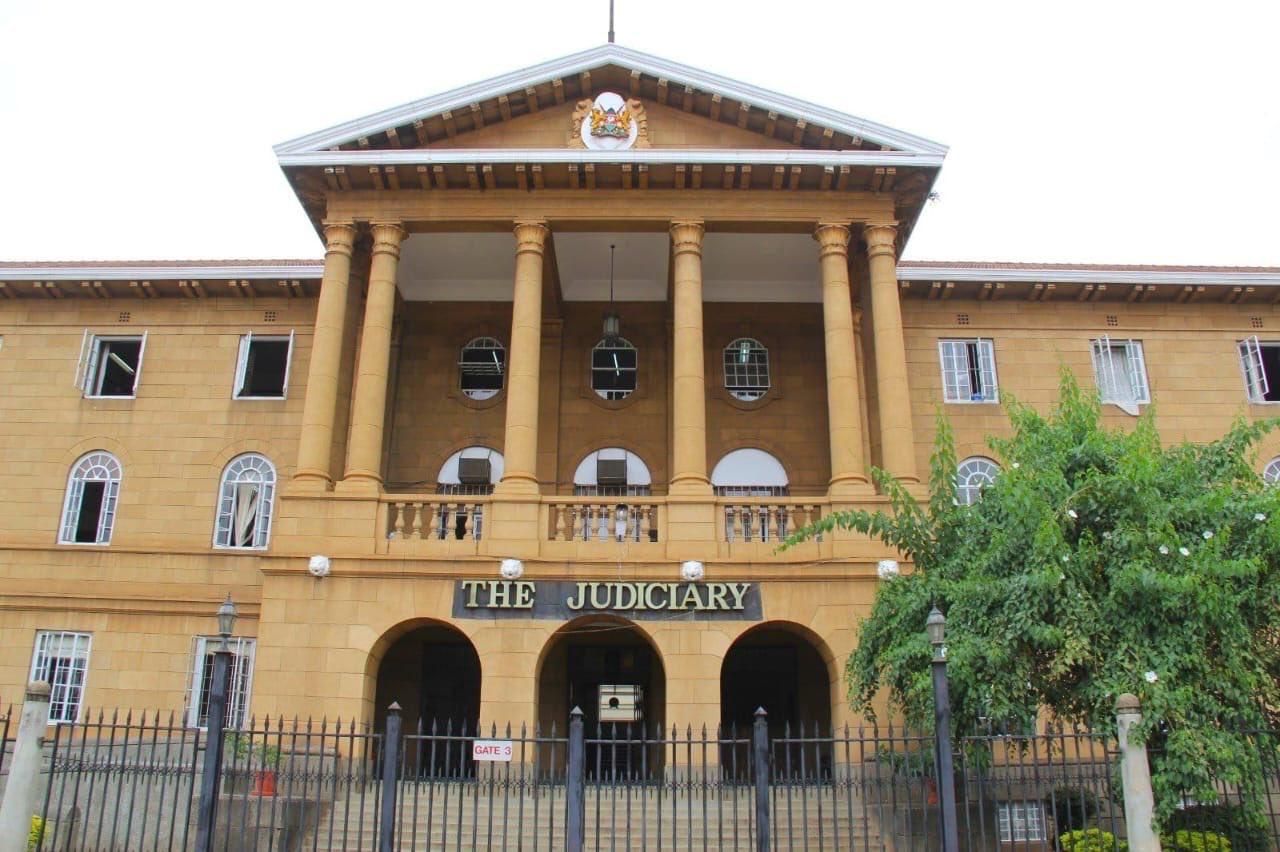
A new audit has revealed that it is instead operating 146 commercial bank accounts, even as millions lost through theft remain unrecovered.
Auditor General Nancy Gathungu, in the report tabled in Parliament, paints a picture of weak financial controls within the courts’ system.
She also flagged fragmented revenue systems and system lapses that expose billions of shillings in public funds to risk.
The audit covering the financial year ending June 30, 2025, shows the Judiciary failed to migrate to the designated digital payment platform, paybill number 222222.
The government, in a circular issued on July 10, 2023, directed all state agencies to handle revenues through the paybill.
“Review of records revealed that the Judiciary had not migrated its revenue collection operations to the designated government digital payment platform, paybill number 222222,” Gathungu says in the report.
Instead, the report notes, “the Receiver of Revenue continued to operate 146 commercial bank accounts for revenue collection contrary to the government directive.”
The directive required all government institutions to consolidate collections into a single platform within 30 days to enhance transparency and accountability.
“In the circumstances, management was in breach of the government directive aimed at centralising and digitalising revenue collection for enhanced transparency, accountability and efficiency,” Gathungu says.
The failure to streamline revenue collection comes against the backdrop of the Judiciary’s failure to recover cash running into hundreds of millions stolen by rogue staffers.
The report cites deposits amounting to Sh146,615,252 lost through theft by staff members in Embu, Malindi, Molo, Nakuru courts and Judiciary headquarters in 2017-18 and prior financial years.
Despite the matter being referred to investigative agencies, the funds remain unaccounted for.
“Although the matter was referred to the Directorate for Criminal Investigations and Assets Recovery Agency, the amounts had not been recovered as at June 30, 2025,” the report states.
The auditor general warns this raises serious concerns about the Judiciary’s ability to meet its obligations.
“In the circumstances, the assets available may not be adequate to cover the third-party deposit liabilities due to the unrecovered losses,” Gathungu says.
The audit further put the Judiciary on the spot over basic breaches of financial management laws, including failure to prepare and submit bank reconciliation statements.
“During the year under review, management did not prepare and submit to the auditor general monthly bank reconciliation statements for judiciary deposits,” the report says.
The breach violates the Public Finance Management regulations, which require reconciliation by the 10th day of the following month.
The Judiciary also failed to submit quarterly deposit reports as required by law.
“In the circumstances, management was in breach of the law,” the auditor general concluded.
The report also flags major inconsistencies in the Judiciary’s transition to a new financial management system. A sample of five court stations revealed notable discrepancies between the old and new systems.
“Total deposits of Sh402,400,261 were successfully migrated to Jumuika Enterprise Resource Planning, compared to a total of Sh640,297,105 recorded in JFMIS before migration,” the report states.
“This resulted in a variance of Sh237,896,844.”
The auditor general has, in the review, raised concerns about the integrity of the data.
“In the circumstances, the effectiveness of the internal controls over the ICT systems used for data migration and processing of the deposits could not be confirmed, raising concerns about data integrity and completeness.”
Auditors further established that the Judiciary failed to account for non-cash deposits held by the Judiciary on behalf of litigants.
Sensitive and high-value items such as land title deeds, vehicle logbooks and bonds were not accounted for.
“The Judiciary's deposit records do not reflect non-cash assets such as bonds, land title deeds, vehicle logbooks, fixed deposit certificates, travel documents and other security documents held on behalf of plaintiffs,” the report states.
The auditor general says the omission signals weak internal controls and raises the risk of loss or misappropriation.
“In the circumstances, the effectiveness of the internal controls over deposit management could not be confirmed.”
STALLED PROJECTS
The audit also reveals that at least 11 construction projects worth Sh1.73 billion have stalled after contract periods lapsed.
“Review of the project list revealed that 11 construction related projects with a contract cost of Sh1,733,399,908 had lapsed contract periods and had stalled,” Gathungu reports.
There was no evidence of adequate budgetary provision to complete the projects, a situation the auditor says exposes the Judiciary to potential legal disputes and additional costs.
“No performance securities were seized on these contracts,” the report notes, citing contravention of procurement laws.
“In the circumstances, the effectiveness of the contracts, procurement implementation and monitoring and value for money on these contracts could not be confirmed.”
In Mombasa, the auditor general found a newly constructed court building lying idle despite pressure on space.
“Physical verification of the newly constructed court building at Mombasa law courts revealed that the facility… remains unused,” the report says.
The building, funded under a donor-supported programme, has visible structural cracks.
“The structure was observed to have visible cracks, raising concerns about its stability and structural integrity.”
At the same time, the Judiciary continues to lease alternative premises, costing taxpayers millions of shillings.
“Despite the Judiciary experiencing space constraints… no documentation was provided to confirm the completion and official handover of the building,” the report adds.
There was also no evidence of penalties imposed on contractors. “In the circumstances, the Judiciary may not have obtained value for money spent on the project.”
The audit further highlights operational challenges affecting service delivery, including case backlogs and poor record-keeping.
At Kwale law courts, 496 cases have been pending for more than three years.
“The prolonged process of resolving these cases may result in justice being denied for the parties involved and could erode public confidence,” Gathungu warns.
Additionally, 905 case records lacked documented court directives, stalling progress.
“It was also noted that there were delays in updating the Court Tracking System and frequent transfer of judicial officers… without clearance of pending matters.”
IRREGULAR PAY
The report also flags irregular payments to staff and questionable hiring practices. Allowances amounting to Sh25.6 million were paid to 336 officers at rates higher than those approved.
“In the circumstances, management was in breach of the SRC and JSC guidelines, resulting in irregular payments.”
Further, the audit questions the engagement of over 1,000 casual workers without proper documentation.
“Payroll analysis revealed that 1,001 casual workers were engaged for periods exceeding three months, without supporting documentation,” the report states.
The auditor general concludes that the accuracy of employee costs totalling Sh15.3 billion could not be confirmed.