
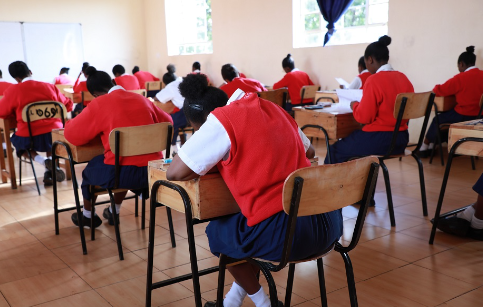
Children are in school, but many are not learning enough, particularly in numeracy, a study by the United Nations Educational, Scientific and Cultural Organisation has found.
The new assessment under the UNESCO Global Education Monitoring Report Spotlight Series warns that while the country has made notable gains in enrolment and literacy, foundational learning outcomes remain uneven, with mathematics emerging as a key area of concern.
The report, which examines instructional leadership as a driver of learning, finds that Kenya’s education system is increasingly constrained by weak school leadership.
Other constraints are gaps in teacher support and systemic inefficiencies.
It says heads of institutions — in this case, headmasters and headmistresses — often feel unprepared to support literacy and numeracy in early grades.
This is especially the case when they are deployed without specific training in Competency-Based Education or instructional leadership.
“For instance, 72 per cent of HoIs [heads of institutions] reported receiving training only after their appointment as school leaders, with this training most often focused primarily on administrative rules and regulations. Without specialised training prior to appointment, HoIs may feel unprepared to lead early grade literacy and numeracy effectively,” the report says.
It further found “a clear gap” between the Teachers Service Commission promotion guidelines and practice.
Some 36 per cent of heads of institutions were appointed without publicly advertised positions.
“Competitive, merit-based processes not only uphold fairness and equity but also ensure that the most qualified candidates fill leadership positions. This strengthens accountability, enhances trust in the system and contributes to improved school governance and learning outcomes,” the study says.
Over the past decade, Kenya has been widely recognised for scaling up education reforms and programmes such as Tusome, Kenya Primary Math and Reading and the Primary Education Development Project.
These programmes, the report says, have significantly improved early-grade literacy.
“These interventions, supported by data from national and international assessments, have helped expand access and strengthen reading skills among young learners.”
However, the gains remain uneven.
Recent national assessment data, including results from the Kenya Primary School Education Assessment, show that numeracy skills continue to lag behind literacy.
This raises concerns about whether the system is delivering balanced foundational learning.
The report suggests that the problem lies in how reforms are implemented at the school level, with leadership emerging as a critical weak link.
School heads, who are expected to drive instructional quality and support teachers, enter their roles without adequate preparation. A majority receive training only after appointment.
This leaves many school heads ill-equipped to guide teaching and learning, particularly under the CBE system, which demands a more hands-on, learner-centred approach.
Beyond individual schools, structural challenges within the education system are also limiting impact.
Local education officials, including curriculum support officers and subcounty education directors, are tasked with supporting schools and improving teaching standards.
Yet, in practice, their ability to provide meaningful instructional support is constrained by heavy administrative workloads and unclear mandates.
The report points to overlapping roles and limited resources, which reduce the effectiveness of oversight and weaken the link between policy and classroom practice.
Even where professional development opportunities exist, they are often too generic to address specific gaps in foundational learning.
Training programmes for teachers and school leaders frequently lack a targeted focus on literacy and numeracy, limiting their relevance and impact.
The report calls for a shift in focus — from expanding access to strengthening quality through targeted investments in leadership training, clearer institutional roles and more effective use of data to inform decision-making.
Among its key recommendations are equipping school heads with practical leadership skills, enhancing the capacity of local education officers to support teaching, and institutionalising collaborative professional development models.
The findings also raise questions about the sustainability of Kenya’s education gains, warning that weak foundational skills, particularly in numeracy, could have lasting consequences for workforce readiness, productivity and economic growth.