
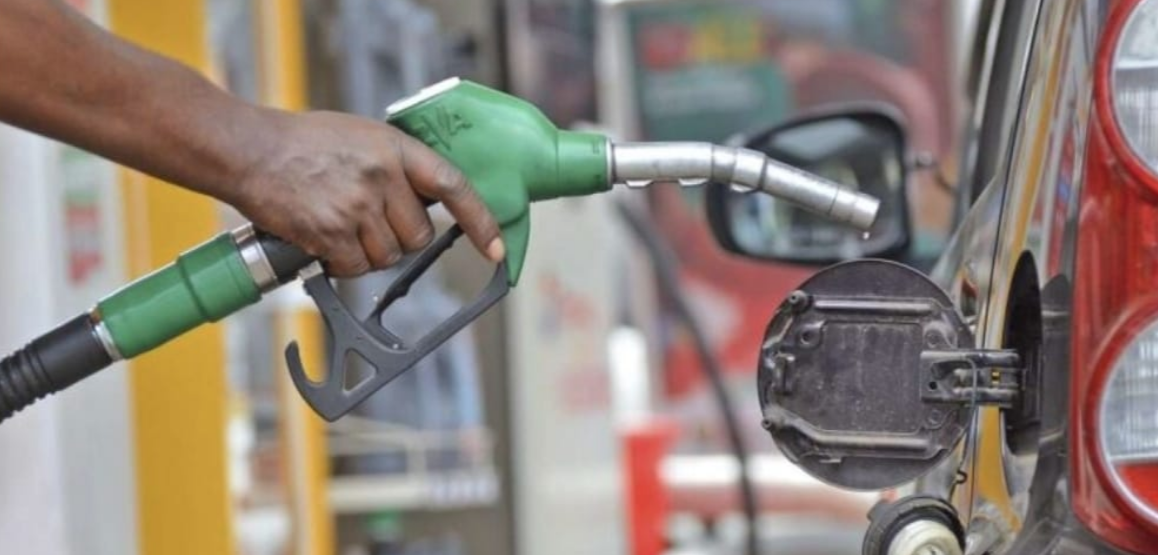
 Fuel Pump/FILE
The Energy and Petroleum Regulatory Authority (EPRA) on Tuesday announced fuel prices for the April–May cycle, indicating a sharp increase in pump prices across the country amid rising global oil costs.
“We have calculated the maximum retail prices of petroleum products which will be in force from April 15, 2026, to May 14, 2026,” EPRA said in a statement.
Under the latest review, the price of super petrol increased by Sh28.69 per litre, while diesel rose by Sh40.30 per litre. The price of kerosene remained unchanged.
In Nairobi, motorists will now pay Sh206.97 per litre of super petrol, Sh206.84 for diesel and Sh152.78 for kerosene, marking a steep jump from the previous cycle.
In Mombasa, pump prices will stand at Sh203.69 for super petrol, Sh203.56 for diesel and Sh149.49 for kerosene, maintaining slightly lower rates compared to inland towns due to proximity to the port.
In Kisumu, petrol will retail at Sh209.00 per litre, diesel at Sh208.87 and kerosene at Sh154.81, reflecting higher transport and distribution costs to western Kenya.
In Nakuru and surrounding towns, prices will remain elevated, with petrol retailing at about Sh209 per litre, diesel at about Sh208 and kerosene at about Sh154.
In Eldoret, motorists will pay about Sh209 for petrol, Sh208 for diesel and approximately Sh155 for kerosene, reinforcing the trend of rising fuel costs across key urban centres.
In central Kenya, Nyeri residents will pay Sh208.98 per litre of petrol, Sh208.85 for diesel and Sh154.78 for kerosene, while in Embu, petrol will retail at Sh208.50, diesel at Sh208.38 and kerosene at Sh154.31.
In Meru and nearby towns, pump prices will cross the Sh209 mark for petrol and Sh208 for diesel, with kerosene retailing above Sh155 per litre.
In eastern Kenya, motorists in Kitui will pay Sh209.24 per litre of petrol, Sh209.12 for diesel and Sh155.05 for kerosene, while in Mwingi, prices rise further to Sh209.92 for petrol, Sh209.79 for diesel and Sh155.72 for kerosene.
In northern and remote areas, fuel prices remain among the highest in the country due to transport logistics. In Lamu, petrol will retail at Sh209.02 per litre, diesel at Sh208.91 and kerosene at Sh154.84, while in Hola, motorists will pay Sh209.51 for petrol, Sh209.39 for diesel and Sh155.33 for kerosene.
Similarly, in Taveta, petrol will retail at Sh208.30 per litre, diesel at Sh208.19 and kerosene at Sh154.12, underscoring the cumulative cost of transporting fuel to distant regions.
“The prices are inclusive of the Value Added Tax (VAT) in line with the VAT Act, the Finance Act 2023, the Tax Laws (Amendment) Act 2024 and the revised excise duty rates adjusted for inflation,” EPRA said.
The regulator noted that VAT on petroleum products has been reduced from 16 per cent to 13 per cent in a bid to cushion consumers from the sharp rise in global fuel prices.
The government has also tapped into the Petroleum Development Levy to the tune of Sh6.2 billion to stabilise pump prices and prevent an even steeper increase.
Despite these interventions, the impact of rising global oil prices has significantly pushed up local pump prices.
EPRA attributed the increase to a sharp surge in the landed cost of imported fuel. The average landed cost of super petrol rose by 41.53 per cent from US$582.11 per cubic metre in February to US$823.87 in March.
Diesel recorded an even steeper increase of 68.72 per cent over the same period, while kerosene rose by 105.15 per cent, reflecting sustained pressure in international energy markets.
During the previous March–April cycle, pump prices in Nairobi stood at Sh176.58 per litre for petrol, Sh167.06 for diesel and Sh151.39 for kerosene after EPRA retained prices unchanged.
The latest increase now pushes fuel prices above the Sh200 mark in most towns, a move likely to exert pressure on the cost of living.
EPRA noted that Kenya imports all its petroleum products in refined form, with prices determined by international market benchmarks and the prevailing exchange rate of the shilling against the US dollar.
“Further, the trade of petroleum products in the international markets is denominated in United States dollars (USD), and an exchange rate is applied to convert the USD to shillings during the computation of local pump prices,” the Authority said.
According to EPRA, the petroleum pricing regulations are designed to cap retail prices while ensuring that importation and other prudently incurred costs are recovered.
“EPRA wishes to assure the public of its continued commitment to the observance of fair competition and the protection of the interests of both consumers and investors in the energy and petroleum sectors.”
The latest review comes against the backdrop of recent fuel supply disruptions reported in parts of the country, which triggered panic buying and long queues at filling stations.
The sharp increase is expected to have a ripple effect across the economy, with public service vehicle operators likely to review fares and businesses adjusting prices of goods and services in response to higher transport and production costs.
As the new prices take effect, households and motorists will be closely watching how the market responds, particularly in terms of supply stability and the broader impact on already strained budgets.







