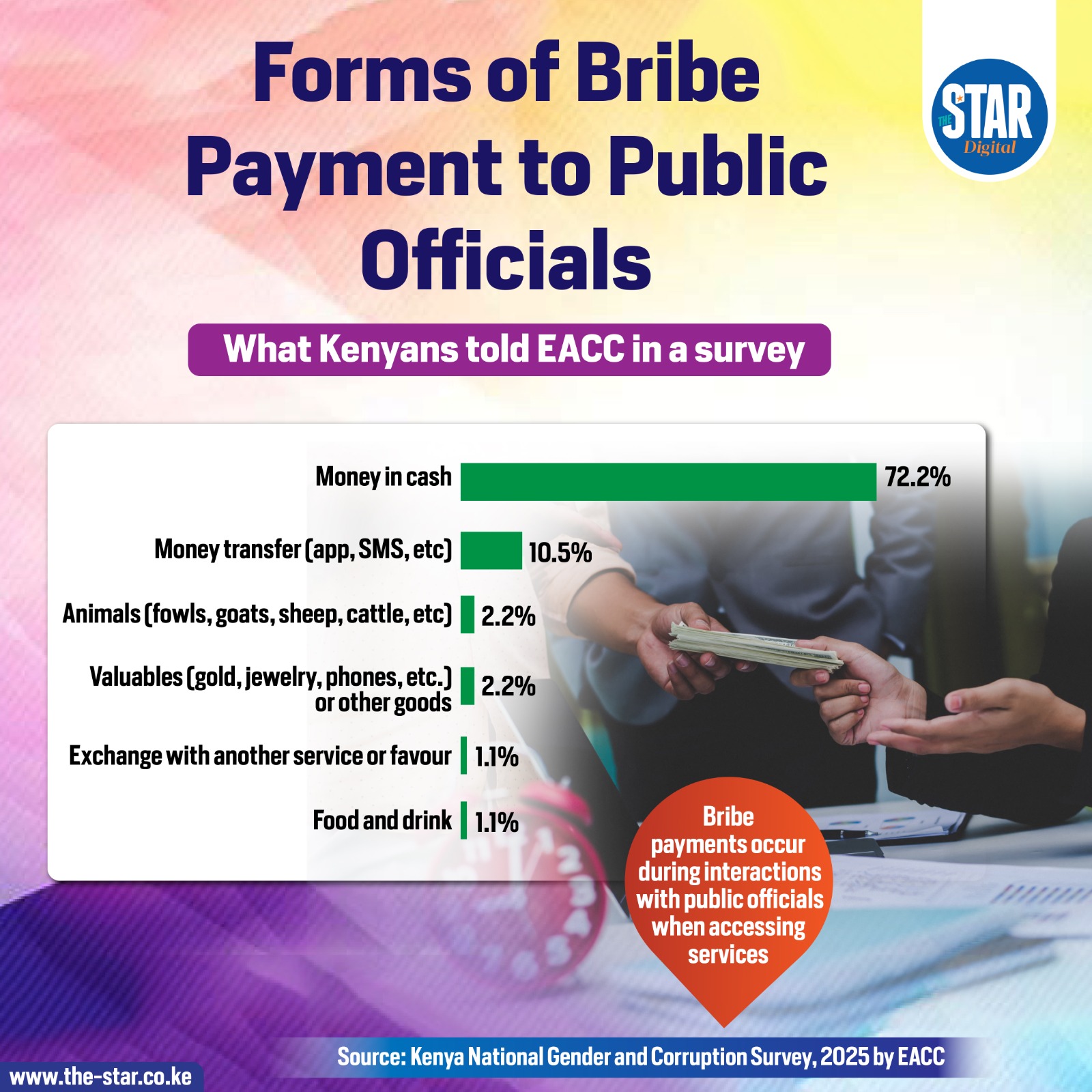
A comprehensive survey by the Ethics and Anti-Corruption Commission (EACC) reveals that cash is the primary medium for bribery in Kenya, with a staggering 72.2% of respondents identifying hard currency as the most common form of payment to public officials.
This preference for physical money underscores the persistent challenges in tracking illicit transactions within the public service, where these exchanges typically occur during direct interactions for essential services.
While digital transformation has swept through the Kenyan economy, money transfers via mobile apps and SMS occupy a distant second place, accounting for 10.5% of bribe payments.
The data suggests that despite the traceability of digital footprints, a significant portion of the population still resorts to electronic means to facilitate corrupt demands.
Beyond monetary transactions, the survey highlights a diverse range of non-cash inducements used to influence public servants.
Animals, including fowls, goats, sheep, and cattle, represent 2.2% of bribe forms, equal to the percentage of valuables such as gold, jewelry, and mobile phones.